Elon Musk: Rescue or Ruin for Twitter?
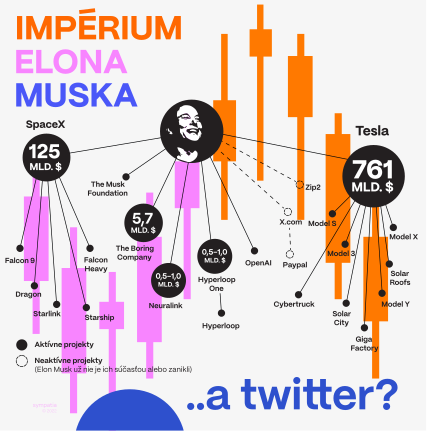
Alongside Tesla, Musk’s most successful ventures include Zip2, PayPal and SpaceX, which obtained funding for its space projects from NASA. In addition to these operational businesses, Musk runs several companies still in development. One of the most intriguing is Neuralink, which aims to connect the human brain to a chip to address medical conditions (paralysis and others) and potentially enhance cognitive capabilities.
How does Twitter work?
Twitter is a social network based on short, rapid text posts, photos and videos. It is primarily used for quick expressions of opinion, which has made it popular with public figures from politics and show business. The platform’s largest user base is in the United States, where the company was founded and where it generates more than 50% of its revenues. Twitter has roughly 500 million active users worldwide.
Elon Musk and Twitter?
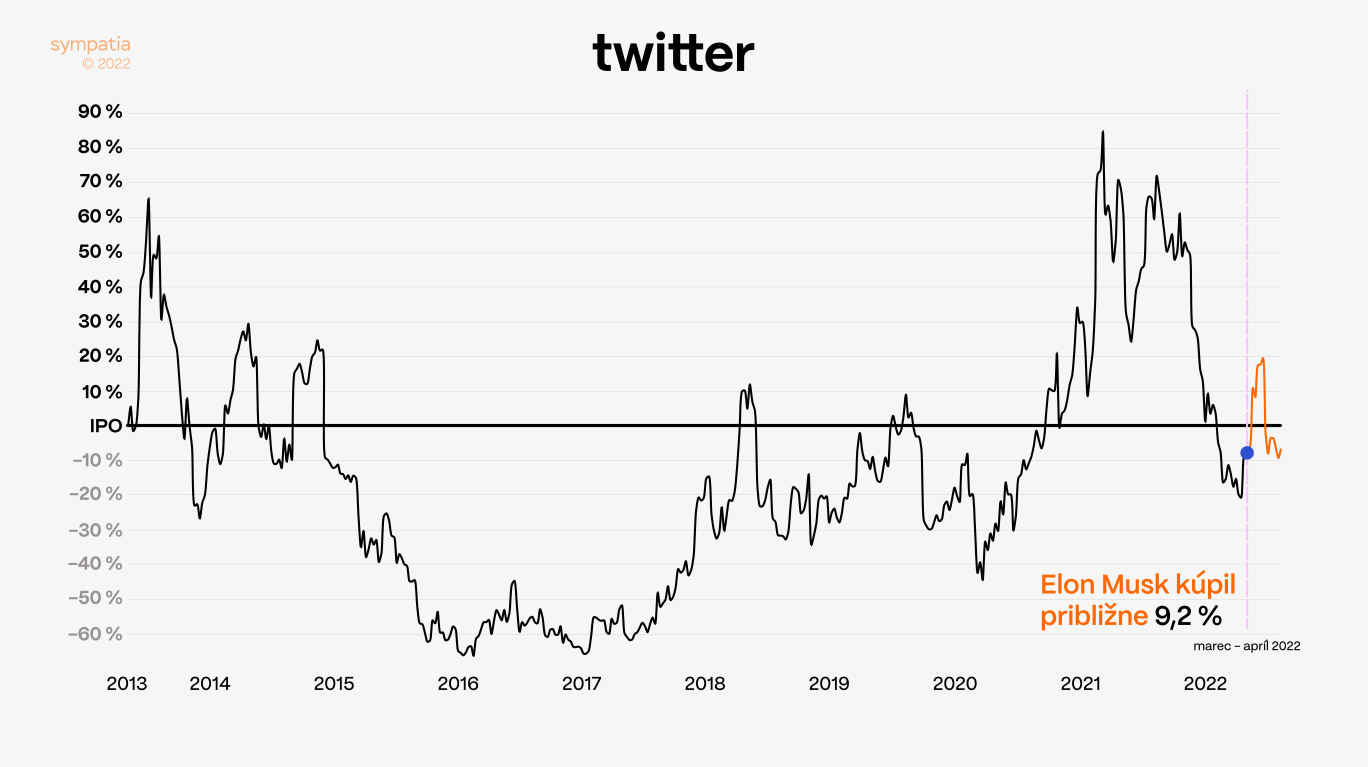
The whole saga began on Twitter itself, following a poll posted on Musk’s account. He stated that the poll’s outcome would have consequences. The first question asked whether Twitter’s algorithm source code should be made public. He then asked about freedom of speech on the platform, and finally what he should do about Twitter. The vote did indeed have “consequences”: in response to the results Musk acquired a 9.2% stake in the company. Prior to this purchase he sold Tesla shares worth USD 4 billion. Soon after buying the stake, he announced his intention to buy the entire company and take it private. He offered shareholders USD 44 billion and arranged financing using a combination of his own capital and loans from major global banks, pledging a portion of his Tesla shares as collateral.
Naturally, the story did not proceed without problems. After initial productive talks with Twitter’s management, Musk publicly questioned the platform’s figures on fake accounts, which Twitter had reported at 5%; Musk claimed—without providing evidence—that the figure could be as high as 20%. He also threatened to withdraw from the acquisition unless he was given access to all relevant data. Musk, a seasoned strategist, may well have been attempting to negotiate a lower purchase price. If he were to withdraw from the merger agreement without a legally valid reason, he would be liable to pay a contractual penalty of USD 1 billion.
Let us consider hypothetically what Twitter under Musk’s leadership might look like. He would likely promote greater freedom of speech, perhaps at the expense of ethical standards. Another potential use of ownership could be to bolster his personal brand or to employ the platform as a safeguard—an “atomic briefcase” of sorts—in difficult times. On the positive side, publishing the algorithm and increased transparency could provide users with greater assurances about privacy compared with competing networks.
Twitter’s shares
There is little doubt that Musk’s name would increase interest in Twitter’s shares and could potentially improve the company’s direction. Historically, many companies have seen their fortunes change markedly after Musk’s involvement. Whether such a transaction will ultimately benefit Twitter or prove disastrous for the company and its buyer remains to be seen. On the stock market, the company is trading below the offer price and longterm investors have not been rewarded with gains. The core problem is insufficient monetisation of the platform and lower margins compared with competitors such as Meta. The social media sector is fiercely competitive and dominated by platforms with substantially larger user bases (Facebook, Instagram, TikTok). Musk is therefore embarking on a difficult battle with an uncertain outcome.
Disclaimer
All texts, images, graphics and other objects contained in this document are protected by copyright and, without prior written consent from Sympatia Financie, o.c.p., a.s., the contents of this document may not be copied, distributed, altered or provided to third parties. This document contains general information only. Sympatia Financie, o.c.p., a.s. does not provide professional advice or services through this document and accepts no liability for any loss arising directly or indirectly from reliance on this document.