Balkans: The Investment Opportunity of the Decade
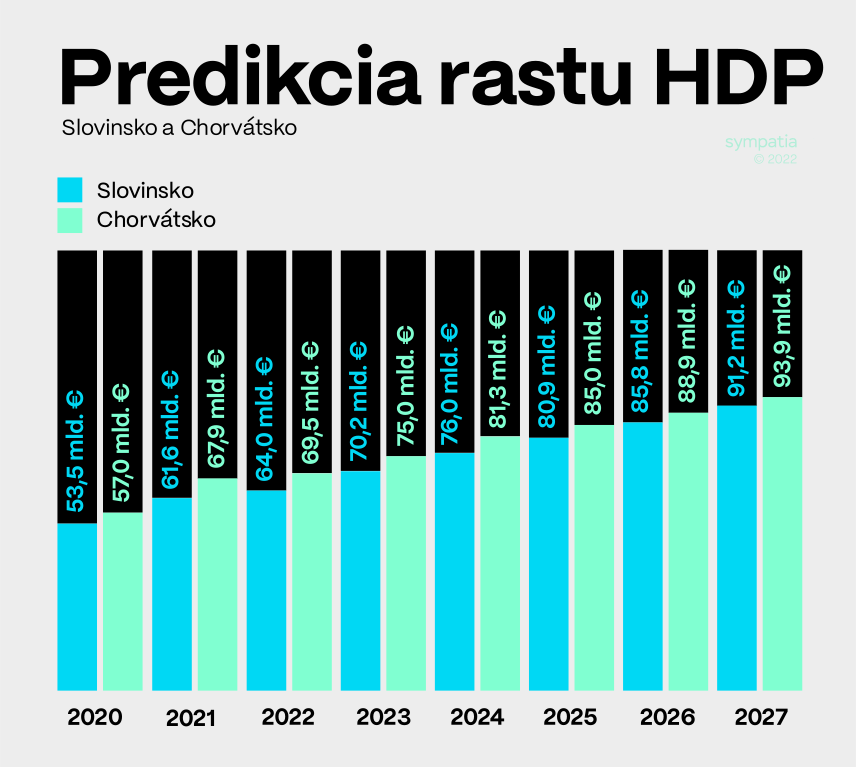
Analyses have shown that the region suffers from a pronounced shortage of high‑quality logistics centres, which we subsequently targeted. Warehouse space therefore appeared to be the ideal real‑estate investment in the Balkans. We regard Croatia and Slovenia as the potential economic tigers of the Balkans thanks to their strategic location. Both countries are developing rapidly: in 2021 Slovenia’s economy expanded by 8.1% and Croatia’s by 10.2%, and they are expected to remain among the fastest‑growing EU economies in the coming years. Both states have also made substantial progress in tackling unemployment: Croatia reduced unemployment from 22% to 6.5% over eight years, and Slovenia from 14% to 5.9%. Both countries have large populations of young, hardworking and educated people who are and will be the “driving force” of their economies. For these reasons we have no doubts about the correctness of our past decisions, and we plan to intensify our activities in the Balkans in the near term. Naturally, we will never be complacent and will continually seek the best opportunities to maximise investment returns.
E‑commerce and deglobalisation — an opportunity for the Balkans?
The coronavirus pandemic accelerated growth in e‑commerce, while the war in Ukraine has placed pressure on large companies to geographically diversify production and warehousing. Companies are responding to these geopolitical challenges by seeking potential locations to relocate operations from high‑risk countries to EU and NATO member states. We believe Croatia and Slovenia will benefit from these shifts, as supported by economic forecasts from internationally respected institutions. Companies have long recognised the need to begin diversifying risk but had not yet acted; the pressure to respond is now rising. Deglobalisation will not occur in a literal, wholesale manner, but certain established global trade patterns will be disrupted. Greater attention will be paid to geopolitical risks, which can no longer be ignored. We already perceive increased demand for diversification among companies in Croatia and Slovenia, and we intend to assist them through this transition.
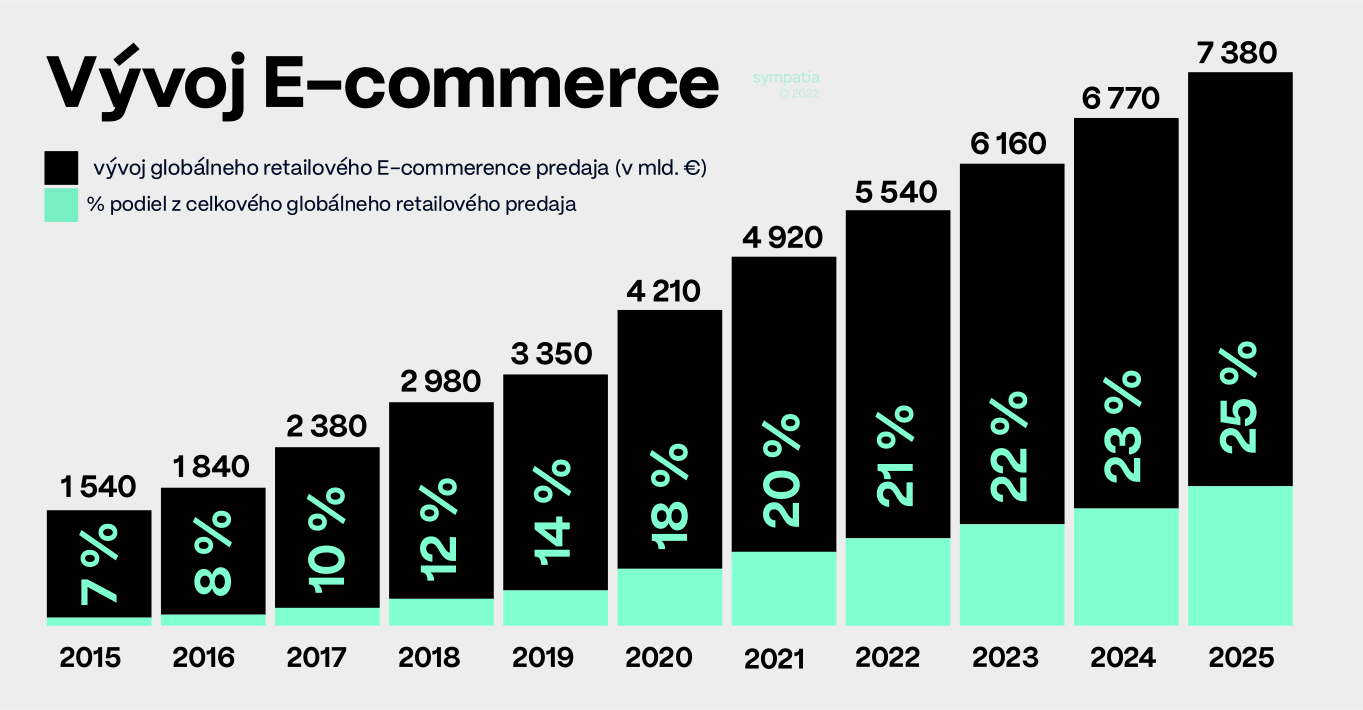
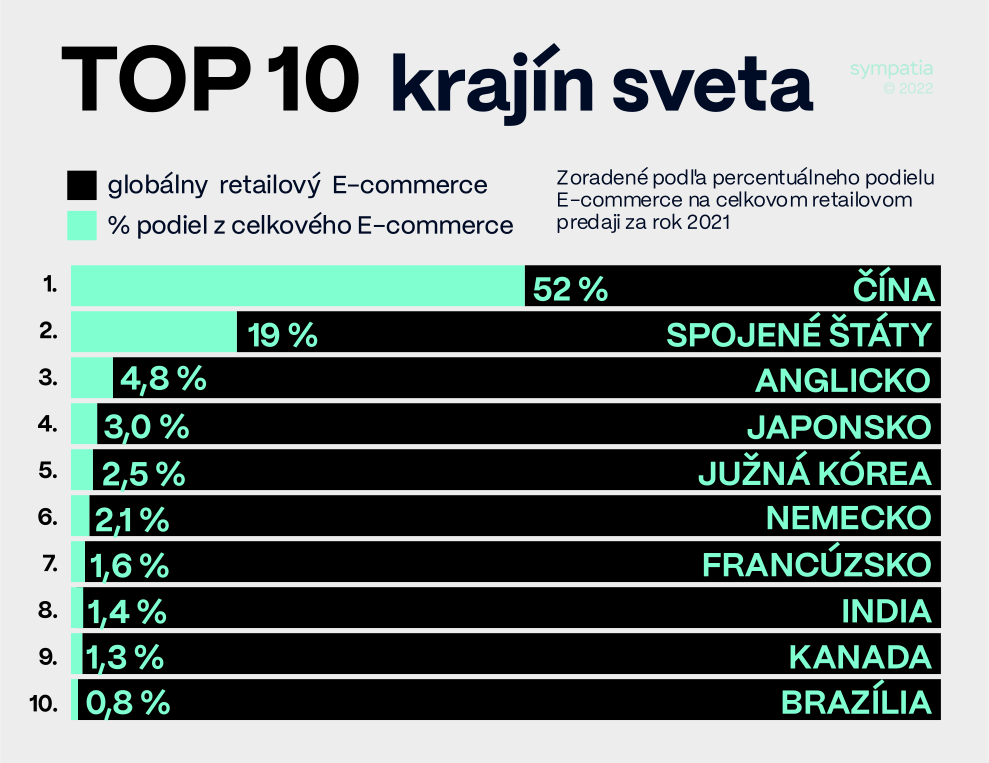
E‑commerce is another major driver for logistics centres. The sector experienced a significant jump during the pandemic and is not expected to cool thereafter; the growth trend should continue. Currently, e‑commerce accounts for 19.6% of global retail sales. Estimates foresee e‑commerce rising to 24.5% of total retail sales by 2025, representing an absolute expansion of nearly USD 2.5 trillion. We therefore consider this decade pivotal for e‑commerce, and it is likely that online sales will continue to grow and may eventually become dominant. Numerous studies support this scenario, indicating younger generations prefer online shopping to traditional in‑person purchases.
Geographical advantages
Both Croatia and Slovenia possess well‑developed transport infrastructures and access to the sea, a significant benefit for logistics hubs. They also enjoy lower labour costs compared with Western Europe, providing an additional competitive edge. Their access to the Adriatic Sea shortens maritime routes: ships using northern ports must circumnavigate much of northern Europe to reach the Suez Canal, whereas Croatia and Slovenia offer direct access from the Adriatic into the Mediterranean and, via the Suez Canal, an open route to Asia.
Currency and security risks
Slovenia is a member of the Schengen Area and the eurozone, which improves its transport position and eliminates exchange‑rate risk. Croatia has met the strict accession criteria and will adopt the euro in the coming months; it will also join Schengen. These steps will remove exchange‑rate risk and reduce border congestion, since travel within Schengen is typically subject to no border controls. Regarding security, in uncertain times when major powers can exert pressure on smaller states, it is crucial to operate in countries that offer security guarantees and political stability — attributes that clearly apply to Croatia and Slovenia. NATO and the EU underpin their security and political orientation. Most EU members, together with the US, Canada and Turkey, are powerful NATO allies; an attack on Croatia or Slovenia would activate NATO’s mutual‑defence obligations. The likelihood of military threats to these countries is therefore very low.
Our projects in the Balkans
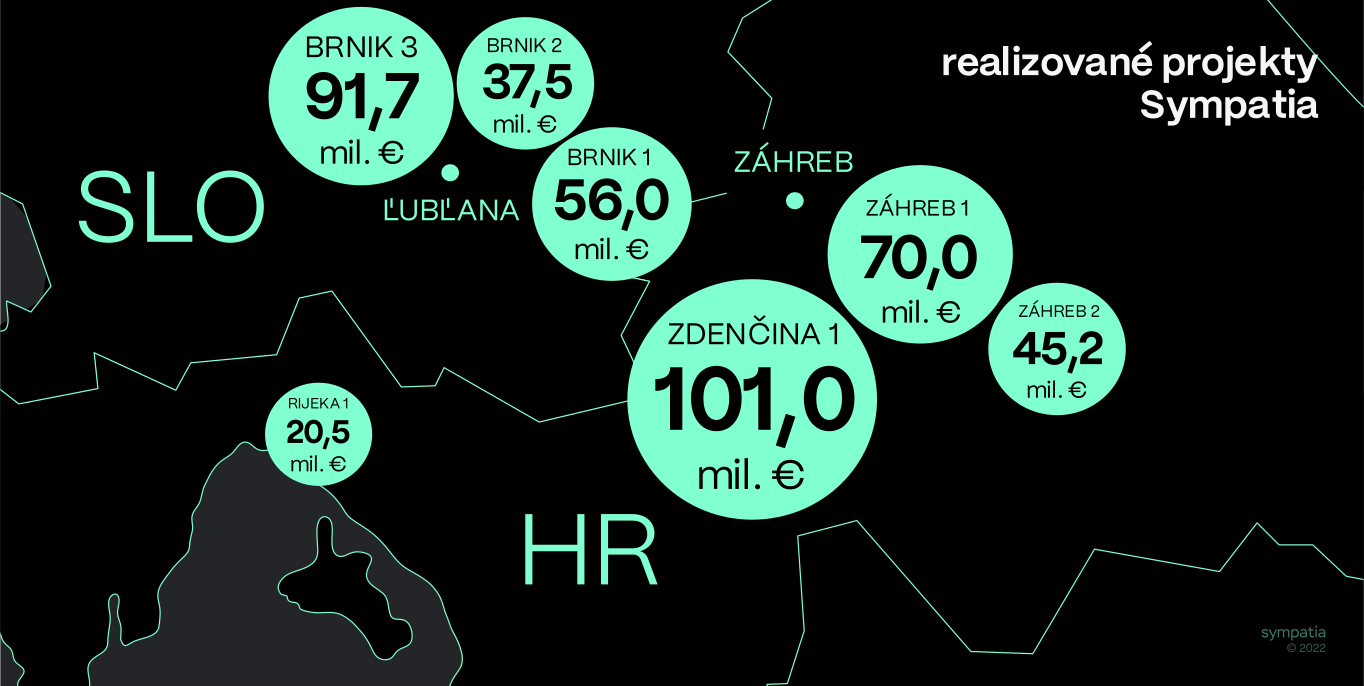
We currently have a number of ongoing logistics‑park projects, such as Zagreb 2, following the successful completion of Zagreb 1. Zdenična 1 is another Croatian project in a strategic location (close to a motorway and airport), and Rijeka 1 was developed in response to strong demand for logistics space near the customs terminal and port. Brnik 2 and 3 are expansions of the airport zone, where suitable undeveloped land for industrial construction is nearing exhaustion. All these projects boast state‑of‑the‑art logistics equipment and meet the strictest environmental standards. For an extended period, we have leased our warehouse space to multinational companies with the most exacting market requirements, which we meet without difficulty. The mentioned projects offer leasable areas ranging from 16,410 m² to 112,000 m² — equivalent to warehouse spaces up to the size of sixteen FIFA‑standard football pitches.
**Disclaimer: **
All texts, images, graphics and other objects contained in this document are protected by copyright and may not be copied, distributed, altered or provided to third parties without the prior written consent of Sympatia Financie, o.c.p., a.s. This document contains general information only. Sympatia Financie, o.c.p., a.s. does not provide professional advice or services by means of this document and accepts no responsibility for any loss arising directly or indirectly from any person relying on this document.