Meme stocks: A rare phenomenon or a new trend?
How to recognise a meme stock
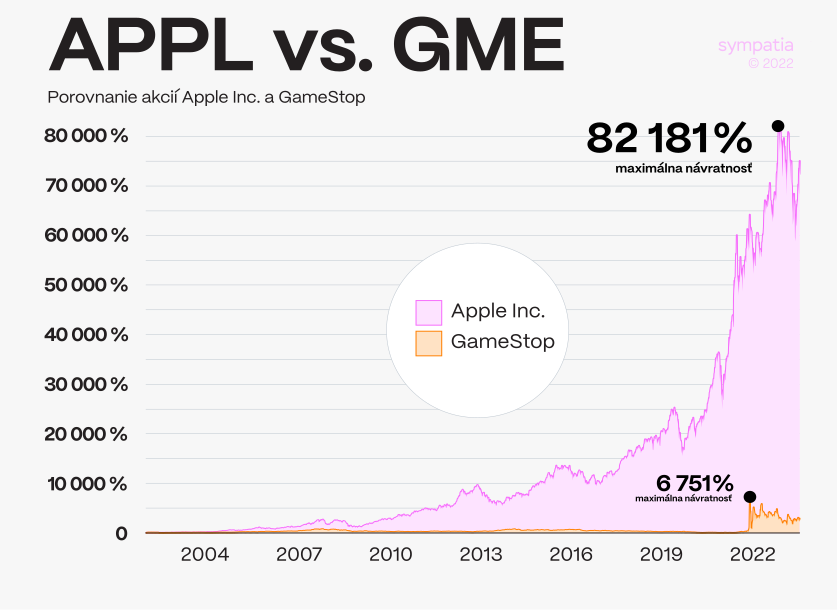
Stocks labelled “meme” typically display extreme price increases with little or no underlying fundamental support. The bestknown examples are GameStop (a videogame retailer) and AMC (a cinema chain). Both companies have largely stagnant or declining businesses and low prospects for a meaningful turnaround, which makes them archetypal meme stocks. People sometimes misuse the term and call anything that rises quickly a meme stock.
GameStop and AMC
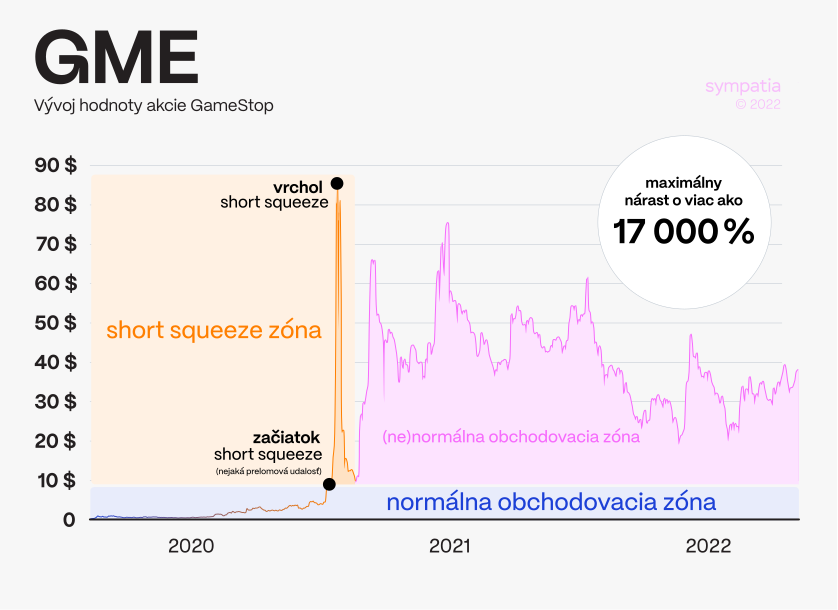
One of the most notable market stories involved GameStop and AMC. The saga began on Reddit, where a community of speculative investors formed the WallStreetBets forum. They focused particularly on heavily shorted stocks — shares that institutional investors had bet against, expecting further declines. The WallStreetBets community exploited this contrast and began buying GameStop and AMC shares in masse. Volatility around these names went through the roof and prices exploded. Institutional investors ultimately added fuel to the fire: forced buying to cover short positions led to a socalled short squeeze.
What is a short squeeze?
A short squeeze occurs when those who have shorted a stock rush to close their positions by buying shares, driving the market price far away from underlying fundamentals. Prices can jump by orders of magnitude. During the GameStop squeeze, the stock rose more than 17,000% from its pandemic low; AMC rose roughly 3,200%. These stocks today still trade at valuations that many consider unjustified.
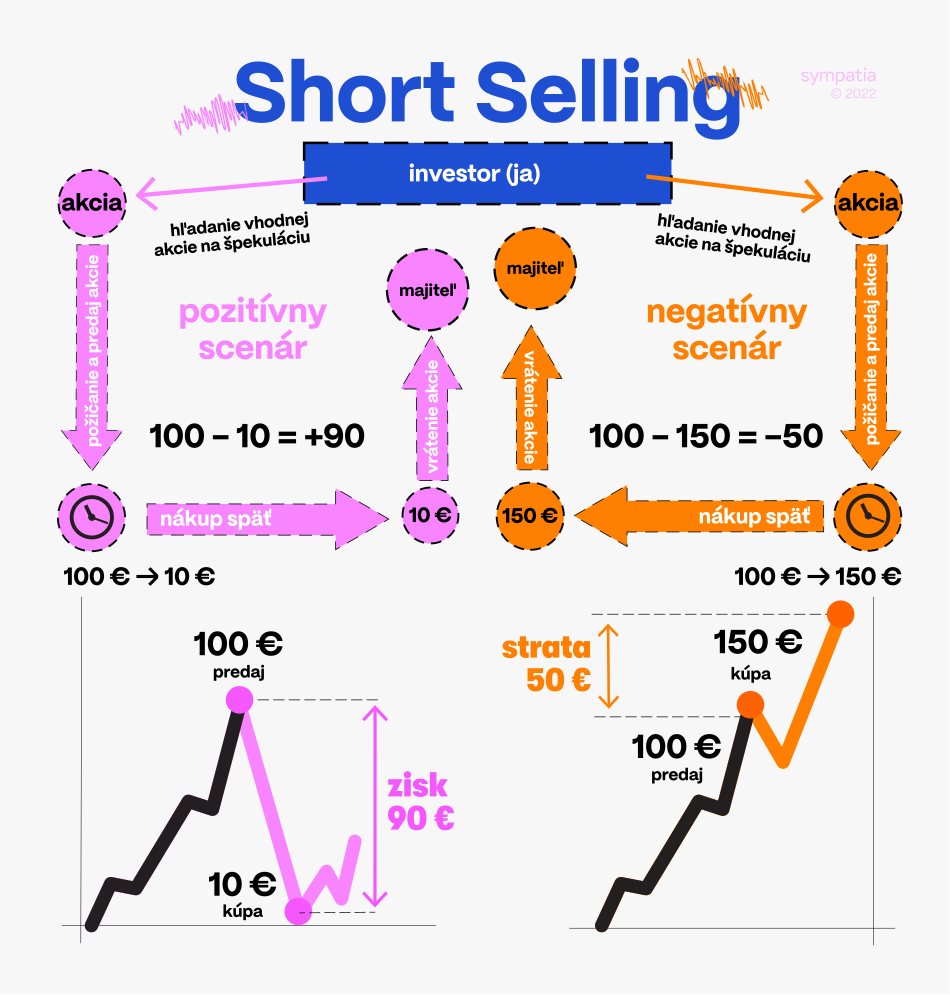
How does shorting work?
Profits can be made not only from rising stock prices but also from falling ones — this is shorting. An investor who expects stock XY to fall borrows shares (for a fee) and sells them immediately, hoping to buy them back later at a lower price. If the share falls, the short seller closes the position by buying the shares back and pockets the difference. But if the price rises instead, the short seller faces two choices: close the position at a loss (buying back at a higher price), or remain short and hope the price falls later. Losses can exceed the value of the trading account and, in extreme cases, be far larger.
Is everything that rose a meme stock?
Many stocks enjoyed strong runs, but not all deserve the meme label — even if they have since suffered steep losses. The market rode a wave of positivity and unprecedented fiscal and monetary stimulus. Rescue measures created valuations for some stocks that were hard to justify at the time. That said, this is not the same as GameStopstyle mania. Companies such as Apple, Amazon, Netflix, PayPal, Spotify, Zoom or Tesla are real businesses with revenues and often profits or credible growth prospects; they should not be dismissed as meme stocks. People have short memories: when markets rise, they credit skill, and when they fall, they look for someone to blame.
What about ARKK — is it a meme?
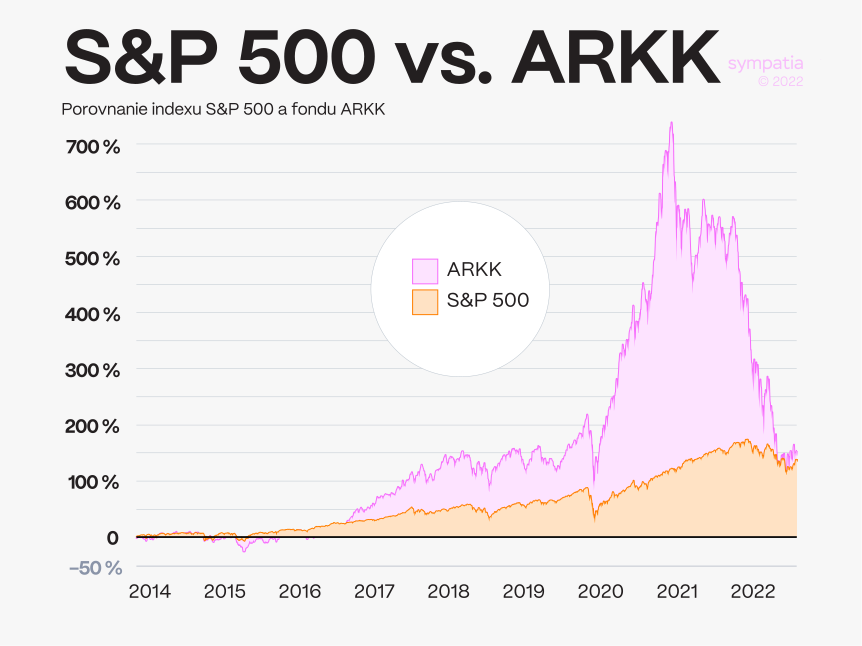
Some critics argue that Cathie Wood’s ARK Innovation ETF (ARKK) is full of memelike names; others say it invests in disruptive innovations that will shape the future. ARKK fell 23.38% in 2021, has lost 57.84% since the start of 2022, and surged 152.82% in 2020. The fund has seen strong gains in previous years (for example, +35.08% in 2019 and +87.34% in 2017), but its 2020 rise does not resemble the thousandsofpercent spikes seen in typical meme stocks. It is fair to say ARKK holds many speculative stocks that may either succeed spectacularly or fail completely. Today ARKK trades near its pandemic lows and some of the holdings’ valuations may look deeply discounted: ARKK’s pricetosales (P/S) ratio is about 5.6, below the fund’s longterm average of 6.85. Nonetheless, ARKK is a highly volatile, highrisk investment.
ARKK vs S&P 500
Despite its volatility, ARKK has outperformed the S&P 500 since inception: the fund is up 115.95% versus the S&P 500’s 88.39% over the same period. That said, investors who bought at the peak are presently down roughly 75% and rightly frustrated. Critics label the fund “meme” and predict collapse. This underlines the importance of dollarcost averaging and timephased investing: even promising strategies can inflict severe losses if bought at the wrong time. ARKK is primarily suited to professional or very risktolerant investors; inexperienced investors should be cautious. History shows speculative funds can and do collapse — ARKK may or may not be an exception.
Disclaimer
All texts, images, graphics and other objects placed in this document are protected by copyright and may not be copied, distributed, modified or provided to third parties without the prior written consent of Sympatia Financie, o.c.p., a.s. This document contains general information only. Sympatia Financie, o.c.p., a.s. does not provide professional advice or services through this document and accepts no liability for any loss arising directly or indirectly from any person’s reliance on this document.