AMC Mania and the Meme Stock Phenomenon

The current wave of market mania centered on “meme stocks” strongly resembles the episode from late January (focused on GameStop, the struggling brick-and-mortar video game retailer). This time, however, the spotlight has shifted to AMC Entertainment, a loss-making cinema chain. Retail investors, or more accurately speculators, congregating on Reddit have pushed AMC shares up by more than 500% in just a few days. Compared with the beginning of the year, the stock is up by almost 3,000%.
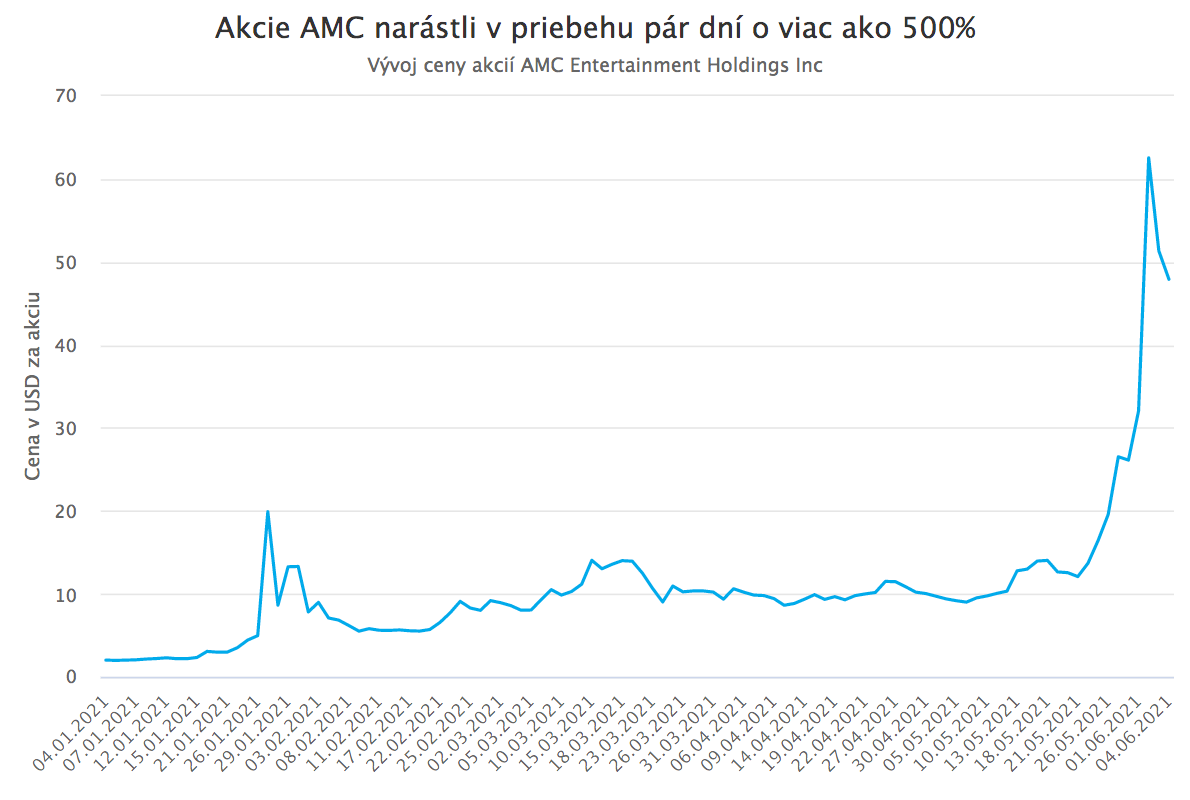
Just Another Meme Stock
As with GameStop and other meme stocks, AMC’s explosive rally has little to do with the company’s current condition, outlook, or fundamental value. The company itself underscored this point by taking advantage of the inflated share price to issue new stock, while also (unsuccessfully) warning investors against buying at these levels:
“We believe that the current volatility and market prices of our Class A common stock reflect market and trading dynamics unrelated to our underlying business, or macro- or industry fundamentals, and we do not know how long these dynamics will last. Under these circumstances, we caution you against investing in our Class A common stock.”
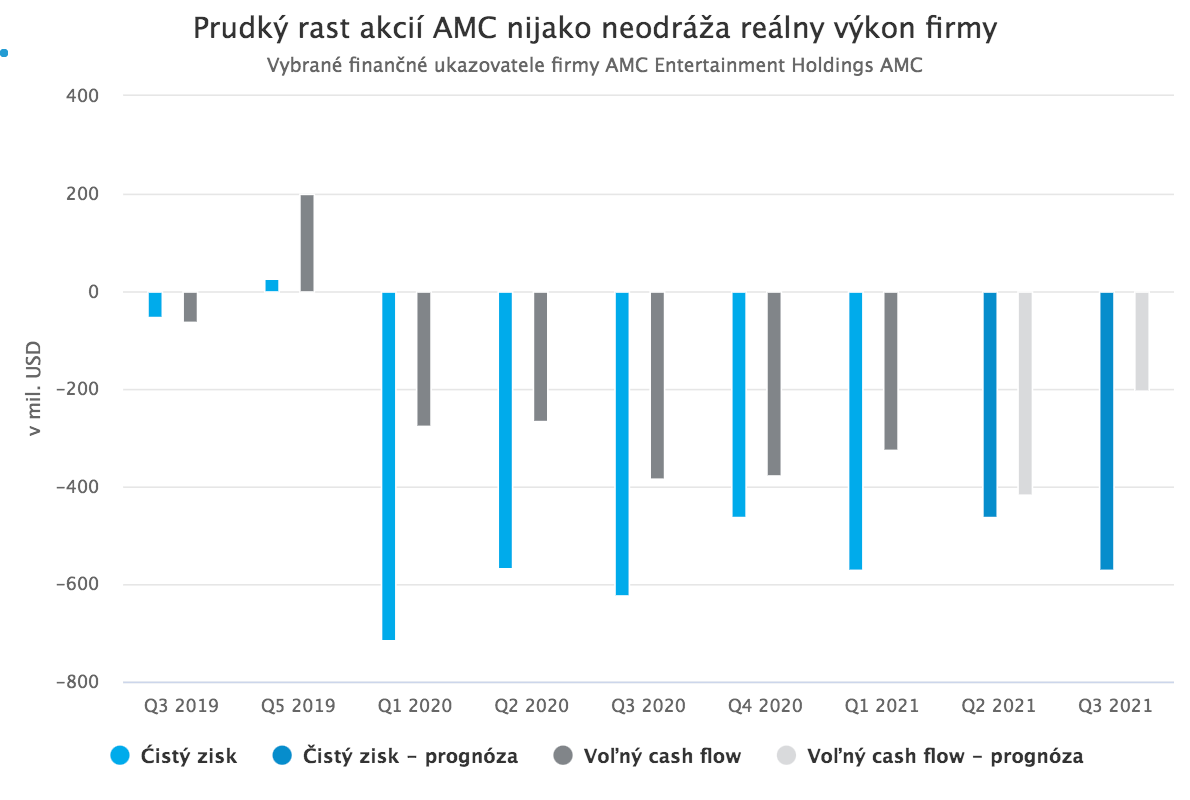
AMC shares have risen primarily because the company is popular among younger social media users and is widely viewed as a meme stock. At the same time, large hedge funds have been betting against it through short positions, given the company’s weak prospects. Retail traders organized around the r/WallStreetBets community on Reddit therefore began aggressively “pumping” the stock in late May, aiming both to inflict losses on short sellers and to profit themselves.
Small investors have learned that coordinated buying, amplified through social media, can temporarily drive up the share prices of relatively smaller companies such as AMC. This effect has been particularly pronounced since many retail traders, over the past year, have become adept at using the options market to accelerate price moves. Buying out-of-the-money call options with near-term expiries can force dealers, via gamma hedging, to purchase the underlying shares, further reinforcing upward momentum. Professional investors have also recognized this pattern and, not infrequently, join in. Those who enter early and exit in time can earn substantial gains. Those holding short positions, by contrast, can suffer severe losses during these spikes.
Who Outplays Whom
The media and many participants often frame such coordinated campaigns as a heroic struggle of small investors banding together to protect beloved companies from “Wall Street predators” while “beating the system.” Reality is more complex. Large investment funds shorting such stocks do often incur losses. Unrealized losses among funds betting against AMC exceed USD 2.5 billion. Yet another group, often larger, of funds and professional investors profit from this dynamic, while the “hot potato” frequently ends up with retail traders who entered too late.
It is also not clear who initiates these episodes. Retail traders may participate enthusiastically, but the anonymity of social platforms makes it impossible to determine whether the first impulses are spontaneous or the result of a deliberate, sophisticated campaign by a larger player. In any case, once the meme stock phenomenon emerged, many professional investors and hedge funds identified it as an attractive opportunity and developed sophisticated strategies to monetize the volatility, typically far more efficiently than retail traders. Brokers benefit as well. Companies whose shares experience such surges often exploit the moment to issue new stock at inflated prices. AMC has repeatedly done so in recent days, raising tens of millions of dollars in cash, despite warning investors against buying at current prices, and even offering free popcorn to shareholders.
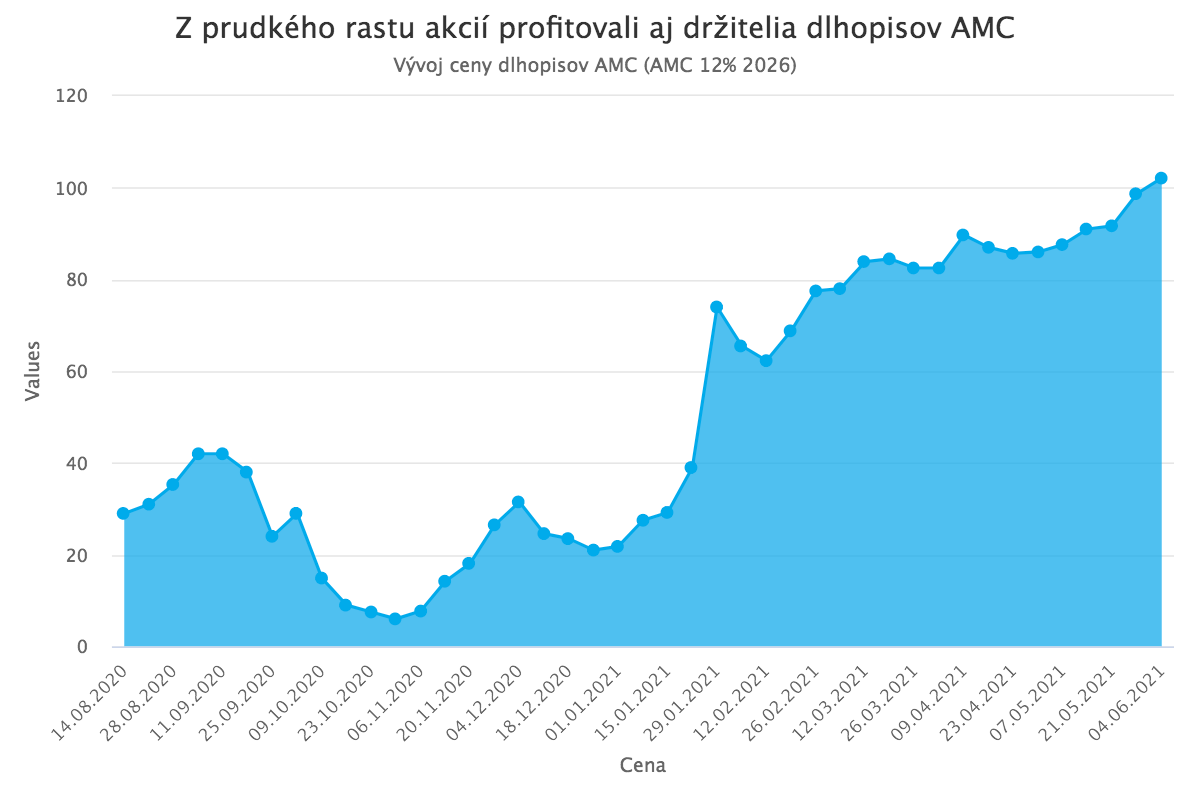
Given AMC’s (pre-issuance) strained financial position and uncertain outlook, the main beneficiaries of newly raised equity capital are likely creditors and bondholders, who have senior claims on the company’s assets in any liquidation scenario. This group consists largely of hedge funds and private equity firms. AMC bonds, which traded at only a few cents on the dollar late last year, have recently climbed back toward par as equity issuance at elevated prices has improved the company’s liquidity outlook.
The Spillover of Speculative Waves
As with other meme stocks, AMC’s share price is likely to fall back after several days of intense buying. However, because capital raised through equity issuance materially improves the company’s financial position, the stock may not return to prior lows and could settle at levels still meaningfully above the original base. Timing is therefore critical: one must enter early and, even more importantly, exit on time. Those buying only once the mania is in full swing risk substantial losses once the momentum reverses.
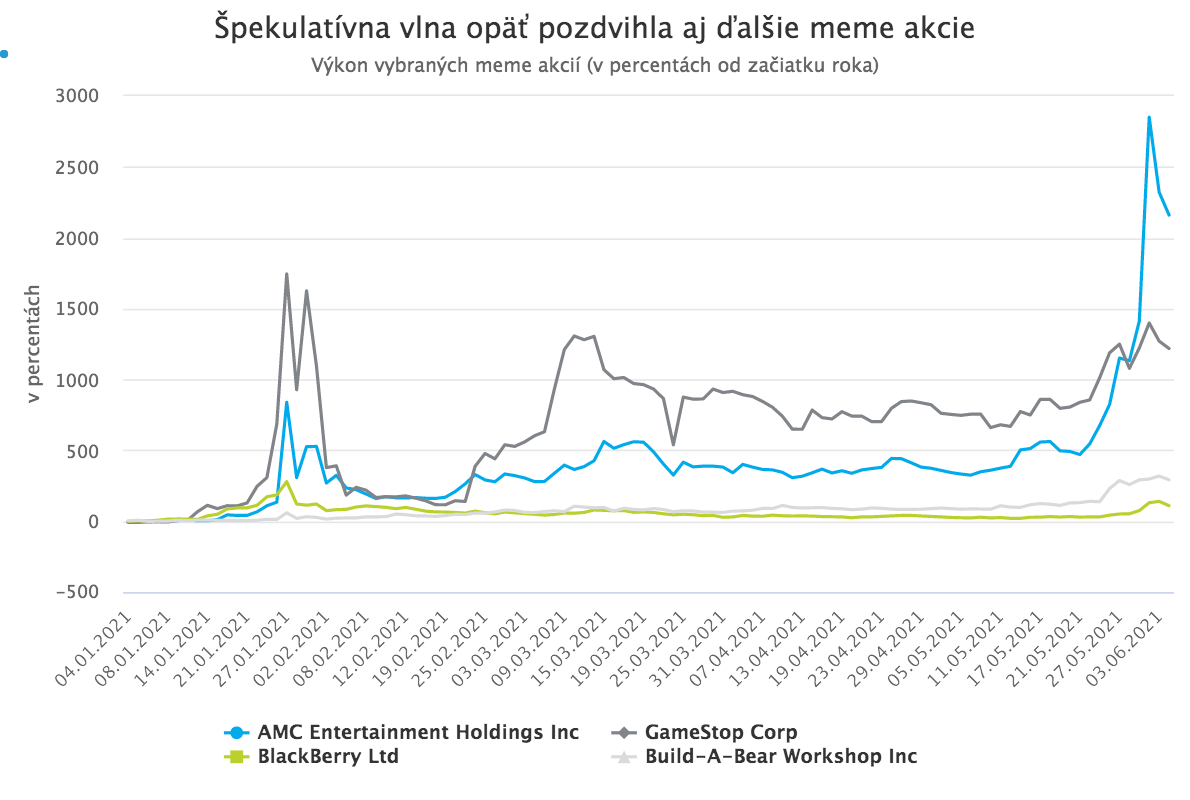
Notably, as AMC’s rally attracted media attention, other meme stocks began to rise as well, albeit less dramatically, mirroring the spillover observed during GameStop’s January surge. After a few days, momentum typically rotates from one meme stock into others in an attempt to replicate the “success.” Beyond AMC and GameStop, such stocks have included Blackberry, Tootsie Roll Industries, and Build-A-Bear Workshop.
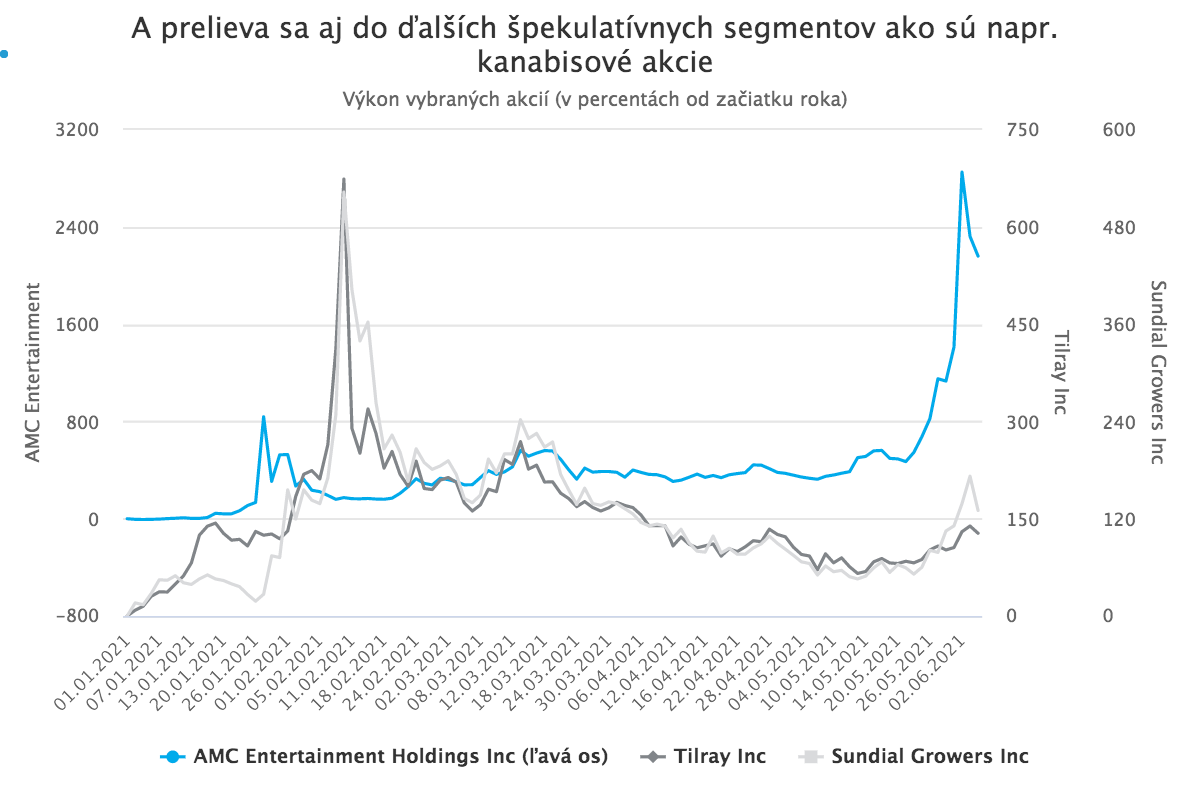
From meme stocks, speculative interest often spills into other market segments, such as cannabis stocks, and it is closely linked to speculative waves in cryptocurrencies.
Investing or Gambling?
Sharp rallies followed by rapid declines in meme stocks and similarly speculative assets first appeared on a larger scale during the past year, after the outbreak of the pandemic. The pandemic struck at a moment when U.S. brokers were engaged in a fee war paired with aggressive marketing, attempting to attract younger users with trading apps designed to make investing feel like a game. Trading became increasingly cheap and accessible. At the same time, lockdown measures created more free time, and many people who enjoyed sports betting and casino gambling looked for alternatives when sporting events were canceled and casinos shut. “Betting” on financial markets became a natural substitute.
Many brought the psychology and strategy of sports betting into equity markets. Rather than seeking steady returns with risk control, they deployed small amounts of capital into highly risky stocks (or options) of distressed companies or other assets of questionable intrinsic value, hoping for outsized payoffs if prices jumped, either by chance or as a result of coordinated pumping. Short-lived manias like GameStop in January or AMC now will almost certainly recur in coming months. With strong timing, luck, and disciplined exits, such episodes can generate large one-off gains. But as in gambling, losses are more frequent, outcomes are unpredictable, and risk is exceptionally high. Meme stock “investing” is therefore better suited to those seeking adrenaline and excitement than to those pursuing long-term, stable wealth accumulation with low risk.