Tensions in Ukraine Add Fuel to the Fire in Financial Markets
The world is also struggling with high inflation and a slowing global economy. This has been caused by the pandemic, the enormous amount of liquidity provided by central banks to the economy, and the energy crisis. The IMF, the International Monetary Fund, has recently revised its outlook for global economic growth for 2022 and now expects growth of 4.4%, which is a reduction of 0.5 percentage points. Likewise, the IMF revised its outlook for global economic growth for the following year from 3.6% growth to 3.8% growth, signaling an expected improvement in the situation in 2023. The worse outlook for the current year is driven by still persistent inflation and the pandemic. The IMF therefore assumes that problems in the economy will fade significantly later than it originally expected last year. Into an already tense situation comes geopolitical tension that could escalate into an armed conflict. This would cause significant economic and political impacts on Europe. No one even wants to imagine such a scenario, as the developed world had assumed that no conflict of this scale and type would occur in Europe. Let us hope that the whole world still remembers history and will not repeat its mistakes.
Ukraine has already experienced a smaller armed conflict in recent history; what impacts did it have on the economy?
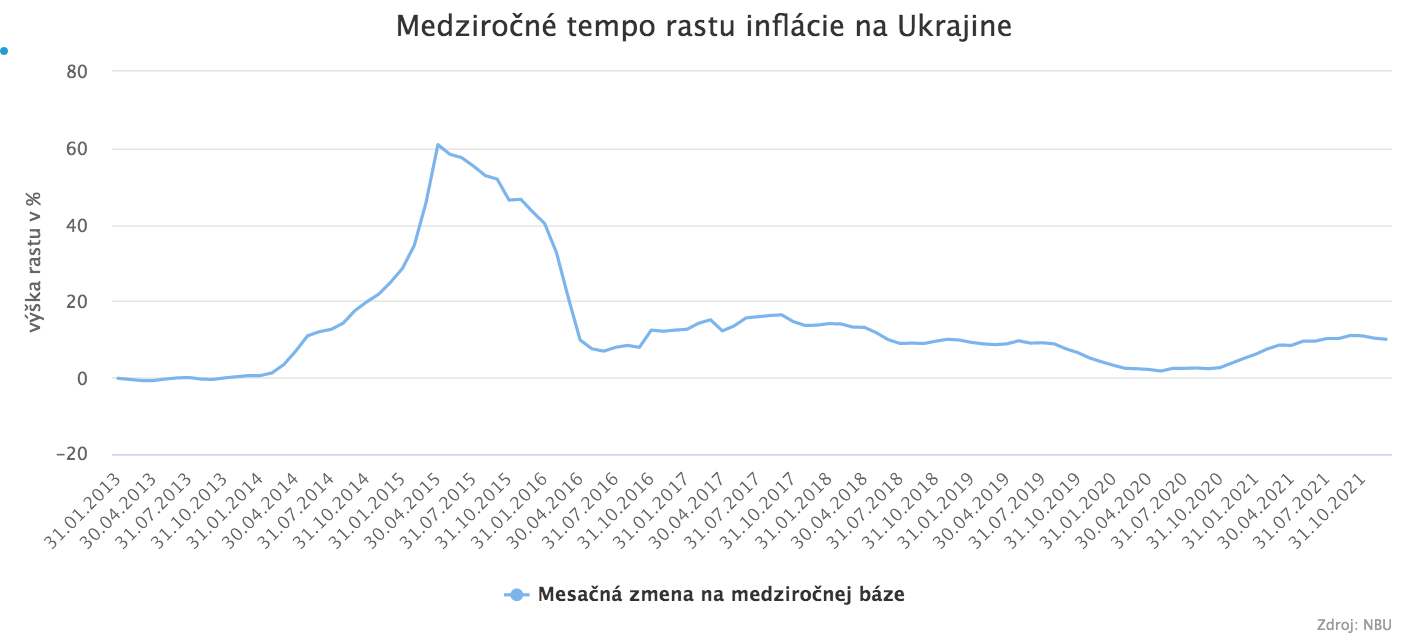
Our eastern neighbors already experienced the Crimea crisis in 2014, when Russia annexed the peninsula. Chaos then spread in Ukraine, and the economy suffered to an extent that we can hardly imagine today. Inflation in the country reached more than 60%, which is totally devastating for citizens’ savings and means a significant erosion of their value. In that period, essentially the entire consumer basket rose in price, as the country fell into chaos and panic. The US and the EU are currently fighting with moderately elevated inflation in the range of 5% to 7%, and even this level is already perceived as a major threat.
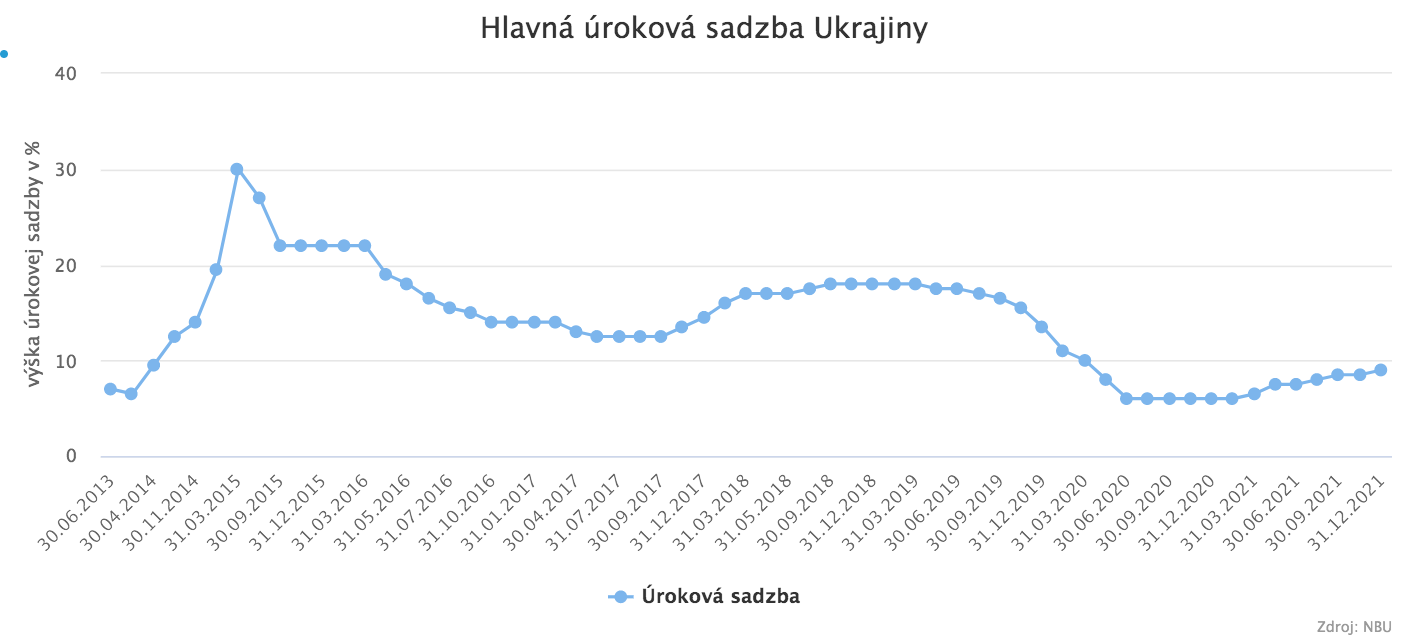
The natural reaction of central banks to high inflation is to raise the main policy rate immediately. Ukraine was no exception and the National Bank of Ukraine acted rationally. It began responding immediately to rising inflation by raising the policy rate, which at its peak reached as high as 30%. Such a level is again difficult to imagine in the developed world, as it would immediately push most of the indebted population into financial difficulties. The reason is the pass-through of these rates into loans, which would immediately cause an economic recession.
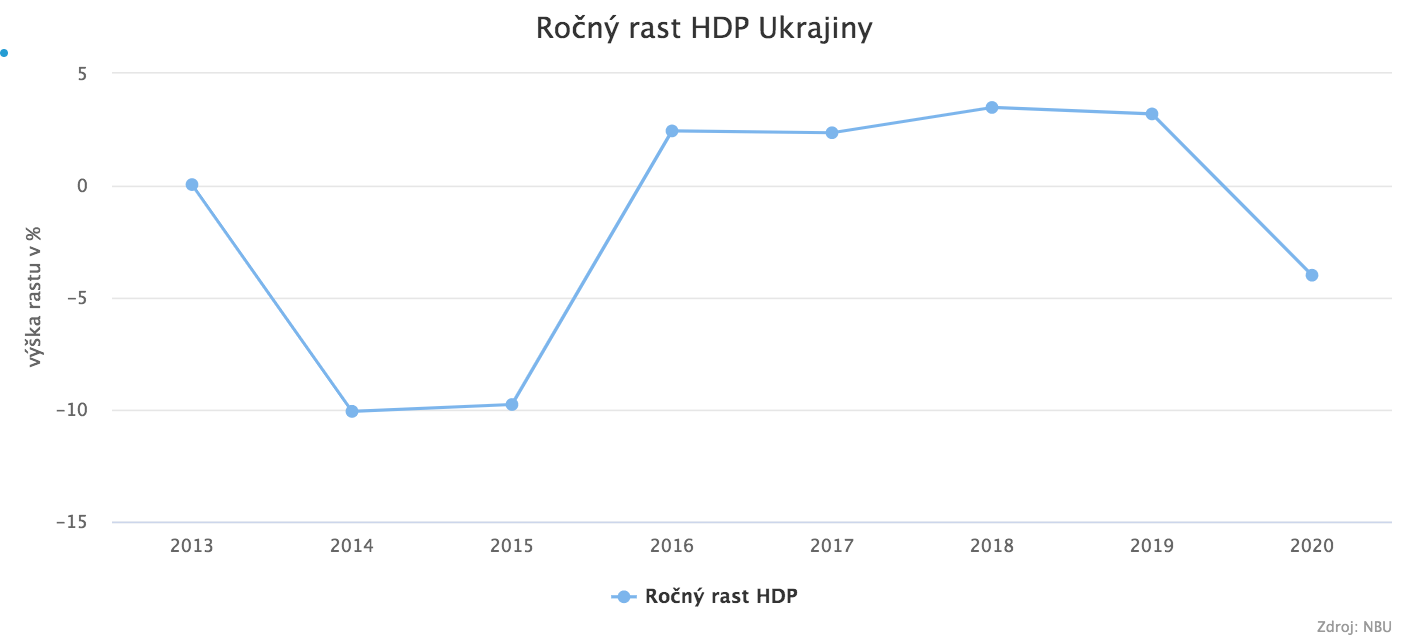
The above-mentioned inflation significantly reduces the purchasing power of the population and confidence in the domestic currency and its stability. The domestic currency thus is no longer suitable for holding savings or for international trade. The country then loses its ability to import foreign products, which we can observe in the strong swing in the EUR/UAH exchange rate, where during the conflict the Ukrainian currency weakened against the euro by more than 200%. Such exchange-rate risks are not acceptable for investors or entrepreneurs, which immediately limits imports from abroad. In a country thrown into such a situation, recession did not take long to arrive. The decline in Ukraine’s economic growth in this difficult period reached 16%. By comparison, the pandemic hit Ukraine’s economy with a decline of 11.2%. For Ukraine’s economy, this period was therefore significantly more challenging than today’s pandemic-related economic situation.
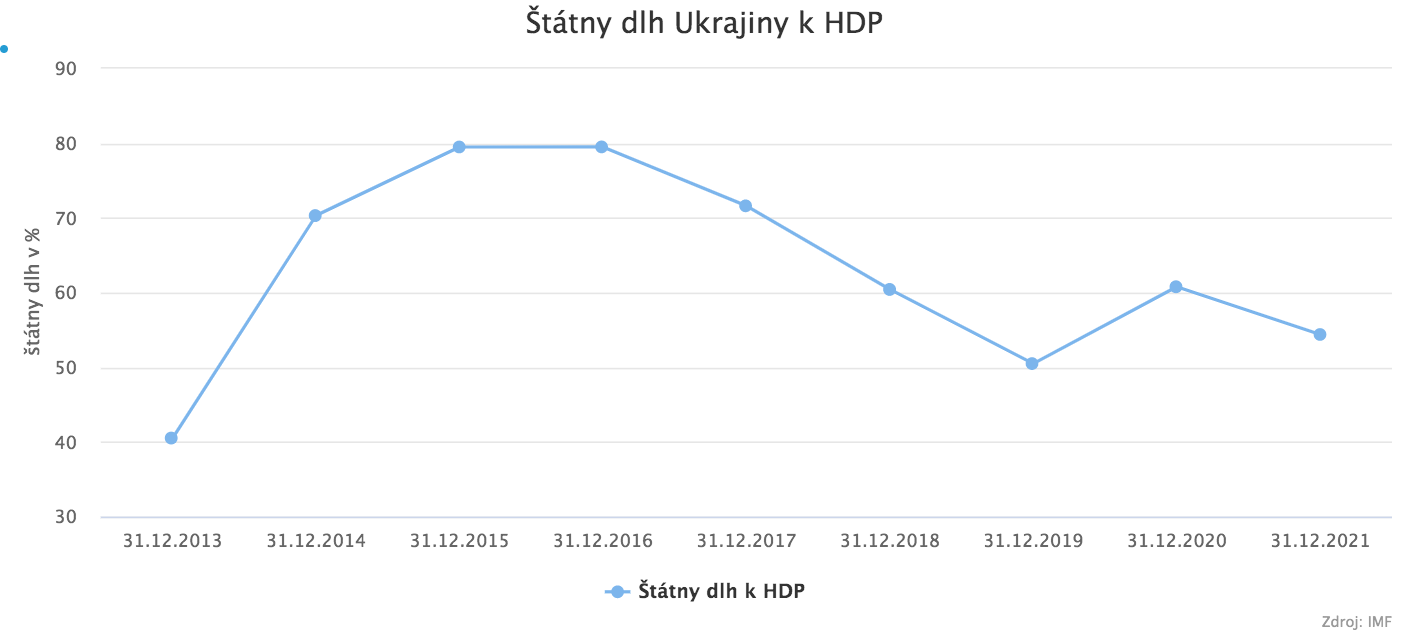
To manage this difficult situation, Ukraine had to significantly increase its government debt, which rose by more than 40% due to the conflict. This step naturally worsened Ukraine’s starting position for future crises. Thanks to international assistance, however, Ukraine managed to reduce its debt by as much as 30 percentage points.
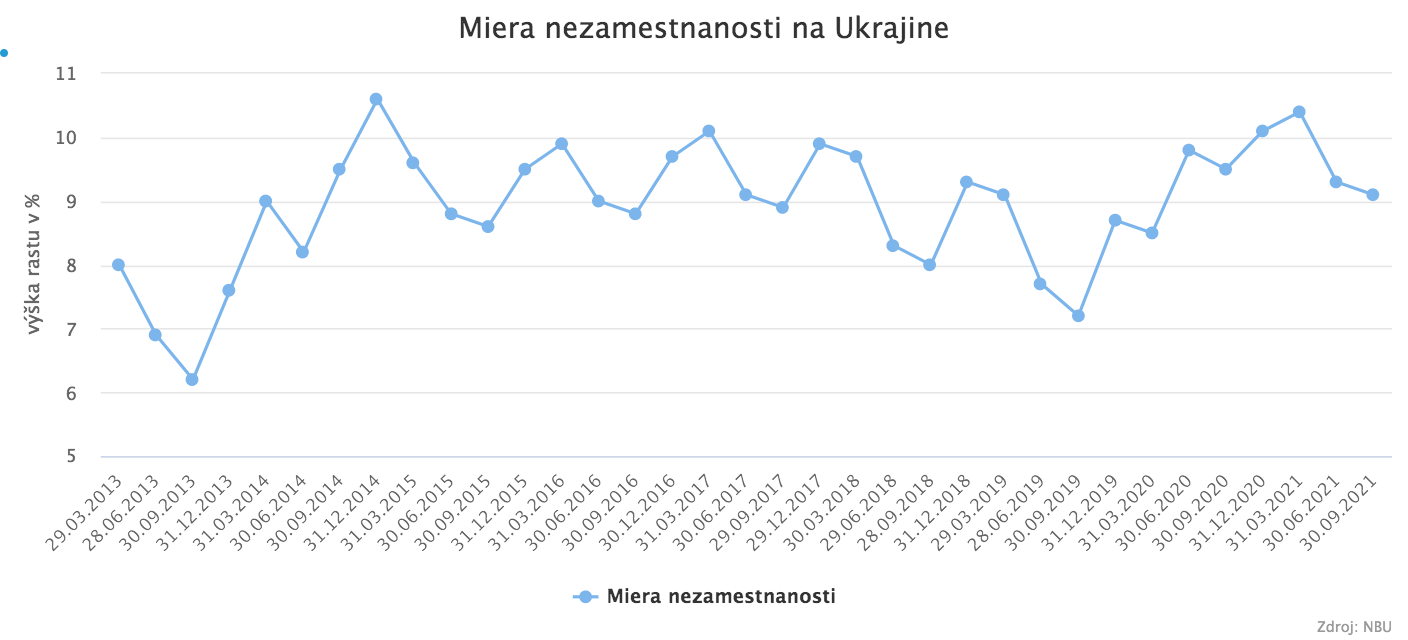
The unemployment curve also did not go unnoticed. It increased by approximately 4 percentage points, which is a substantial figure for a country with more than 45 million inhabitants. Subsequently, the country began to succeed in reducing unemployment. The arrival of the pandemic, however, was another blow.
What does the current situation look like?
Tensions in Ukraine have been escalating day by day, and opinions differ as to whether an armed conflict will occur. Many military analysts agree that a potential attack on Ukraine would cost Russia too high a price. If an attack were to occur, it would likely take the form of disrupting the functioning of strategic points in Ukraine, rather than taking control of the entire territory. Russia would thus hold Ukraine hostage in negotiations with the West. The West rules out a military presence in Ukraine even in the event of an armed conflict. At the same time, it warns Russia that the response to a potential armed conflict will be significant economic sanctions against Russia. The US President has even spoken about sanctions against the Russian President himself. Such sanctions would not contribute to global economic growth; on the contrary, they would significantly worsen the situation.
What impact on the economy and financial markets should we expect?
Markets have to some extent already priced in a potential conflict in Ukraine; however, they have not priced in a conflict extending beyond Ukraine’s borders, since almost no one considers that scenario. The reason is clear statements from the West that it does not plan to become militarily involved in the conflict. This is truly a positive signal that does not further raise already high tensions. It adds, however, that Russia will not avoid economic sanctions, which could deter Russia from a potential attack. Sanctions could be truly severe in the event of a broad attack on Ukraine, and would be economically very painful for Russia. Several voices from the West further add that economic sanctions should not apply to the energy sector, since Russia is a strategic supplier of oil and gas for Europe. It is necessary to add, however, that energy companies are currently preparing for such a possibility and are negotiating alternative energy supplies to the EU. Russia itself also assures that it is a stable partner for the EU on energy issues.
Ukraine would, from an economic and political perspective, face at least a similar scenario as during the Crimea crisis. After an economy already tested by the pandemic, this would have a devastating impact on Ukraine, and the situation would probably be significantly more negative than in the case of Crimea. The reason is the theoretical disruption of all strategic points in Ukraine, which would paralyze not only the entire economy but also society. In such a case, we can expect a refugee crisis toward Poland, Romania, and Slovakia. The EU must prepare for this preventively, and therefore NATO is strengthening its positions in the eastern countries of the alliance. In addition, relations between the West and the East would reach a deep freeze, and no one desires such an escalation. Let us therefore hope for the fastest possible resolution of the situation through diplomatic channels.