Development of property and rent prices in the EU
Where did property prices rise fastest between 2010 and 2021?
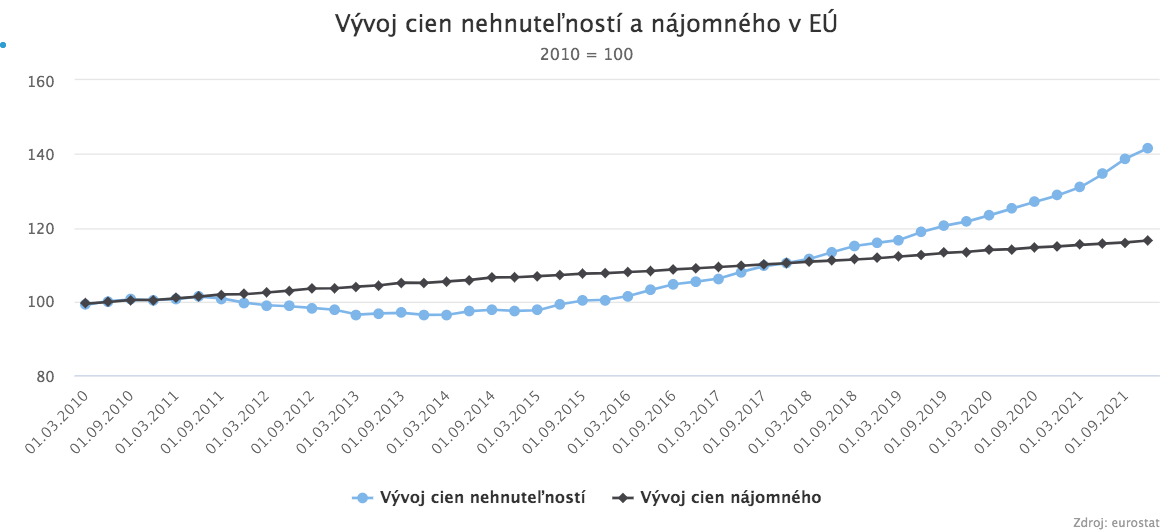
Property owners in Austria, the Czech Republic, Hungary, Estonia, Lithuania, Latvia, and Luxembourg can be pleased, as the prices of their homes and apartments likely doubled. Estonia not only holds the top spot in property value growth, but also in rent growth. Rental income rose so quickly that it even outpaced the growth in property prices. Rents in Estonia increased by 171% between 2010 and 2021, while property prices rose by 156%. Countries where rents grew faster than property prices also include Lithuania, Ireland, Finland, Romania, Spain, and Italy. Countries like Greece and Cyprus are specific cases, as they are dealing not only with falling property prices but also with falling rents. In Greece, rents fell more than property values. By contrast, in Italy, property prices declined while rents increased. This raises the question of why property values did not rise (or even fell) in some countries, while in others they enjoyed double-digit growth. The main reason is likely that the countries mentioned contributed most significantly to the EU debt crisis. This resulted in economic stagnation and high unemployment. Economic problems in these countries partly persist to this day. The most serious issue is primarily high youth unemployment, which ranges between 20% and 30%. In addition, these countries still have weak economic growth and high debt, not to mention stagnation or even a decline in living standards, since wage growth has largely stopped.
How did real estate perform in Slovakia?
According to Eurostat, prices rose by 68.71% over the same period. Compared to our neighbors, this is not the dramatic growth that some parties constantly warn about when they talk about a real estate bubble. Potential buyers often wait for years for property prices to fall, and in the end a specific apartment or house may become 100% more expensive. Speculating on a decline in housing prices does not pay off too much, because in the long run, property prices in a prospering economy grow. Another argument for continued growth is still-low interest rates, which likely will not rise to the levels seen in the Czech Republic, Hungary, or Poland. So far, these countries have only managed to slow their economies through higher interest rates, without solving inflation. At the same time, their price levels are higher than in the euro area or in Slovakia. The disproportionate intervention of these central banks, which keep interest rates around 5%, will likely be assessed as a mistake. This was also pointed out by the NBS vice governor, Ľudovít Ódor. The ECB currently keeps its key interest rate at 0%, and one increase to 0.25% is forecast for this year. It should be noted that real estate is considered an inflation-hedging asset, and therefore it largely protects its owners from the erosion of financial resources. That is why many Slovaks invested in residential projects as well as commercial real estate. With hindsight, this step appears to have been correct, and the growth in property prices fully covers today’s high inflation.