How has Slovakia changed since joining the EU?
Of course, nothing changes overnight and everything takes time. Membership has brought us countless advantages. For example, we gained access to the EU labor and trade market, we are part of the euro area (our entrepreneurs do not suffer exchange-rate losses within the euro area), consumers enjoy previously unseen legal protection, high roaming charges for calls within the EU were abolished, we have cheaper banking, our students study abroad (Erasmus), we receive EU funds, and many other benefits.
Key figures
Between 2004 and 2020, Slovakia received €29.5bn from European Structural and Investment Funds. In addition, we continue to receive more from the EU budget than we contribute. Thanks to these incentives, we renovated and built almost 2,250 km of roads, supported more than 940 research projects, helped 157,000 people gain access to higher-quality water and sewage networks, and Erasmus+ enabled approximately 40,000 university students to study abroad. Our membership also serves as an invitation for foreign investors, and around 90% of foreign direct investment comes from member countries. Consumer rights are unified across the EU, and purchased goods come with a two-year warranty. These are just a few important and specific changes that took place thanks to EU support.
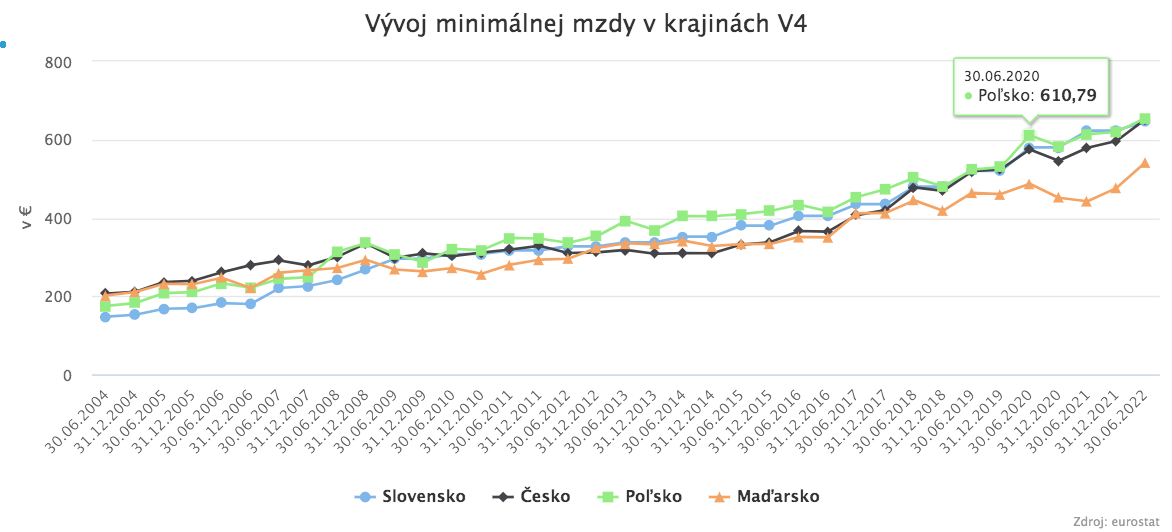
Development of the minimum wage in V4 countries
The minimum wage in Slovakia increased by 337%, while over the same period it rose by 32% in France. The other V4 members also did well: the Czech Republic improved by 215%, Hungary by 168%, and Poland by 273%. In real terms, meaning after taking inflation into account, Slovakia saw an increase of 100%. France recorded a real increase of 13%. Looking at the average wage, Slovaks improved by 108% nominally and by 51% in real terms.
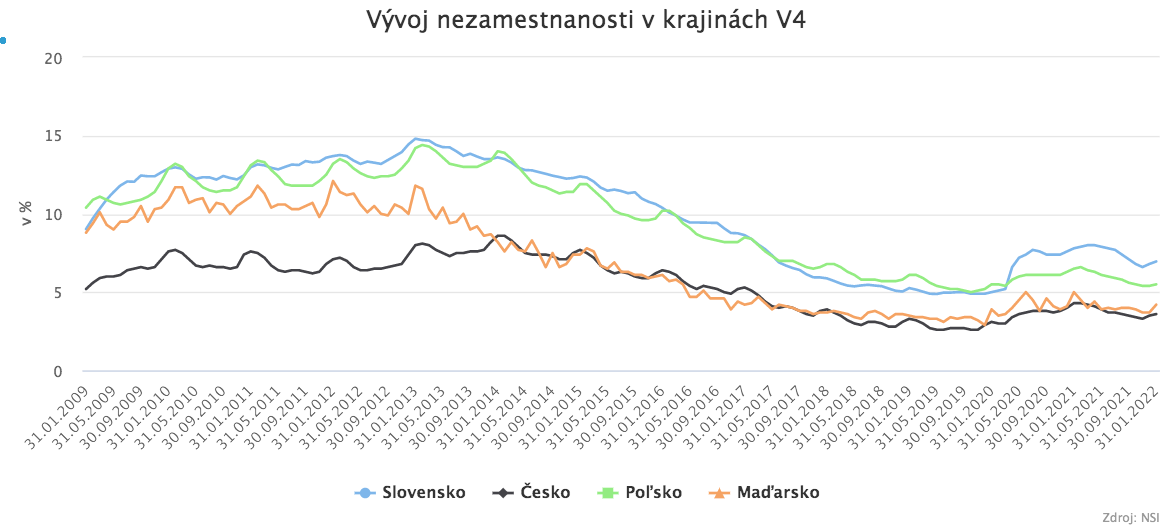
Unemployment in V4 countries
Before joining the EU, Slovakia suffered from high unemployment at 16%; the Czech Republic had almost 10%, Poland as much as 20%, and Hungary only 6%. Today, these countries rank among those with the lowest unemployment rates, largely helped by EU membership. Slovakia currently has unemployment around 7%, Poland 5.5%, Hungary 3.8%, and the Czech Republic 3.5%, which is the lowest unemployment rate in the European area.
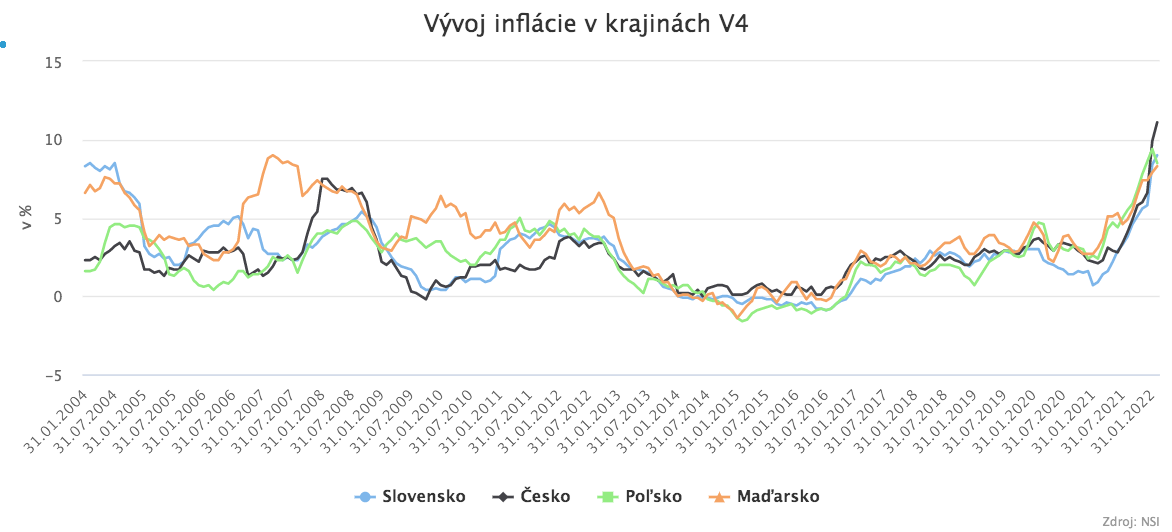
Inflation pressures were not uniform
The coronavirus pandemic caused several economic damages that later contributed to rising inflation. For this reason, Slovakia and Hungary today have similarly high inflation as they did when joining the EU. In our case it was more than 8%, and for Hungary almost 7%. The Czechs and Poles had lower inflation than today, at around 2%. Currently, the situation is unfavorable, and compared to 2004 the entire V4 bloc has a higher price level. So today, prices are generally higher than they were in the previous decade, and the war in Ukraine is adding fuel to the fire.
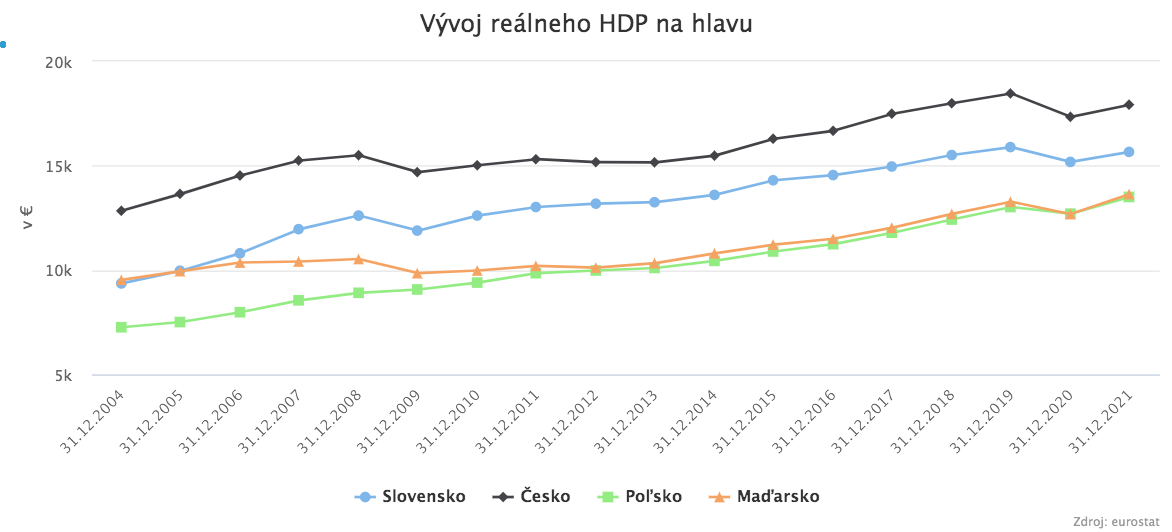
Real GDP per capita
The V4 group truly belonged among the fastest-growing economies, as evidenced by the growth of real GDP per capita. For Slovakia, it was an increase of 67% since accession; for the Czech Republic 39.5%; for Poland 85%; and for Hungary 43%. The German economy is the largest in the EU and yet it grew much more slowly, gaining “only” 20%.
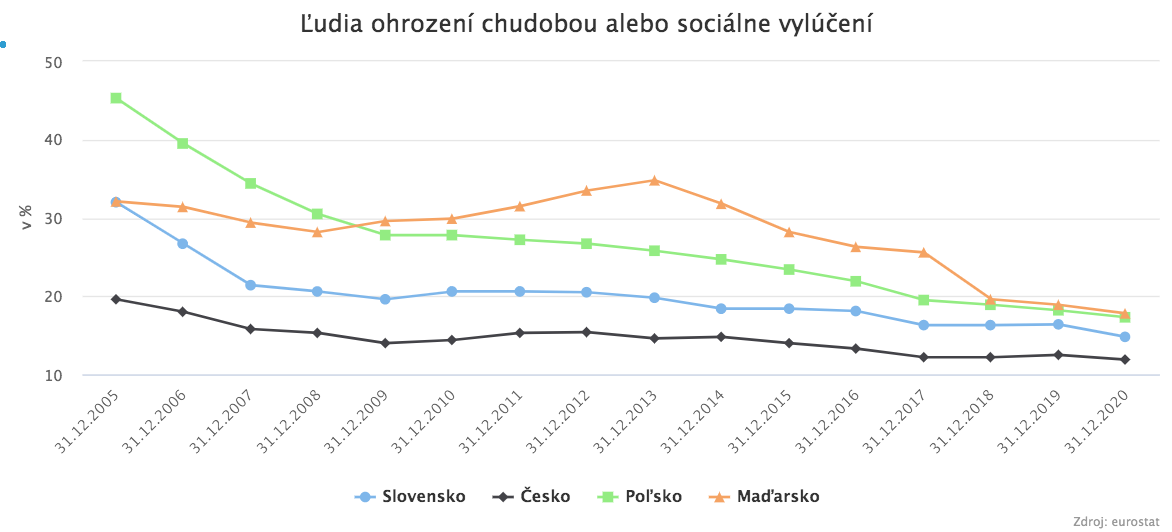
People at risk of poverty or social exclusion
We improved significantly in this indicator as well. From 2005 to 2020 (since data is available), the share of people at risk of poverty decreased from 32% to 14.8%. In Poland, the difference is even more striking, improving from 45.3% to 17.3%; in Hungary from 32.1% to 17.8%; and in the Czech Republic from 19.6% to 11.9%. This is a very important element that clearly confirms the right direction of the V4 within the EU. Again, for comparison, the situation worsened in Germany during this period, rising from 18.4% to as much as 24% at risk today.
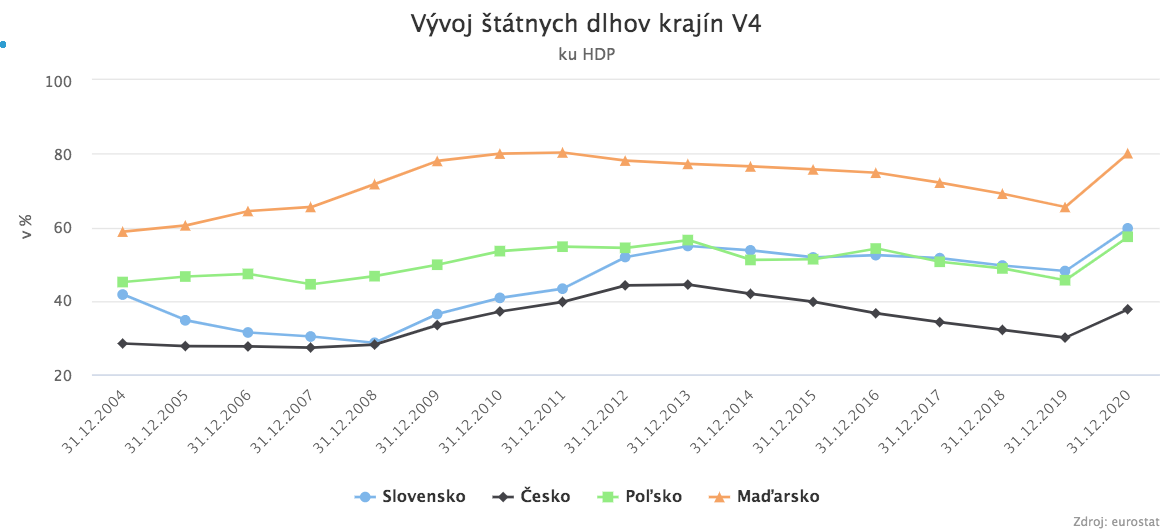
Debt of V4 countries relative to GDP
Public debt increased in absolute terms, but with economic growth it did not change dramatically as a percentage. Since accession, Slovakia’s public debt-to-GDP ratio increased by roughly 20 percentage points, in the Czech Republic by 10 percentage points, in Hungary by 20 percentage points, and in Poland by about 10 percentage points. Without the COVID crisis, V4 countries’ debts would be at very similar levels as at the time of joining the Union. Overall, indebtedness increased worldwide because the pandemic hit the global economy. According to the latest available data, OECD members have an average debt-to-GDP ratio of 94%.
A long road ahead
Even though we have made significant progress and our living standards have risen, we still have a very long road ahead if we want to catch up with the best. Much more could have been done in Slovakia, and today we could be in a much better position, but we must learn from history and look to the future. Further growth will require many reforms focused on the business sector and restarting the economy. Politicians should understand that only by attracting foreign investment, and therefore foreign capital, can our living standards improve. We also need to focus on reforms in education and healthcare, because only a healthy and educated nation can prosper in the long term.