Property Prices: Real Estate Bubble or Reality?

Date created: 25 August 2022
Many people asking whether to buy property today—whether for living or for business—are worried about one question: is this a real estate bubble? Some have been hesitating for years while prices kept rising by tens of percent. Others have only recently entered the market and are haunted by articles warning of a bubble.
Real estate bubble?
You can find many pieces confidently asserting we are in a nationwide housing bubble. Broad, sweeping claims like that are easily dismissed: real estate markets are highly heterogeneous, with differences not only between regions but between neighbourhoods within the same city. People who predict “apocalyptic” outcomes whenever prices rise tend to be wrong most of the time—until, by chance, they are right once.
Available data do not point to a bubble comparable to the U.S. housing bubble that preceded the 2008 financial crisis. Property prices are determined by many variables: mortgage and loan interest rates, land and construction costs, location, supply and demand, wages, rents, and numerous other factors. The mere fact that something is expensive to someone is largely irrelevant unless you consider the full set of price drivers.
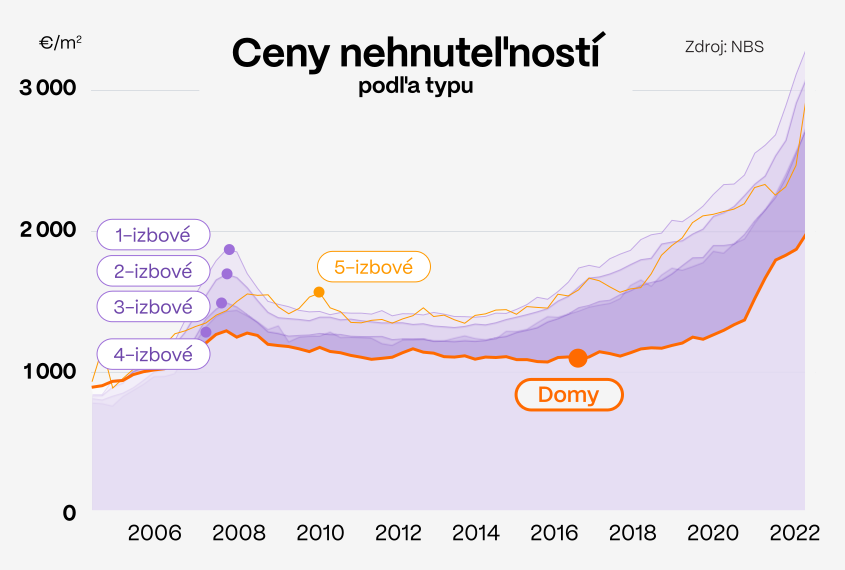
For perspective: during the 2008 crisis, Slovak real estate prices fell on average by 27.5% over several quarters. Even if someone had purchased at the 2008 peak, after that correction they would still have a roughly 42% gain today—about 2.5% per year—while the 10-year average return for residential property is about 3.1% annually. Do such returns really constitute a bubble?
Moreover, 2008 was primarily a financial and debt crisis that affected property markets, not a pure property bubble. Today’s situation is different: the global economy faces a commodity shock amplified by the war in Ukraine. In such crises many investors seek conservative, stable assets that preserve value over the long term—one of the traditional strengths of property.
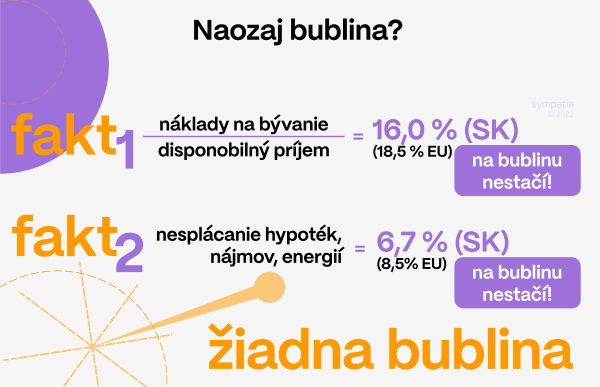
A housing bubble would also show up in housing costs relative to disposable income. The EU average share is about 18.5%; in Slovakia it’s around 16%. If a bubble were present, we would expect widespread mortgage or rent payment defaults—yet only 6.7% of Slovak households report difficulties paying housing costs, below the EU average of 8.8%.
Why did Slovak property prices rise?
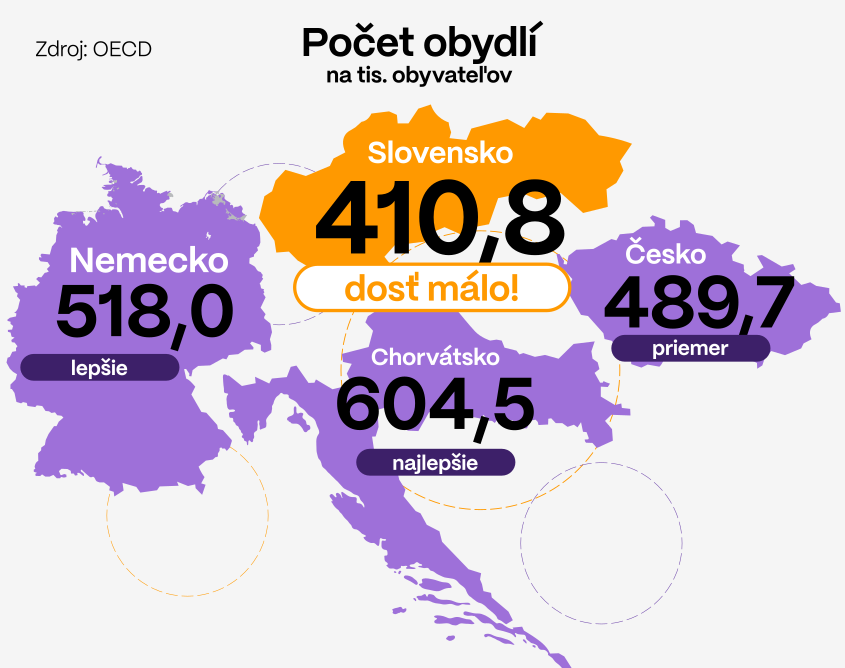
Slovakia is among the EU countries with the fewest dwellings per 1,000 inhabitants. Deloitte’s analysis shows Slovakia with roughly 411 dwellings per 1,000 people (versus 480 in the Czech Republic and 518 in Germany). Croatia leads with over 604 per 1,000—likely influenced by tourism.
Regarding new residential construction, Slovakia has just 4.39 units under construction per 1,000 inhabitants, compared with Austria at 10.56. Completion rates are similarly modest (3.79 completed units per 1,000). Slovakia therefore still has a housing shortage and limited construction activity. Simple supply-and-demand dynamics—demand exceeding supply—push prices up. Expecting a prolonged market cooldown makes little sense unless a major recession occurs.
Low mortgage interest rates also fuelled demand. Cheap financing makes mortgages more affordable, encouraging buyers to pay higher prices. Rising real wages in recent years (outpacing inflation) mean Slovaks generally have higher purchasing power, which also supports demand and higher household indebtedness.
Inflation increases construction costs, and developers often pass these costs to buyers. Success here depends on developers’ ability to control costs and retain margins—final prices are set by the market rather than a single supplier.
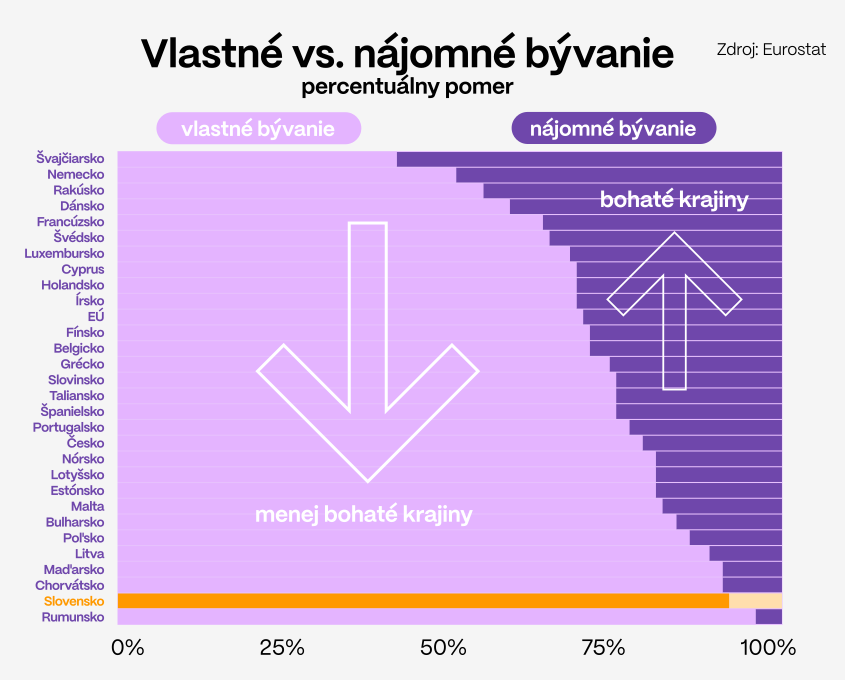
Cultural factors matter too: Slovakia has very high homeownership. About 92.3% of Slovaks live in owner-occupied homes, versus 50.5% in Germany and 42.3% in Switzerland. Poorer countries often show higher homeownership shares, while wealthier ones have larger rental sectors. The scarcity of rental housing in Slovakia amplifies purchase demand.
Is there a bubble in Bratislava?
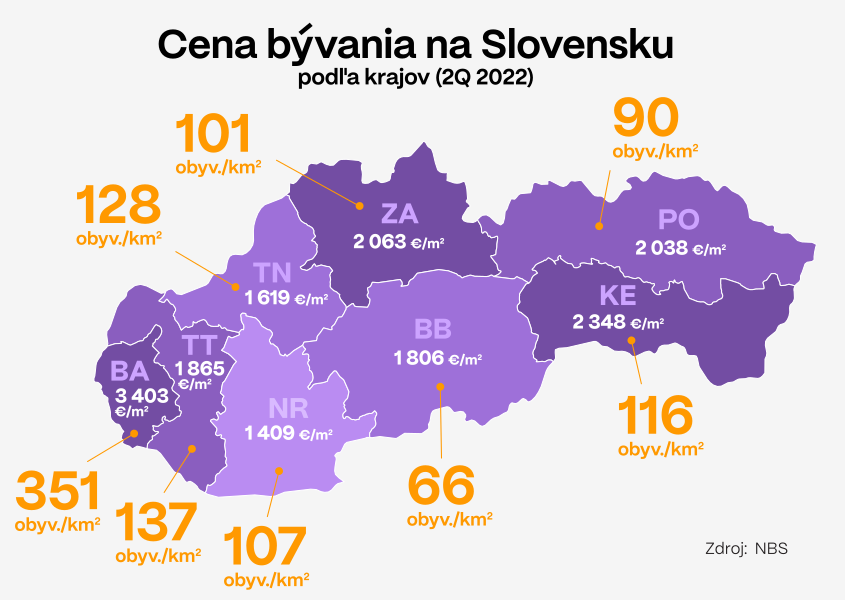
Probably not. Bratislava has the country’s highest prices due to location desirability, strong job markets, better accessibility, higher living standards and the highest average wages. Over the last 10 years, residential prices in the Bratislava region rose by about 52%—an annual return around 3%. That’s consistent with normal long-term property performance, although individual neighbourhoods or segments can see much larger moves.
Regional price dynamics
In Q2 2022 residential prices rose fastest in the Žilina region (+12.86% quarter-on-quarter) and slowest in the Košice region (+4.63% q/q). Overall, housing kept rising across regions despite global and domestic uncertainty; long-term real returns appear reasonable and the market may have been catching up after nearly a decade of stagnation.
Not everything is rosy
Some regional centres already show price declines: real estate barometers reported monthonmonth drops in July in Bratislava and Žilina—though in Bratislava these declines were minimal (the largest decline being -1.2% in new four-room flats). The market is diverse: prices for certain property types fell in some towns. Such short-term fluctuations require caution; long-term trends are more informative.
The National Bank of Slovakia (NBS) takes a more cautious view and warns about house prices. It notes falling real incomes and rising mortgage rates (up from 0.98% to 2.11% yearonyear by June). Its composite housing price risk index has risen markedly toward levels seen in 2008. The index has five risk bands; it currently sits at the start of the highrisk band—the highest alert level.
Disclaimer
All texts, images, graphics and other objects in this document are protected by copyright and may not be copied, distributed, modified or provided to third parties without prior written consent of Sympatia Financie, o.c.p., a.s. This document contains only general information. Sympatia Financie, o.c.p., a.s. does not provide professional advice through this document and is not liable for any damage arising directly or indirectly from anyone’s reliance on it.