The Dragon Awakens Again: Chinese Equities Surge

18 January 2023 | 6 min read
Chinese equities have rallied sharply over the past two weeks, significantly outperforming the more tentative gains seen in U.S. and European markets. The CSI 300, which tracks 300 of the largest Chinese companies listed in Shanghai and Shenzhen, has risen by more than 16% since the start of the month. On Monday, it posted an eye-catching 5.7% single-day gain.
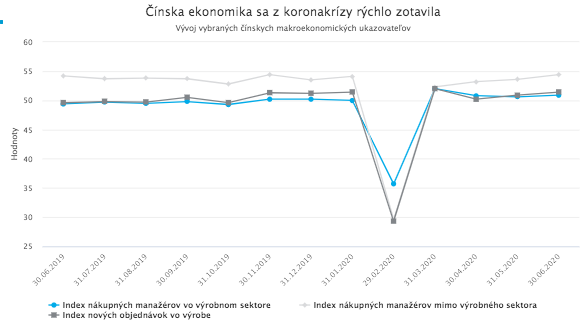
China’s equity markets had, in fact, stabilized earlier and now trade roughly 14% above pre-pandemic levels. The current advance therefore is not merely a rebound back to prior highs following a steep sell-off, as was largely the case in the U.S. and Europe. Rather, it may mark the start of a new uptrend, or the early stages of a bubble reminiscent of 2015. Although China’s economy (at least according to official data) rebounded quickly from the Covid shock in a textbook V-shaped recovery, the latest rise in domestic equities was not triggered by macroeconomic releases, but by state media messaging.
In recent days, articles in China’s most influential financial outlets have begun to promote the notion of a “healthy bull market”, the need to deepen capital markets, and the “wealth effect” that rising asset prices could generate. Investors interpreted this as an implicit signal that policymakers are willing to support equities, and that those seeking to benefit from the move should begin buying. In the past few days, China has been swept up by an investment frenzy similar to the one seen in the United States. Interest in investing has spread to people with no prior market experience. Searches for terms such as “investing” and “stocks” have spiked on Chinese social platforms; brokers and trading apps have reported a surge in newly opened retail accounts; and trading volumes have jumped. There have even been cases of individuals taking on debt in order to deploy more capital into equities.
This policy- and sentiment-driven rally raises two key questions. Why has China chosen to encourage the domestic stock market now? And can policymakers keep the resulting speculation within reasonable limits, or has a new bubble begun to inflate, one that could burst as abruptly as it did in 2015?
Why now?
The Chinese government clearly has the tools to push domestic equity markets higher, at least in the short term, to levels it deems desirable. Moreover, policy support for asset prices is not unusual. Donald Trump repeatedly attempted to talk the U.S. stock market higher through public statements and social media, and U.S., European, and Japanese equities rebounded so quickly from the March sell-off largely due to central-bank support.
For experienced investors and China watchers, however, the timing remains puzzling. From certain angles, it even appears counterproductive. Equity market gains have relatively limited immediate positive spillovers into the real economy. Rising share prices do not automatically translate into near-term operating benefits for companies. For highly indebted Chinese firms, relief would more directly come from lower interest costs, which could be achieved via support for the bond market.
Instead, the current equity rally is producing the opposite effect. It encourages capital rotation out of bonds and into stocks, putting downward pressure on bond prices and pushing yields higher. In the short run, state-led equity support can therefore make corporate financing conditions more challenging. Over the longer term, a stronger equity market can of course help companies rebalance their capital structure by raising more equity relative to debt. Could this be part of the rationale?
The rally is also drawing funds not only from the bond market, but also from state investment vehicles focused on real estate and infrastructure. Is that desirable under current conditions? At the same time, the renminbi has strengthened alongside Chinese equities, partly reflecting foreign inflows into the stock market. In the context of today’s elevated U.S.-China tensions, renminbi appreciation is also surprising.
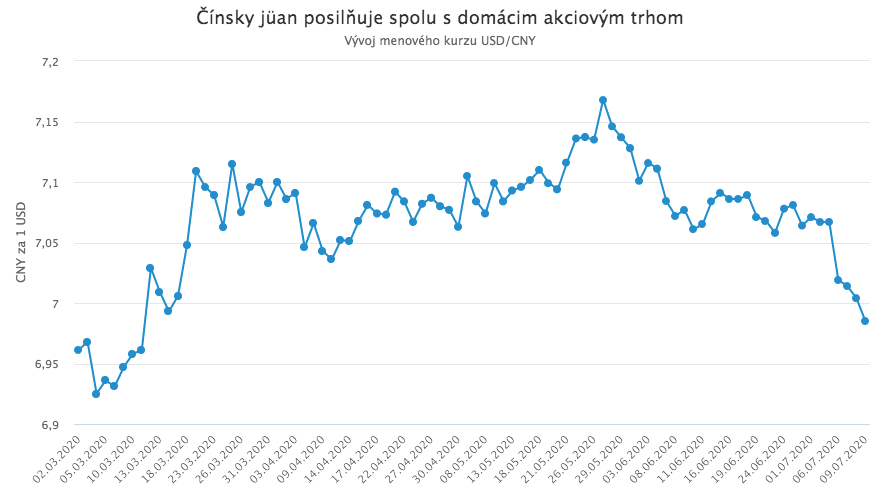
The United States has long accused China of deliberately keeping the renminbi undervalued to support exporters. Over the past year, China responded to trade-war escalation and U.S. sanctions by allowing the currency to weaken, a move that significantly irritated the Trump administration.
Renminbi strength, by contrast, runs against the interests of Chinese exporters and could be welcomed in Washington. It is therefore unclear why China would choose such an accommodating signal at this juncture. Relations between China and the United States are arguably at their weakest since the Cold War. Beijing may fear that rising geopolitical tensions, including developments in Hong Kong, could trigger abrupt foreign capital outflows. Making domestic equities more attractive could be one way to counter that risk.
Another possible objective is to revive domestic demand via a “wealth effect”. In other words, if a broad base of households sees the value of their portfolios rise, they may feel more financially secure and increase spending, restoring consumption to pre-pandemic levels, or even offsetting weaker external demand, thereby supporting the domestic economy. For now, there are many questions and few clear answers.
A repeat of 2015?
For investors, the more pressing question may be whether the rally is sustainable, or whether it is a bubble that will eventually burst. Many remain skeptical. In several respects, the current setup resembles the early phase of China’s previous equity bubble, which ended with a dramatic collapse in 2015. That episode, too, was initially driven by state media messaging and supported by the government. Ultimately, as is often the case with bubbles, momentum escaped policymakers’ control. Speculation reached extreme levels, the market crashed, and the fallout inflicted significant damage, with repercussions across global markets.
Today’s advance has not yet reached 2015 extremes, either in absolute or relative terms. In recent years, Chinese equities lagged global markets; following the 2015 crash, China introduced various regulatory measures intended to prevent a repeat; and it is reasonable to assume policymakers have internalized some lessons.
On the other hand, China’s economy was in better shape five years ago than it is today. The world was not grappling with a pandemic, and U.S.-China relations were not defined by an intensifying strategic rivalry. For the general public, it is also easier than ever to open an account and begin trading. Even a system capable of tightly managing many aspects of social and economic life may struggle to contain the buying frenzy of millions of new retail investors and prevent another bubble from forming, and then bursting.
In any case, the Chinese dragon has awakened after years of relative dormancy and is taking flight. It remains unclear why it has chosen to rise now, and whether it is headed for a sustained ascent or a sudden fall just beyond the first ridge. For those eager to ride the dragon, however, the reasons matter less than the momentum. They trust they can jump off in time if the flight turns into a plunge, and for them, now is the time to climb on.