Chinese Tech Stocks Under Pressure

Beijing is continuing its crackdown on domestic technology companies. Most recently, it moved against Didi, China’s competitor to Uber, just a few days after the company’s listing on the New York Stock Exchange. Didi’s shares subsequently fell by more than 20%, and the company lost USD 23 billion in market value. Alongside Didi, other Chinese technology companies are also declining, as they face the risk of further interventions not only from Chinese regulators, but also from U.S. regulators.
Didi Global Inc. is a popular Chinese ride-hailing service operating similarly to Uber, through an app that connects passengers with drivers. It was founded in 2012 and gained a dominant position in its home market largely after it managed to push rival Uber out of China. Its dominant share of the huge Chinese market makes Didi one of the world’s largest mobility companies. The app has 500 million active users and 15 million active drivers.
Like other ambitious Chinese tech companies, Didi decided to take advantage of favorable market conditions in recent months and list on the New York Stock Exchange, which offers, thanks to a broader investor base and higher liquidity, more attractive opportunities to raise capital than Chinese exchanges.
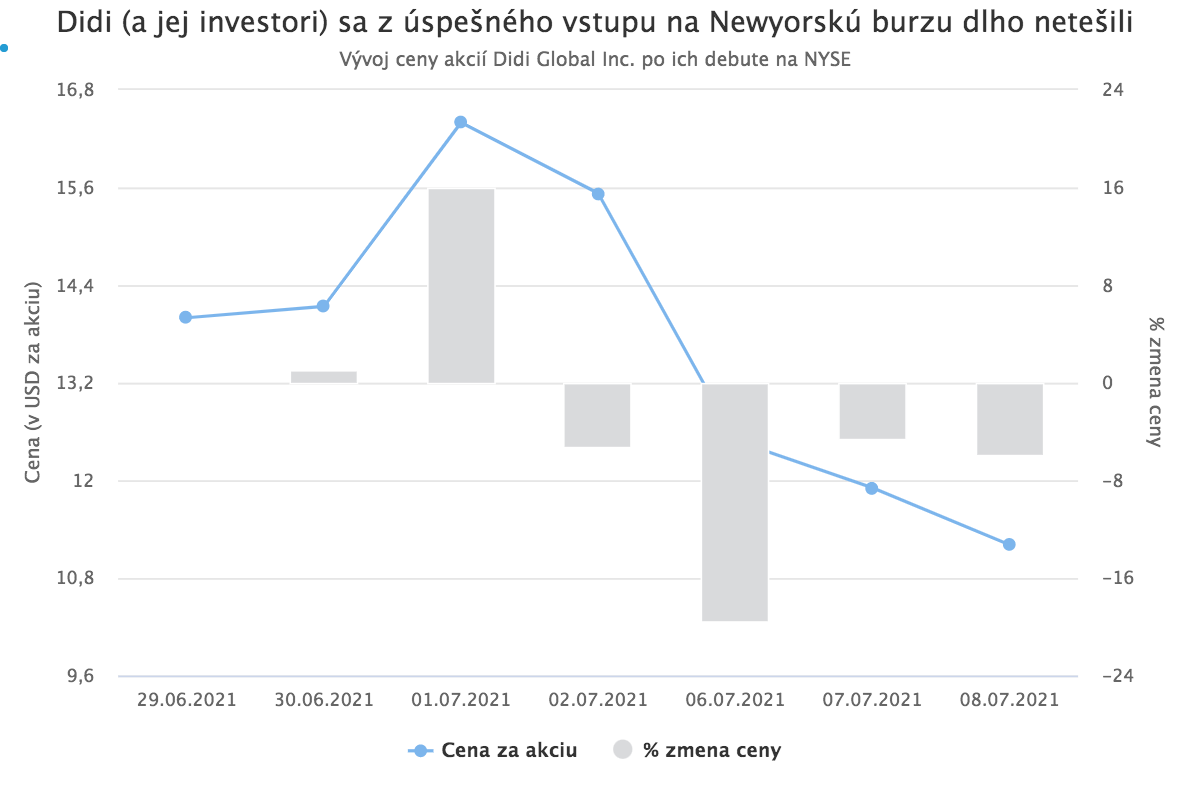
The company carried out its initial public offering (IPO) on the NYSE on June 30, successfully. It sold 317 million shares to investors at USD 14 per share, raising USD 4.4 billion and pushing its market capitalization to USD 68 billion. Its listing became the second-largest IPO by a Chinese company in the U.S. market. Only the giant Alibaba raised more money in its 2014 IPO. The successful NYSE debut further boosted investor interest and helped drive the shares higher.
However, the euphoria was short-lived. Just three trading days after the listing, China’s cybersecurity regulator announced that, as part of an ongoing investigation, it had ordered Didi’s app to be removed from Chinese app stores after finding unauthorized collection and use of personal data. The company committed to fixing the identified issues and, until it does so, to stop registering new users.
The company’s shares fell by 20% immediately after markets opened, and its market capitalization dropped by more than USD 23 billion.
Other Chinese tech companies are also at risk
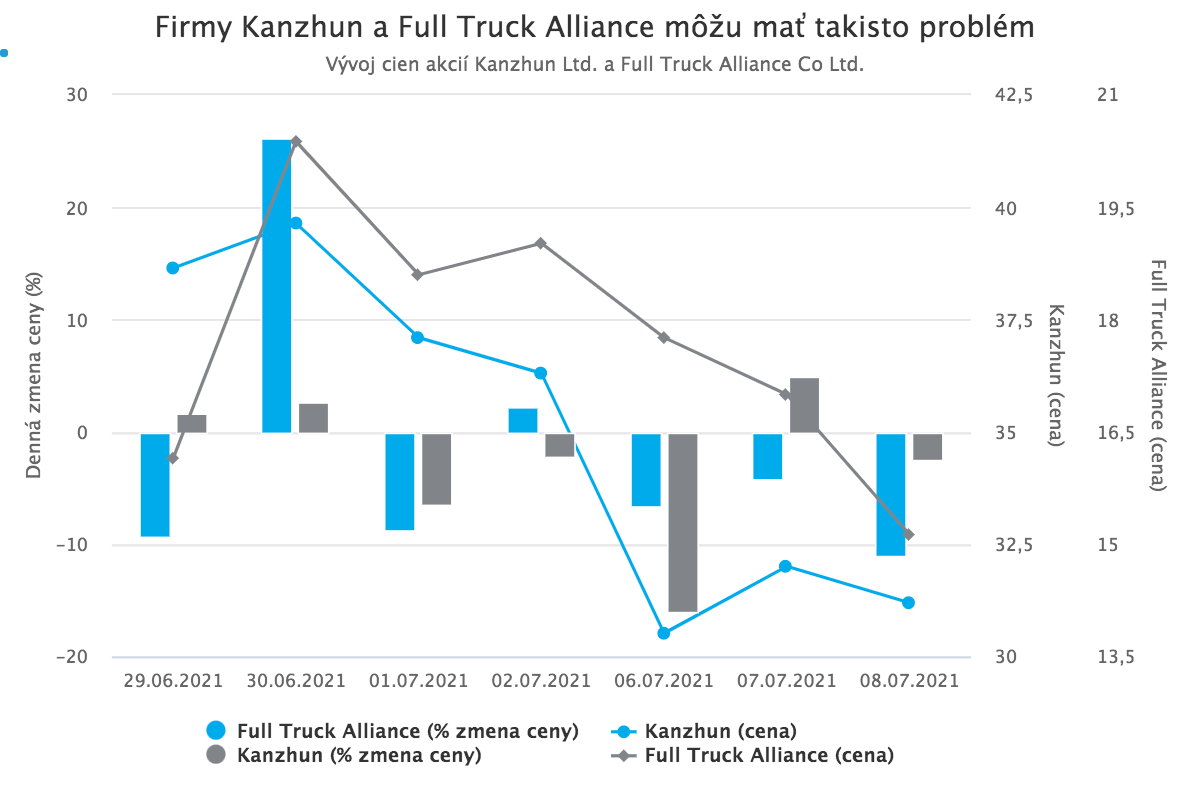
It appears that the tough action by Chinese authorities against Didi was not an isolated case, but only the beginning of a new wave of tighter regulation of domestic technology companies by Beijing. Just one day after the action against Didi, the Chinese regulator announced that it was launching investigations into the Yunmanman and Huochebang platforms, which operate similarly to Didi but serve freight transportation, as well as the Boss Zhipin platform used for job searching.
All three platforms are similar to Didi not only in that they collect large amounts of user data as part of their operations, but also in that their parent companies, Full Truck Alliance and Kanzhun, recently listed on U.S. exchanges as well. Their shares, of course, also fell after the investigation announcement.
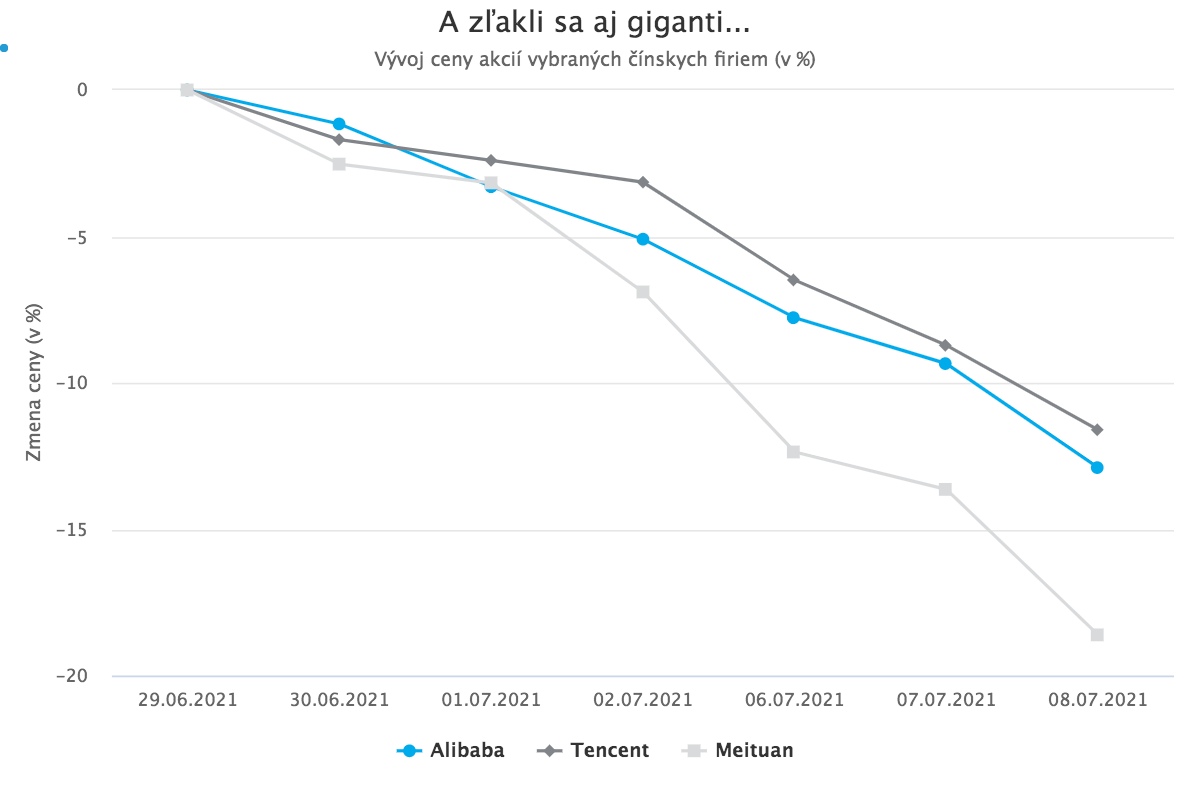
Panic also spread to shares of other Chinese tech companies, including giants Alibaba, Tencent, and Meituan.
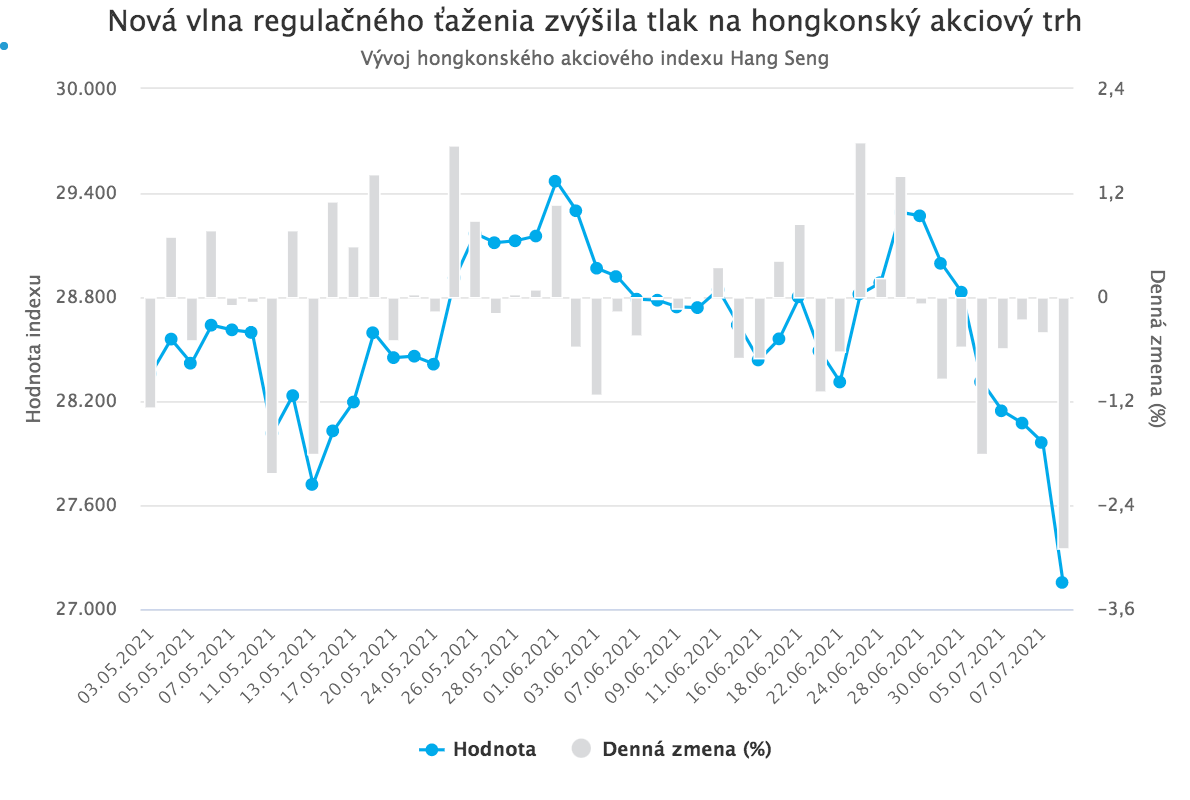
Due to the high weighting of technology stocks, Hong Kong’s Hang Seng index has also fallen sharply, suffering a record streak of eight consecutive losing days. From its February highs, it has already dropped by more than 30%.
Simply put, nobody knows which technology company Beijing’s heavy hand will hit next, or how far Chinese regulators will go. The only certainty is that China clearly wants to significantly curb the power of domestic technology firms and will continue its regulatory campaign against them.
The regulators’ campaign was triggered by action against Ant Group
For a long time, Beijing left domestic technology companies without strict regulation, perhaps in an effort to allow companies capable of competing with U.S. tech giants to emerge. A dramatic shift in the Chinese government’s stance occurred only in the autumn of last year. We may never know whether Jack Ma, Alibaba’s founder and at the time China’s richest man, was the inspiration for the change in the government’s approach to tech firms, or merely its first victim.
In any case, Beijing’s regulatory campaign began in November last year with action against Ant Group, an affiliate of the Alibaba group focused on digital payments and financial services. Ant Group was preparing to go public in early November, and its IPO was expected to be the largest in the world. However, Chinese authorities halted the listing just two days before the planned date. Ant’s founder Jack Ma then disappeared from public view for more than two months.
The tough action against Ant Group was preceded by a public appearance by Jack Ma in which he criticized (not only) Chinese regulators and certain practices of Chinese state banks. Jack Ma subsequently thanked regulators for their intervention, and after reappearing in public he directed no further criticism toward Chinese authorities.
However, Beijing’s campaign did not end after Jack Ma was “brought to heel.” On the contrary, it expanded to other large Chinese tech firms and continues to widen and deepen. The action against Didi and the platforms of Full Truck Alliance and Kanzhun is only its latest episode.
It seems, simply, that the Chinese regime views as undesirable the growing volume of data in the hands of Chinese technology companies and the growth of wealth (and power) in the hands of their owners and founders. It apparently considers it particularly risky when Chinese companies holding large amounts of user data have foreign investors or owners who could theoretically gain access to that data. That is why the current wave of regulatory interventions is focusing precisely on companies that recently listed on U.S. exchanges and whose owners include large foreign institutional investors (SoftBank and Uber in Didi’s case).
U.S. regulators could also step in
Chinese technology companies, especially those listed on U.S. exchanges, are currently in a very unfavorable situation, further worsened by the fact that in addition to actions by Chinese regulators, they also theoretically face the risk of action by U.S. regulators.
Beijing’s tough move against Didi just days after its U.S. listing angered not only investors but also some U.S. politicians, as it caused significant losses for U.S. investors who bought the stock at its market debut. It also became clear that poor transparency on the company’s side was part of the problem. Didi’s management did not disclose to investors that the Chinese regulator had strongly recommended before the IPO that the company postpone the listing. This episode therefore highlighted not only the risk of regulatory action by Beijing, but also the long-discussed issue of weak transparency among Chinese companies.
Senator Marco Rubio called allowing Didi to list on a U.S. exchange an “irresponsible and risky” move by both the exchange and U.S. regulators. He also noted: “Even if the stock price rises again, American investors will have no insight into the company’s true financial situation, because the Chinese Communist Party prevents U.S. oversight bodies from accessing this data.”
Senator Rubio is known for his tough stance toward China and has previously proposed that U.S. pension funds should not be allowed to invest in shares of Chinese companies. If, however, actions like the one against Didi were to be repeated, causing losses for U.S. investors, and if tensions between China and the United States continue to escalate, it is easy to imagine that such views would gain broad support and U.S. regulators would take harsh regulatory action against Chinese firms.
Investors should therefore approach Chinese technology companies very cautiously today. By standard valuation metrics, many of them look attractive at current prices and still have solid growth potential in their home market despite tighter regulation. However, the risk of further regulatory interventions, with a (at least short-term) significantly negative impact on stock prices, is currently very high.