Commodity Shock: Is the Worst Behind Us?
The current commodity shock is neither the first nor will it be the last in human history. Its most important trigger was the war in Ukraine, which has lasted for more than a year. Prices for some commodities had already been rising before the war, but the true shock arrived during the summer of 2022 with surging electricity and gas prices.
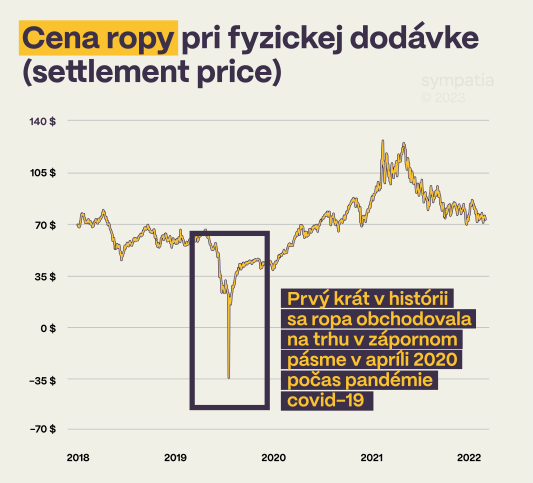
In the recent past we also experienced the opposite extreme, when some commodity prices plunged — oil even traded at negative prices. That bizarre situation occurred shortly after the global pandemic began. During a trading session some oil sellers were willing to pay buyers to take oil off their hands. The reason was a dramatic drop in demand combined with saturated storage and processing capacity.
Back to the lingering commodity crisis. The EU was not the only region that suffered from elevated energy prices — the whole world struggled, albeit with different intensity. The EU was hit especially hard because several large member states made critical mistakes in their energy mixes, and the consequences affected the entire bloc. The United States repeatedly warned the EU not to build an excessive dependence on Russian energy. Hopefully the EU will learn from this episode and avoid concentrating strategic supplies with a single partner in the future.
The commodity shock did not strike overnight
Energy prices began rising markedly in autumn 2021 as economies reopened after the pandemic. Russia then reduced gas volumes to the Union, unsettling market participants. The final and largest trigger of the commodity shock was Russia’s attack on Ukraine.
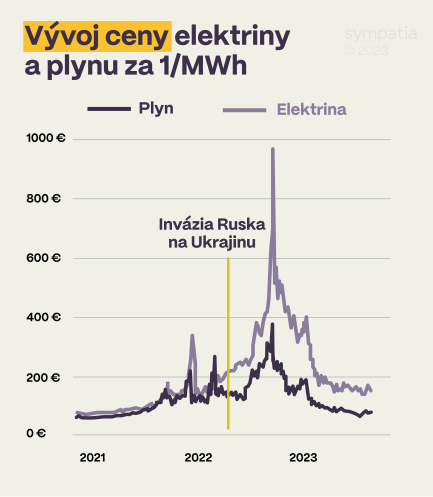
Markets for energy, equities and bonds panicked as a previously unthinkable scenario unfolded. In the days that followed coal, oil, gas and electricity traded tens of percent higher than before the war. The crisis deepened over the summer and prices for some energy commodities reached historic highs.
Oil was an exception: it began to fall gradually during the summer weeks. Coal prices stabilized at elevated levels, while electricity and gas continued their steep run. In Europe electricity even traded above €1,000/MWh at peak (YTD ≈ +630%) and gas approached €340/MWh (YTD ≈ +380%). Commodity markets calmed toward yearend and extreme prices retreated, though they had not returned to precrisis levels.
Why did the EU suffer some of the highest prices?
The Union has been steadily aiming to transition from fossil fuels to green energy. That transition is being driven largely by regulation rather than wholly by market signals. Regulation helps accelerate the shift but also pushes conventional energy sources out faster than alternatives are available, producing shortterm price pain for consumers.
At the same time, the EU still lacks enough renewable capacity to operate smoothly, so it continues to rely on imported fossil fuels. This makes the bloc more vulnerable to price shocks than other regions. Over time this pressure should ease as domestic renewable generation grows and production costs fall.
Why were gas and electricity at the heart of the panic?
During the market panic attention focused on gas and electricity more than oil and coal. The reason was simple: gas reached the EU mainly through pipelines from Russia. Those flows are now at historic lows and Russian gas deliveries are largely negligible.
Panic was worsened by the fact that prior to the war demand for LNGcapable ships and regasification terminals was much lower, so distribution and regasification capacity was limited. Oil, in contrast, is mainly transported by tanker; pipelines play a smaller role. Tankers and global refining infrastructure made oil markets less immediately vulnerable.
Another problem is that gas and coal play a large role in marginal price formation for electricity: wholesale electricity is priced according to the most expensive generation source needed to meet demand. That means even when cheap sources produce the bulk of power, prices can be set by peakcost generation.
This rule, combined with panic, allowed some otherwise cheap generation to earn outsized profits — an odd but logical market outcome that prevented system collapse. A reform to use a weighted average of input costs has been discussed but is not widely implemented.
What about other commodities?
Large price swings extended beyond energy — metals, agricultural commodities and timber were affected. Lithium, for example, rose roughly 1,100% after the pandemic onset but has fallen steadily since late last year. From its peak lithium is down about 70%, though it still trades nearly 495% above prepandemic levels. Wheat prices jumped about 128% over the same period and after the initial shock of the war have largely returned toward prepandemic levels.
Timber showed dramatic volatility: a near 45% fall at the pandemic’s start was followed by a 400% surge, with spikes during supplychain disruptions and the Ukraine war; it now trades closer to prepandemic norms.
Did the EU prepare well for winter?
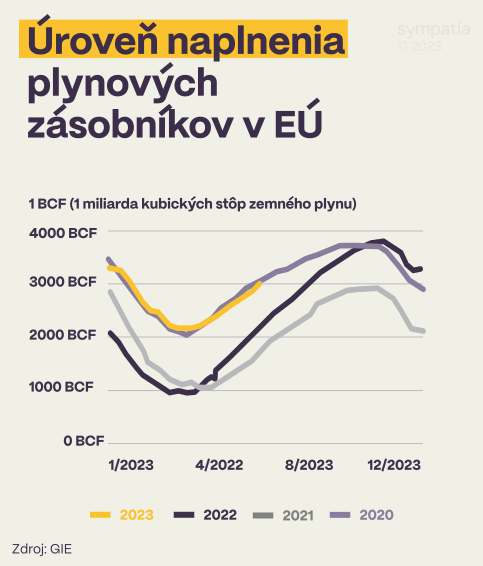
After the war began the EU moved quickly to refill gas storage. Many skeptics predicted shortages, which further pressured markets and pushed gas and power prices higher. Those dire scenarios did not materialise: high prices incentivised new LNG deliveries and storage was filled. Combined with a relatively mild winter, the EU weathered the season and entered the new refill cycle with storage above 55% — today around 70%, roughly two months ahead of the pace in 2022.
This year looks positive
It is already clear that another winter should not catch the EU off guard: LNG capacity is expanding. Germany — once heavily dependent on Russian gas — is building and commissioning new LNG import infrastructure. Slovakia entered the season with a recordhigh storage level (60%). Falling gas prices are pulling down electricity, driven by new suppliers, conservation by households and firms, EU regulation, expanded renewables, reduced panic and the mild winter that demonstrated the bloc’s resilience.
Where do energy commodities come from now?
Before the war, the EU’s overall energy dependence on Russia stood at 24.4%. Imports of Russian energy have fallen to negligible levels. Nord Stream 1 and 2 are inactive and other pipeline flows are severely curtailed; roughly 90% less gas flows from Russia to the EU versus normal. Russian oil imports into the Union have fallen by more than 80%.
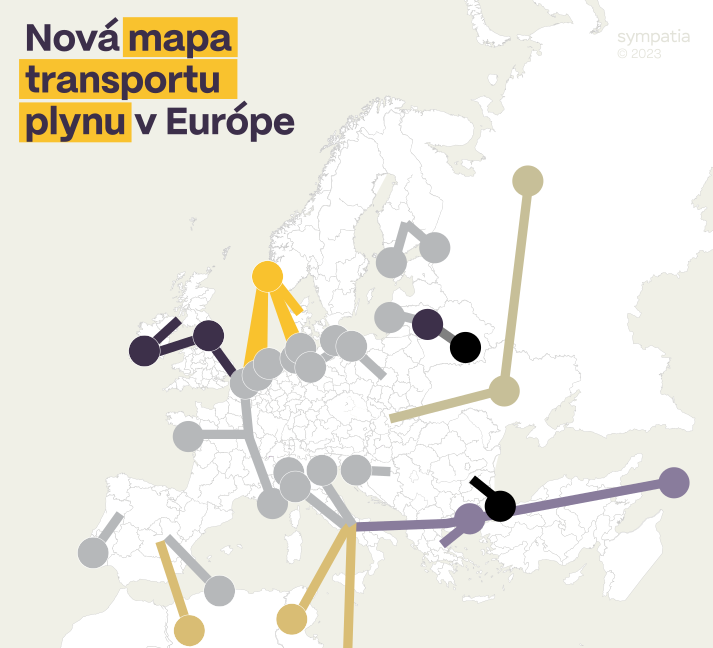
The EU plans to wean itself off Russian oil and gas and replace supplies from other sources — notably the US and Norway — while also drawing on the Middle East, Latin America and Kazakhstan. Moving gas into the EU is more complicated, but new LNG terminals and fleets of LNG tankers redirected from Asia have helped. The bloc has largely replaced lost Russian volumes, though not entirely. Oil has been easier to substitute because of available tankers and infrastructure.
Thanks to these factors it is expected the energy crisis could be fully overcome by 2024, depriving Russia of a major lever over the EU. New LNG contracts, terminal construction, conservation and renewed emphasis on renewables should accelerate the transition; renewables could become a dominant energy source within the next decade.
What makes up the EU energy mix?
The EU imports 56% of its energy and produces 44% domestically. Oil products are the largest share at 34%, followed by natural gas at 23% and renewables at 17%. The Union aims to rely less on conventional fuels and more on green energy. Sweden leads EU countries in renewables (48.2% of its energy from renewables); Malta is at the bottom (2.1%).
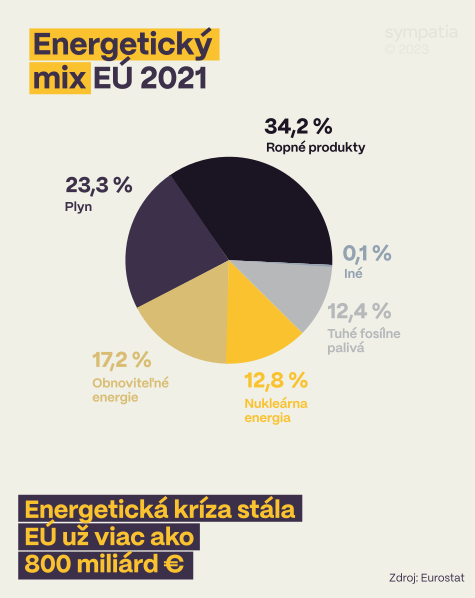
What composes the EU’s domestic 44%?
Of the energy the EU produces domestically, 40.9% comes from renewables, 31.3% from nuclear, 18.1% from solid fuels, 6.4% from natural gas and 3.1% from oil. The heavy emphasis on renewables suggests the bloc is positioning for a lowcarbon future, and the recent crisis has reinforced the case for accelerating that shift. Corporations and households are increasingly installing renewable generation capacity.
Sources of electricity in the EU
For electricity specifically, renewables supply 37.6%, fossil fuels 36.2% and nuclear 25.2%. Luxembourg produces the most electricity from renewables (89%), while Malta relies heavily on fossil fuels (88.1% of its electricity from fossil sources).
The EU cannot look the other way
Energy independence must be among the EU’s top priorities and investments in independence should grow significantly. The EU consumes roughly 10,300 TWh of energy annually, about 2,300 TWh of which comes from renewables. Replacing the remainder would require building roughly five times the current renewable capacity plus a reserve margin of 20–30%, at an estimated cost near €5 trillion, not counting ongoing maintenance.
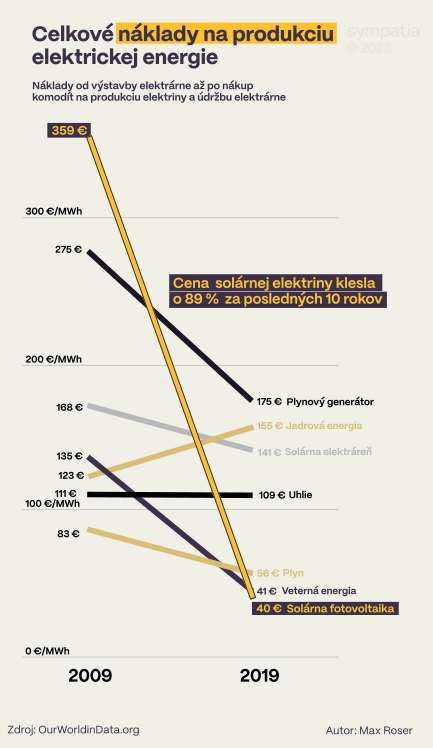
Costs for renewables are falling rapidly: over the past decade photovoltaic panel costs declined nearly 90%, onshore wind about 70% and offshore wind about 60%. Renewables now produce some of the cheapest electricity, which is driving investment.
Given accelerating technological progress, it is plausible the EU could generate electricity exclusively from renewables by 2050, and perhaps replace all conventional energy even earlier. Such a revolution would profoundly affect countries whose wealth relies on fossil fuels and which are unprepared for the transition; some currently wealthy states could see a decline if they fail to adapt.
All texts, images, graphics and other objects in this document are protected by copyright and may not be copied, distributed, modified or provided to third parties without prior written consent of Sympatia Financie, o.c.p., a.s. This document contains general information only. Sympatia Financie, o.c.p., a.s. does not provide professional advice or services through this document and is not liable for any damage arising directly or indirectly from reliance on it.