ESG: A Fad or the Future?

Date created: 30 June 2023
The world has been changing rapidly in recent years while simultaneously facing growing challenges. ESG emerged as a response to rising demand for sustainable, longterm solutions to the planet’s pressing problems. What is ESG, and why do some people oppose this path?
What is ESG?
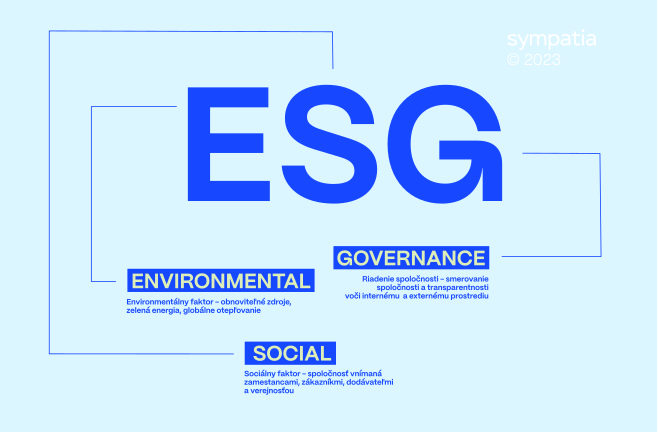
ESG stands for three words: Environmental, Social and Governance. These three pillars under the ESG label should form longterm, genuinely sustainable foundations for a prosperous world. ESG itself is therefore an indispensable part of our future; the specific measures under the label are, however, likely only fundamental building blocks that must be refined and expanded.
Environmental
The environmental pillar is the most frequently discussed, because global warming and its consequences affect the entire planet without exception. Solutions to environmental problems tend to be longterm, costly and politically sensitive. People historically resist change out of fear, so progress is often slow.
A prime example is renewable energy — the green transition — which is a major global topic and especially prominent in the EU. For the Union, the green transition is also the only sustainable path to reduce energy dependence on external regions and suppliers. The EU’s policy steps show it takes this direction seriously: large subsidies are being mobilised, and the REPowerEU plan alone allocates €210bn.
Social
The social pillar shapes how a company is perceived by employees, customers, suppliers and the public. It covers corporate behaviour toward these groups. Employees care about workplace safety, working conditions, benefits and compensation. Customers and suppliers judge the company by their interactions and how issues are handled. The public forms opinions through media and communications.
A wellmanaged social profile materially affects a company’s success. Today’s environment demands exemplary corporate conduct; any misstep by a wellknown brand is rapidly publicised. Smaller firms often pay less attention to social measures because they have fewer resources, but strong social practices attract customers and talent.
Governance
Governance concerns corporate direction and transparency both internally and externally. Good governance means avoiding corruption and tax avoidance, managing risks responsibly, ensuring board and executive independence, respecting shareholder rights and rigorously protecting personal data.
ESG and capital markets
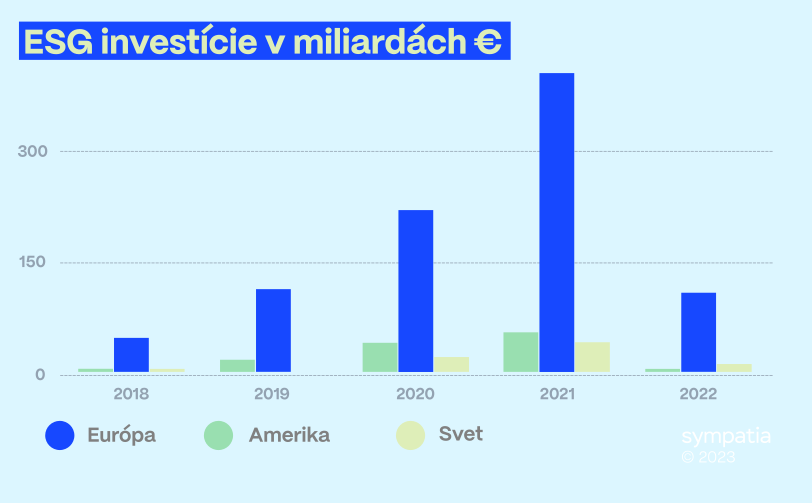
ESG funds and ESG investing have only recently entered the mainstream, driven in large part by the EU, which is the most vocal block on responsible conduct toward the planet and people. The EU sets an example worldwide, even though its proposals are not universally popular — critics often cite higher costs associated with sustainable solutions.
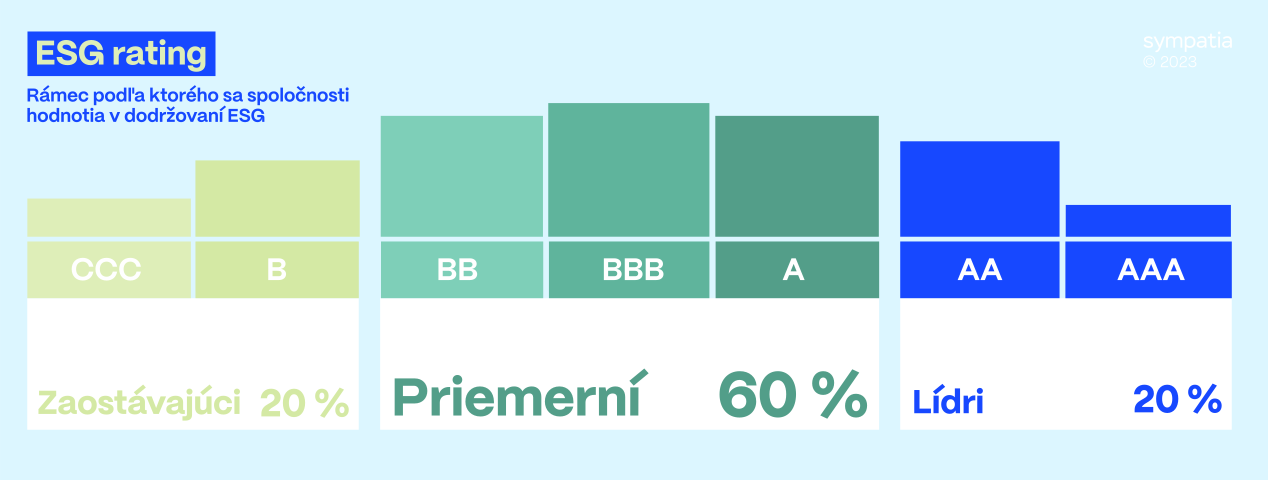
Capital markets, however, have embraced the ESG label so much that ESG ratings now exist. These ratings assess how well funds or companies meet ESG criteria and are published by major providers such as Bloomberg and MSCI. Companies with high ESG ratings attract ESG capital.
Net inflows into ESG funds peaked in 2021, when $649.1 billion flowed into these funds. In 2022 inflows fell to $157.3 billion — a yearonyear drop of about 76% and the smallest inflow since 2018 (when inflows were $69 billion). Overall, roughly $1.2 trillion flowed into actively and passively managed funds in 2021.
Green energy — ESG’s hottest sector
The war in Ukraine fundamentally changed the EU’s view on energy security and independence. The crisis highlighted that energy independence is strategic. In 2022 the EU faced a stark choice: look on or act — even at the price of economic pain from disrupted energy supplies. Russia soon curtailed gas flows, precipitating immediate market panic and sharp rises in gas and electricity prices.
The EU responded through coordination and allies, securing sufficient gas for the winter while consumption fell by around 20% thanks to a mild winter and conservation measures. Currently EU storage levels are around 77%, and refilling for the next winter looks manageable.
The core uncertainty remains that the EU extracts almost no fossil energy domestically and is not planning to do so. Instead, it intends to accelerate renewables — a shift the war helped push forward. Solar capacity grew by 24% yearonyear and wind by 8.6% in the last year reported. More electricity was generated from wind and solar (22%) than from gas (20%) or coal (16%); the largest shares came from hydro and nuclear.
How the world is progressing on renewables
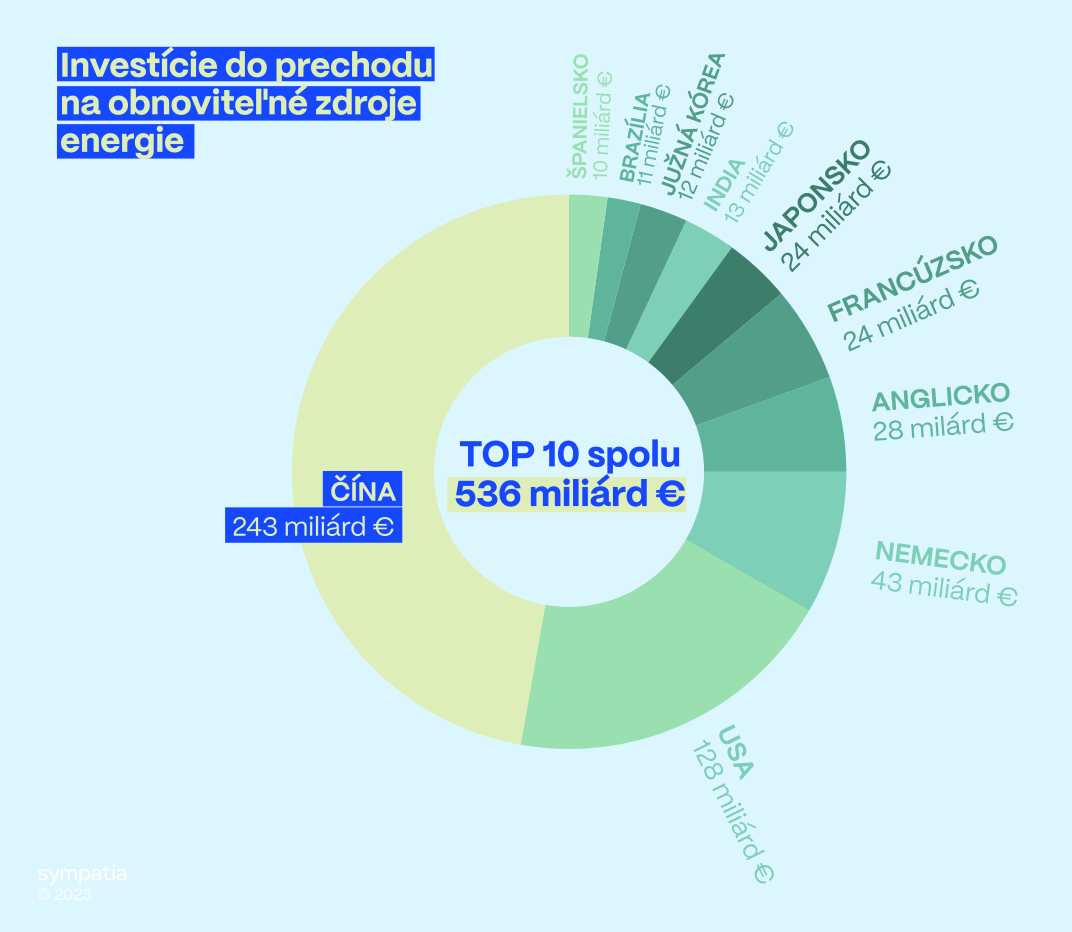
The EU’s ambitions are high: climate neutrality by 2050. Achieving this will require hundreds of billions of euros in renewable investments. The EU aims to cut greenhouse gas emissions by 55% by 2030 versus 1990 levels. Some projections suggest up to 96% of electricity could come from renewables by 2035. In 2021 the EU invested approximately $219 billion in the energy transition.
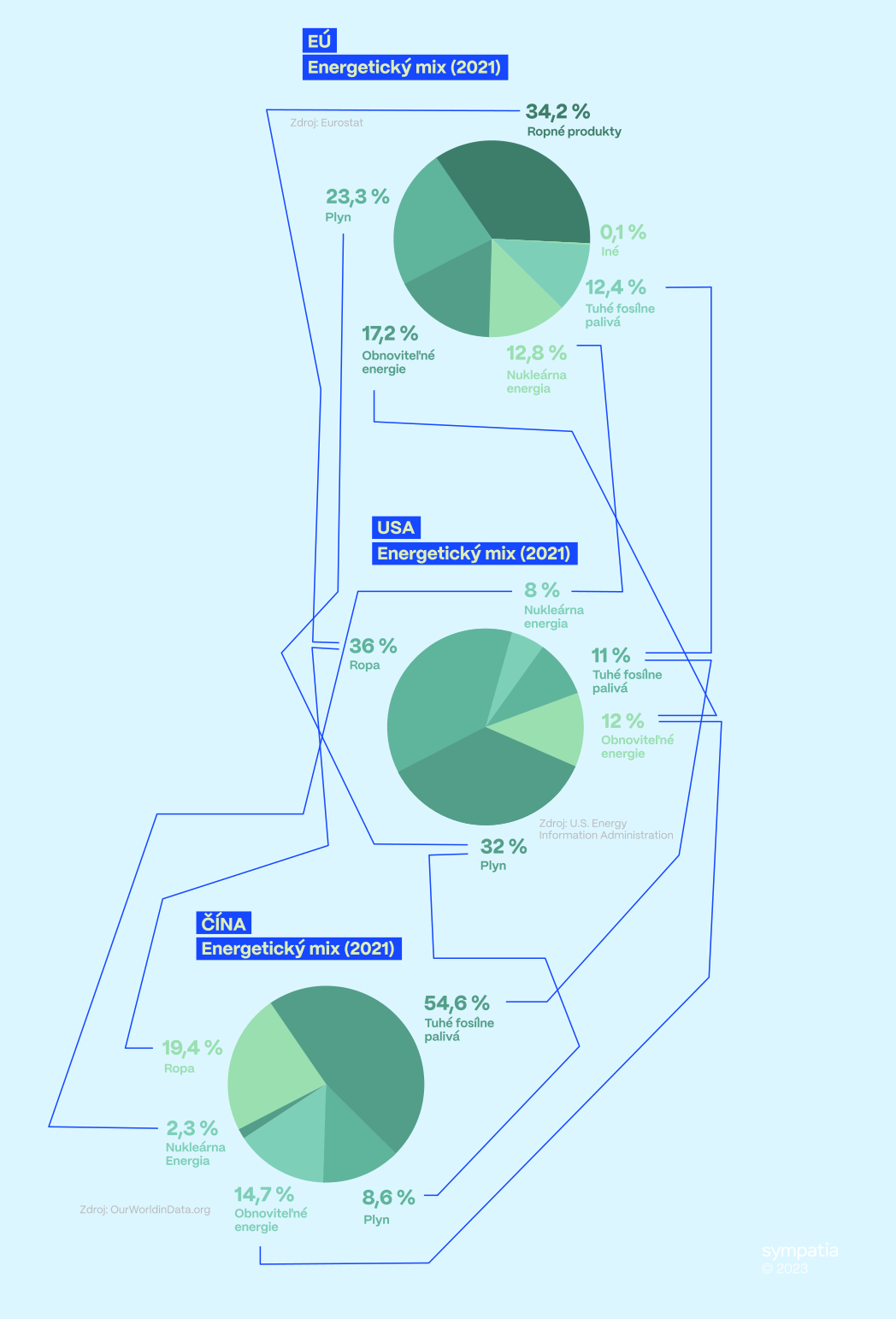
It’s possible the EU will hit targets faster than planned. Today roughly 60% of electricity comes from renewables when nuclear is included (38% without nuclear). Renewables account for about 17% of the overall energy mix excluding nuclear (the 2030 target is roughly 42.5%). The EU also plans to plant 3 billion trees by 2030 to improve air quality.
The United States shifted its posture on climate after President Biden took office, pledging substantial green investments and targeting a netzero economy by 2050. In 2022 the U.S. earmarked $369 billion for climate action, including renewables, and targets a 50% reduction in emissions by 2030 versus 2005 levels.
Unlike the EU, the U.S. remains energyselfsufficient and is a significant gas exporter — which helped Europe decrease reliance on Russian supplies. Still, the EU’s strategy is moving from one dependence to another unless it builds domestic renewables at scale. In the U.S. the energy mix is roughly 36% oil, 32% gas, 12% renewables, 11% coal and 8% nuclear. Electricity generation in the U.S. is dominated by gas (38%), coal (22%), nuclear (19%) and renewables (20%), though solar is growing rapidly.
China historically has been a major polluter, but it has shifted course and is now the world’s largest investor in the energy transition. In 2021 China invested $266 billion — about 47.5% of global investment in the energy transition that year.
Toward a sustainable economy
High ESG ratings should ultimately produce a sustainable economy in harmony with the planet — one that does not endanger life on Earth for future generations. Sustainability implies a lifestyle shift humanity must adopt if we wish to leave the planet in a condition similar to what we enjoy today. The tools exist; it now depends on collective awareness and the willingness to face climate change rather than ignore it.
If you’re interested in ETF investing with an ESG focus, click here.
Disclaimer
All texts, images, graphics and other objects in this document are protected by copyright. Without prior written consent of Sympatia Financie, o.c.p., a.s., the content of this document may not be copied, distributed, modified or provided to third parties. This document contains general information only. Sympatia Financie, o.c.p., a.s. does not provide professional advice or services via this document and is not liable for any damage arising directly or indirectly from reliance on this document.