How dependent is the EU on Russian commodities, and what are the alternatives?
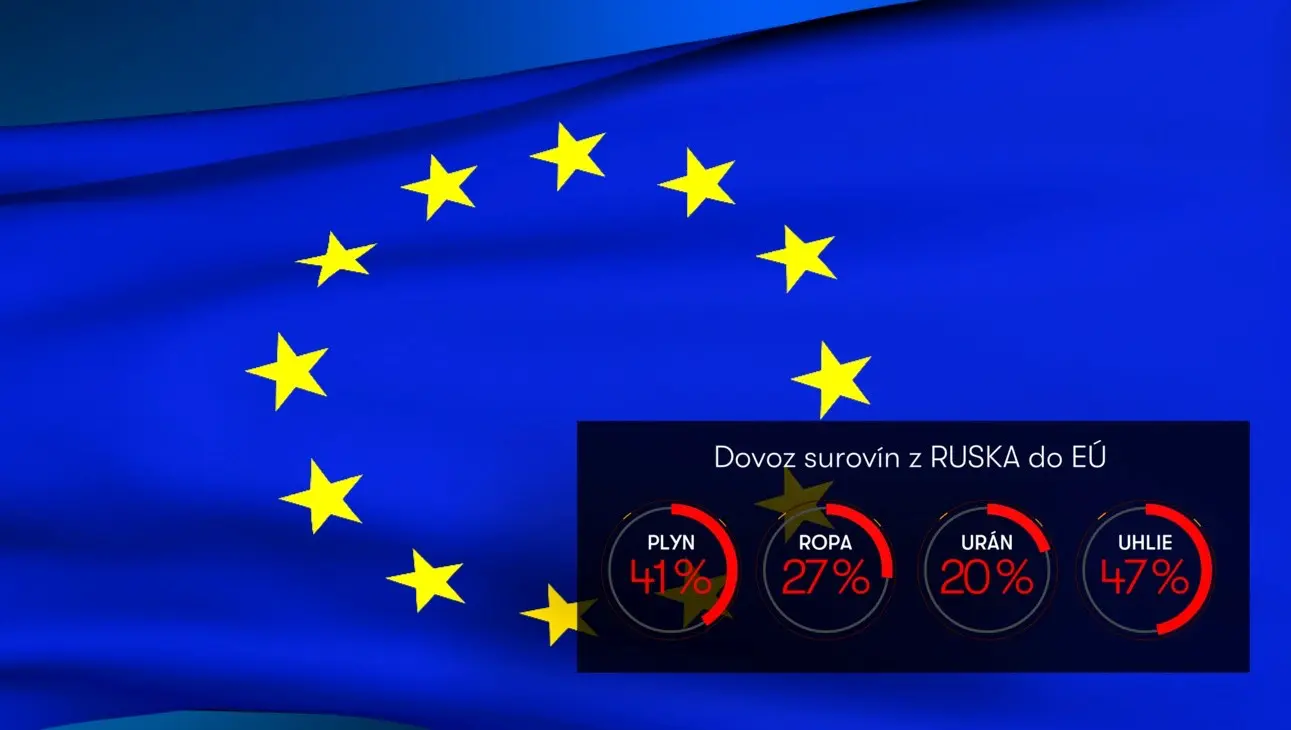
Of course, the EU does not import only energy commodities, but also various metals and agricultural raw materials. However, the Russian Federation does not hold as dominant a position here as it does in energy. The main imported metals include iron, aluminum, copper, palladium, lithium, and others. The largest importer of iron ore is Brazil (30%), while Russia (3.6%) is among the smallest. When it comes to imports of raw aluminum, the dominant supplier is Guinea (40%), and Russia does not even account for 1%. In addition, about 50% of the aluminum used in the Union comes from recycling. The main supplier of copper is Brazil (18.5%), and again the Russian Federation has a share of less than 1%. Palladium is also an important commodity in the automotive sector; about 31% of imports come from Russia and almost 28% from the US. Lithium, a key element in battery production, is largely imported from Russia (46%) and Switzerland (34%). In the case of cobalt, the main importer is the US, accounting for 66% of imports, while Russia’s share is practically zero. Russia and Ukraine are among the largest wheat growers, but imports into the EU are largely negligible. The most important supplier to the Union is mainly Canada (65%) and the US (25%). Ukraine, however, is a major supplier of cereals overall (40%). This includes wheat, barley, corn, rice, rye, oats, and sorghum. The dominant supplier of unprocessed wood is Russia (82%), but on the other hand, the EU exports wood in an amount equal to 62% of imports from Moscow.
Who has the largest production and reserves of oil, gas, coal, and uranium?
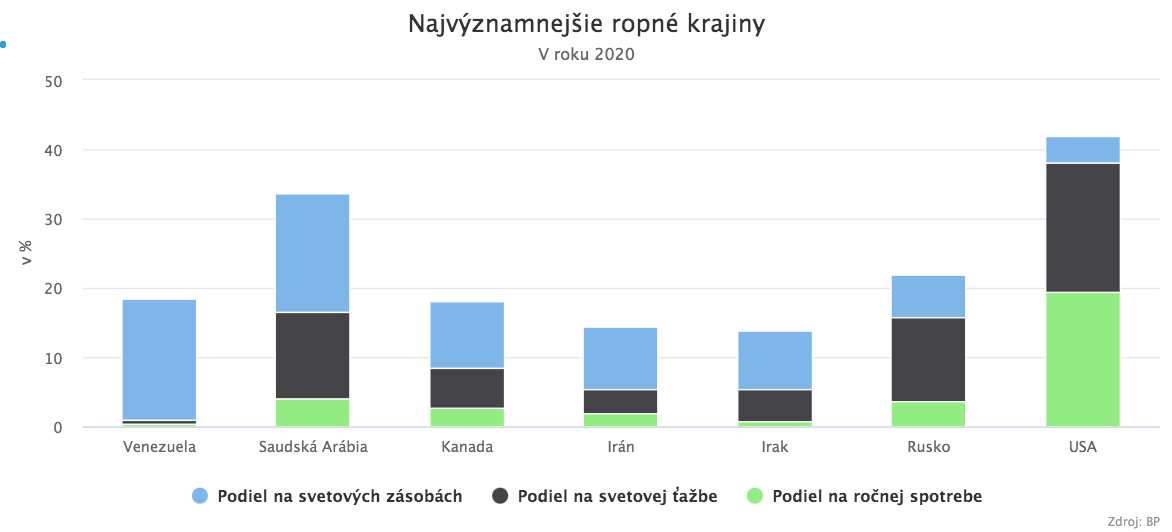
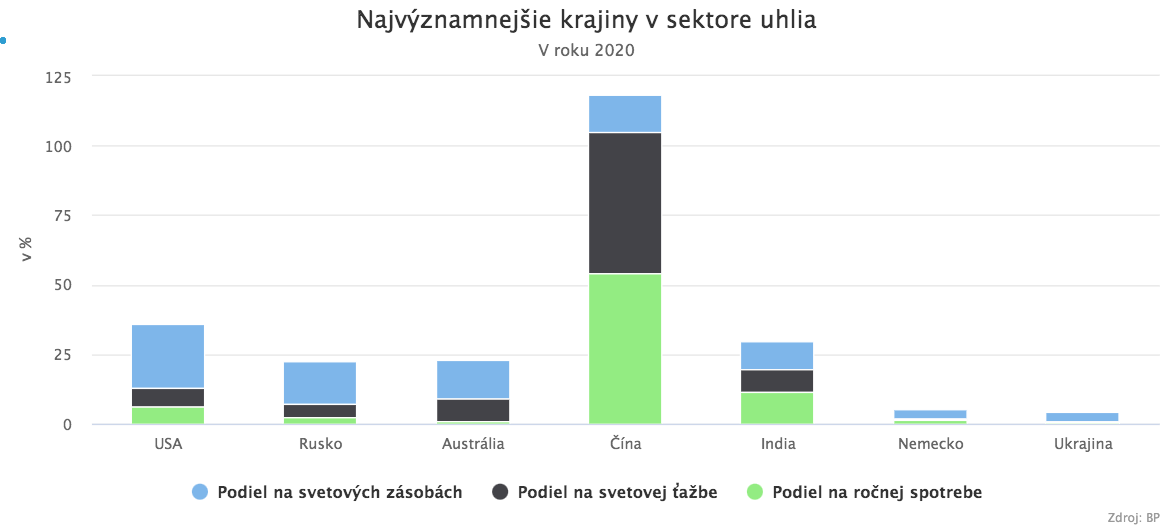
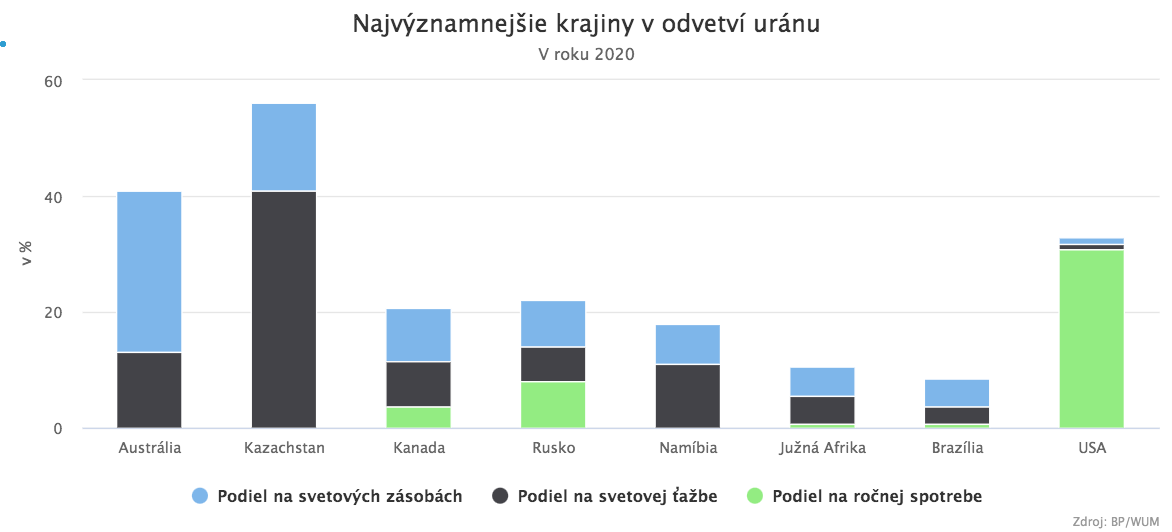
The largest oil producer in the world is the United States, with daily production of 16.5 million barrels of “black gold” (18.6% of global production). Looking at this impressive ranking, it might seem that the US is a strong player in the oil industry, but this production covers only its own consumption. Another issue is that at such dramatic production levels, US oil fields would be depleted within 10 years. Saudi Arabia is in second place with production of 11 million barrels per day, and Russia closes out the top three with 10 million barrels. Interestingly, the largest proven reserves are held by Venezuela, at 303 billion barrels, which is 17.5% of the world’s oil. The second-largest oil reserves are controlled by Saudi Arabia (297.5 billion barrels), and the third by Canada (168.1 billion barrels). The dominant producer of natural gas, as with oil, is the US (23.7% of global production). The United States has reserves for another 13 years if it maintains such high levels of gas extraction. Russia is the second most significant producer (16.6% of global production), and Iran closes out the top three (6.5% of global production). The largest gas reserves are held by the Russian Federation (20% of global reserves). In addition to having the third-largest production, Iran also has the second-largest reserves (17% of global reserves), and Qatar holds third place (13% of global reserves). Coal, as an energy raw material, is the least environmentally friendly. It is used mainly for electricity generation. The US has the largest coal reserves in the world, amounting to 23.2% of global reserves. It is followed by the Russian Federation with 15%, and Australia in third place with 14%. As mentioned, this fuel is highly non-ecological, which is why developed countries are gradually removing it from their energy mix. In contrast, China, as a developing economy, produces as much as 50% of global production, and consumes more than 54% itself. Uranium is among the most dangerous energy commodities, even though electricity produced from it is considered environmentally friendly, or suitable for a transition to completely clean sources. The most important country in this area is Kazakhstan (41% of global production). It is followed by Australia (13% of global production) and Namibia (11% of global production). Interestingly, Australia controls 28% of global deposits, Kazakhstan 15%, and Canada 9%. Uranium, however, is a complicated commodity that must be “enriched” before it can be used to generate electricity. This means that most of the mined uranium must be separated (more than 99%), leaving only one specific isotope (less than 1%). This process is demanding and very dangerous, and the largest uranium “enricher” is Russia.

How long will energy commodities last?
This question is very difficult to answer, since new deposits are still being discovered. However, deposits are becoming fewer and fewer. If no additional locations containing these mineral resources were found, then at current consumption levels the commodities would last for several decades. Specifically, oil could last for another 52 years, natural gas 47 years, coal 196 years, and uranium 127 years. It should therefore be clear to everyone that the world must start working on alternative sources. It is not enough only to replace current energy consumption, but also to build storage capacity and develop new, more efficient technologies that, on the one hand, produce more energy and, on the other hand, consume less. The technological era the world is heading toward will clearly require high energy demands.
Can the EU break away from Russian commodities?
The Union can detach itself from most Russian commodities immediately without major problems; however, in the case of gas this is not realistic without significant economic losses. The EU can survive without Russian gas, but it cannot prosper economically. The same applies to the Russian Federation, which cannot economically withstand a complete halt of energy supplies to the West. The symbiosis was built over a long period of time, and dismantling it will also require time, if we do not want to bleed financially in an already uncertain era. The West and its allies need economic strength in order to maintain political influence and the ability to help Ukraine after the war ends.