Tesla: Mania or a Technological Miracle?
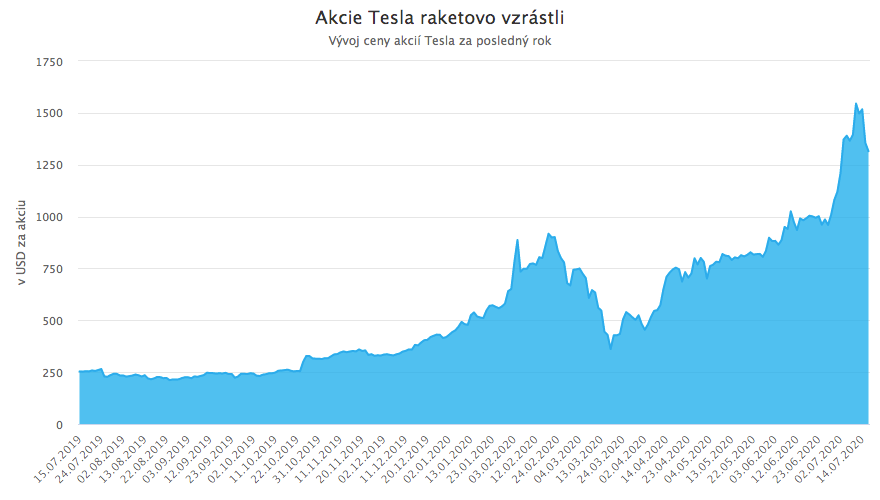
Tesla has always been among the more volatile stocks in global markets, but only the past few weeks have shown what a truly wild ride can look like. Since the start of the month alone, the shares have gained more than 40%. In the four months since the March sell-off, the stock price has quadrupled. Relative to the beginning of the year, Tesla is up 262%.
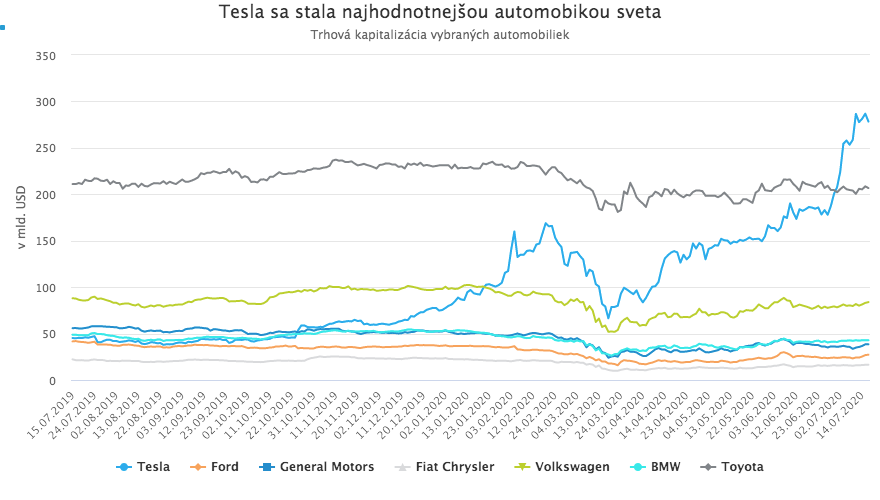
The surge in the share price has been matched by an equally dramatic rise in the company’s market capitalization. Over the past month alone, Tesla’s value has increased by more than USD 100 billion. At the start of the month, it overtook Toyota to become the world’s most valuable carmaker. Tesla’s market cap now exceeds USD 280 billion, meaning the company is worth more than Ford, General Motors, Fiat Chrysler, Volkswagen, and BMW combined.
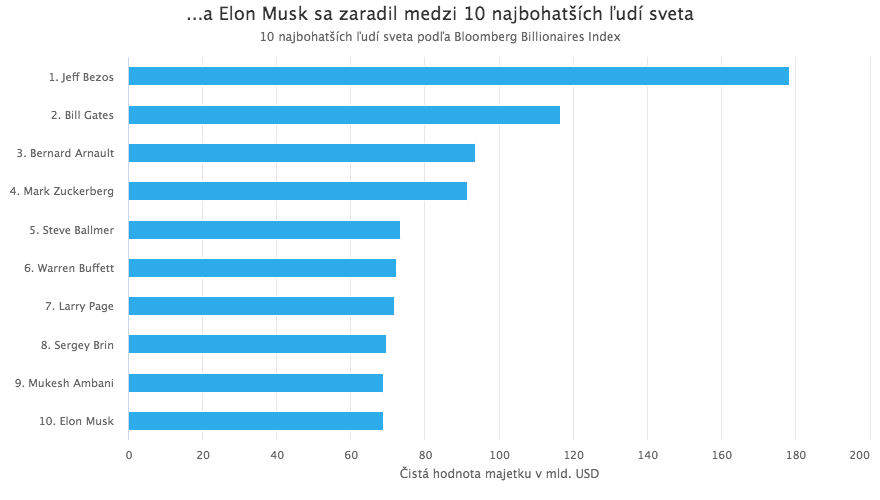
The rally has, unsurprisingly, also boosted Elon Musk’s personal wealth. As Tesla’s largest shareholder, Musk was propelled into the world’s top ten richest individuals earlier this month and briefly even moved ahead of Warren Buffett last week. He now ranks tenth, with a net worth of nearly USD 70 billion.
Tesla has always polarized opinion, including among investment professionals, and the current episode is no exception. Some investors and analysts not only view the latest move as fully justified, but argue there is still substantial upside. Others remain deeply skeptical and see the rally as nothing more than an extraordinary bout of irrational exuberance that will end badly. Below are the core arguments on both sides.
The bullish case
Tesla bulls argue that Tesla is not a conventional carmaker but an innovative technology company that will reshape mobility. On this view, it is not surprising that Tesla’s valuation has surpassed that of traditional automotive manufacturers. If anything, they argue it could continue rising toward the scale of the largest technology companies such as Apple, Alphabet, or Microsoft, whose market capitalizations exceed USD 1 trillion.
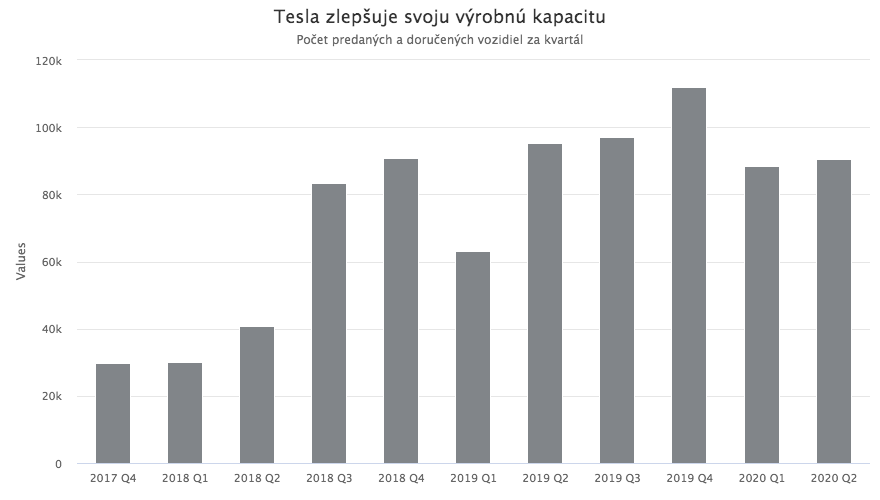
Supporters also point to a sharp improvement in Tesla’s operating and financial performance since last year. Production volumes are rising; estimates for this year point to as many as 500,000 vehicles produced, which would mark a new record.
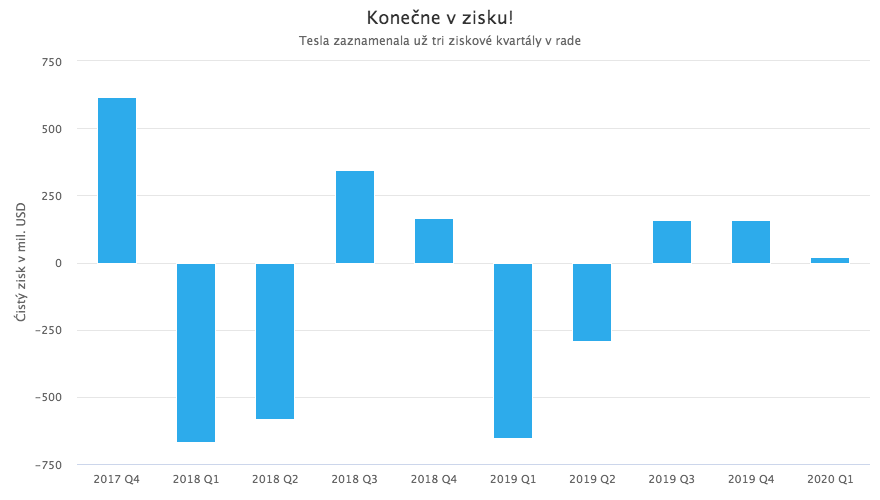
A company that spent years posting losses has also delivered three consecutive profitable quarters, including the first quarter of this year, already affected by the pandemic. Bulls interpret this as evidence of strengthening financial health and resilience.
Three profitable quarters in a row also offer another potential catalyst: if Tesla were to post a profit in the second quarter, it would formally meet the requirements for inclusion in the S&P 500. In a market dominated by passive index investing, entry into the world’s most widely tracked equity index would mechanically trigger large incremental demand, as S&P 500-linked ETFs would be forced to buy Tesla shares. That, in turn, could further propel the stock price.
The pandemic environment itself may even be supportive. Traditional automakers expanding into EVs, and therefore potential competitors to Tesla, may be forced to cut R&D and investment as the crisis pressures their finances. This could slow competitive threats and allow Tesla to strengthen its market position. In addition, post-crisis recovery programmes in many countries place significant emphasis on “green” investment. That trend is also reflected in strong inflows into ESG and clean-tech ETFs, where Tesla is a constituent of many indices, adding another structural source of demand for the stock.
Further excitement is generated by Tesla’s planned “Battery Day,” where Musk is expected to unveil advances in battery technology, and by his recent statement that Tesla is “very close” to achieving Level 5 full autonomy.
Finally, the rally has been fueled by short covering. Tesla has historically been among the most heavily shorted stocks globally. As the stock rises, short sellers’ losses mount and many are forced to cover by buying shares, which can further amplify upward momentum.
The bearish case
Sceptics have not been convinced. If anything, the rally has reinforced their belief that Tesla is a bubble driven by irrational mania, disconnected from fundamentals and destined to deflate as quickly as it inflated.
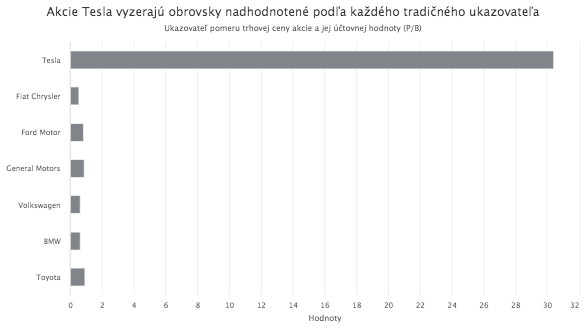
They point first to valuation. Tesla’s price-to-earnings ratio is currently around 9,594, implying the shares trade at almost 10,000 times earnings. For comparison, the average P/E for U.S. automakers is roughly 9.7 and for European automakers about 7.3. Even on a forward revenue-based perspective, the valuation remains extreme, with a multiple around 250. By virtually any standard metric, Tesla screens as extraordinarily expensive.
For today’s valuation to make economic sense, revenues and, more importantly, profits would need to grow at an extraordinary pace, implying a future in which Tesla becomes close to a monopoly in EVs and autonomous driving, while demand continues to rise and the company scales production sufficiently to meet that demand. Bears view that as highly speculative. No matter how strong Tesla’s products are, it is improbable that it will face no meaningful competition or sustain technological leadership and monopoly-like market power for an extended period.
They also argue that collapsing oil prices and a decline in living standards due to the pandemic could lead consumers to favor traditional vehicles over “green,” technologically advanced, but still relatively expensive cars. And even if Tesla leads in autonomous driving, the lack of enabling legislation may delay large-scale rollout for years, limiting the near-term economic advantage of any technological edge.
Capacity is another concern. The world’s most valuable automaker delivered 367,200 vehicles last year, up from 244,920 the year before. Tesla expects 500,000 deliveries this year. Yet compared with the scale of incumbents, this remains small. Volkswagen, whose market value is roughly three times lower, produced nearly 11 million vehicles over the same period.
Bears also question the certainty of some bullish catalysts. S&P 500 inclusion is far from guaranteed. It is unclear whether Tesla will post a profit in the second quarter, with analysts expecting a loss of 58 cents per share. Even if Tesla meets the technical criteria of four consecutive profitable quarters, inclusion is not automatic or immediate; the index committee has significant discretion and is not required to add a company merely because it qualifies.
Moreover, Tesla has benefited from being included in ESG indices and ETFs. But inclusion is not permanent. In the ESG acronym (Environmental, Social, Governance), sceptics highlight the “G”: governance. Musk’s controversial public conduct and episodes that have flirted with regulatory boundaries are not easily aligned with governance standards, meaning the risk of exclusion is not zero, despite Tesla’s green image.
Notably, Musk himself tweeted in early May, when the shares traded at roughly half their current price, that Tesla stock was “too high,” triggering a brief sell-off. What happens if he repeats a similar message?
A good investment?
Whether one leans bullish or bearish, Tesla is not a stock most investors should treat as a core holding, unless their objective is adrenaline rather than stable compounding. Even the optimistic camp must acknowledge meaningful risks and extreme volatility. A sudden shift in sentiment, an ill-judged Musk tweet, or any of the risks outlined above could trigger a sharp sell-off at any time.
At the same time, shorting Tesla may be equally hazardous. Even if the valuation looks disconnected from reality, the stock can still move higher, particularly in a market environment distorted by central bank liquidity and the increasingly speculative behavior of retail traders. One example illustrates the point: Nikola, a would-be Tesla competitor that has not yet sold a single vehicle or generated a dollar of profit, currently has a market capitalization of USD 18.9 billion.