Inflation Is Spooking Equity Markets Again

The latest data show that inflation is being driven upward primarily by energy prices, which rose by 29.3% year on year, with gasoline posting a particularly strong increase of 49.6%. Used passenger and freight vehicles continue to see sharp price growth, rising by 37.3% year on year, while new vehicles increased at a year-on-year pace of 11.8%. As for food, it rose at a year-on-year rate of 6.3%, and clothing by 5.8%. Inflationary pressures are expected to persist until mid-year and then weaken.
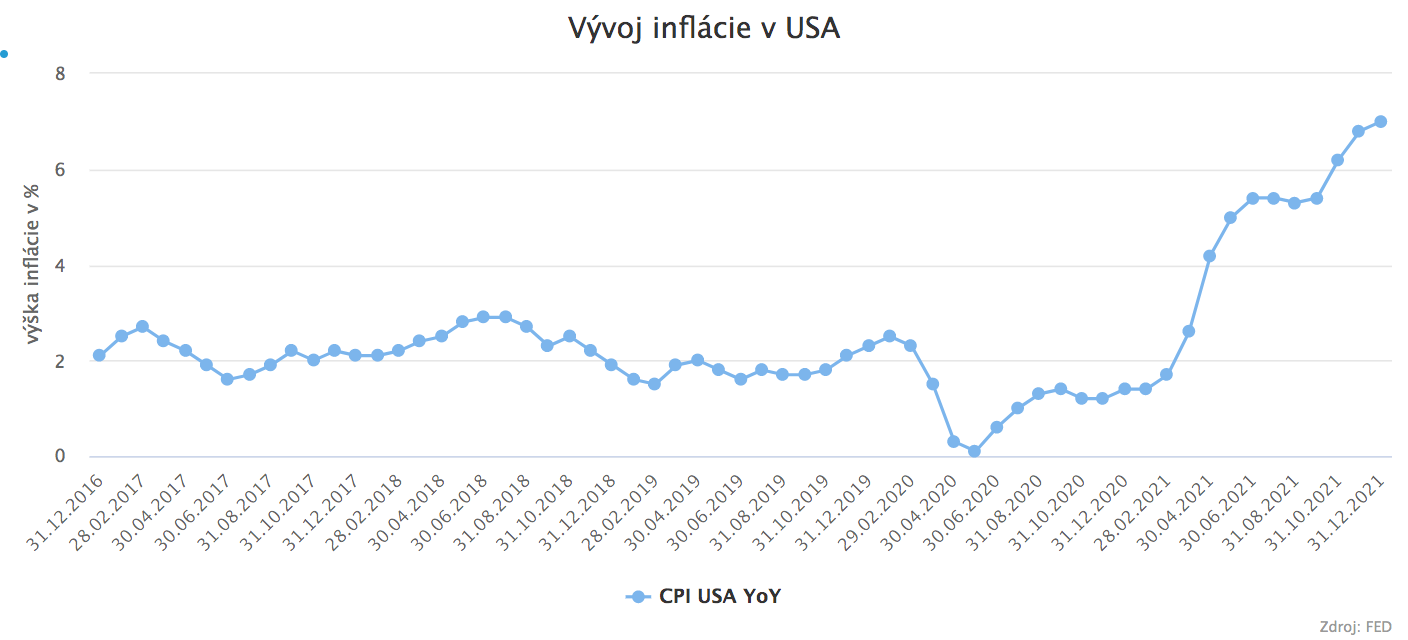
The Fed enters the fight against inflation
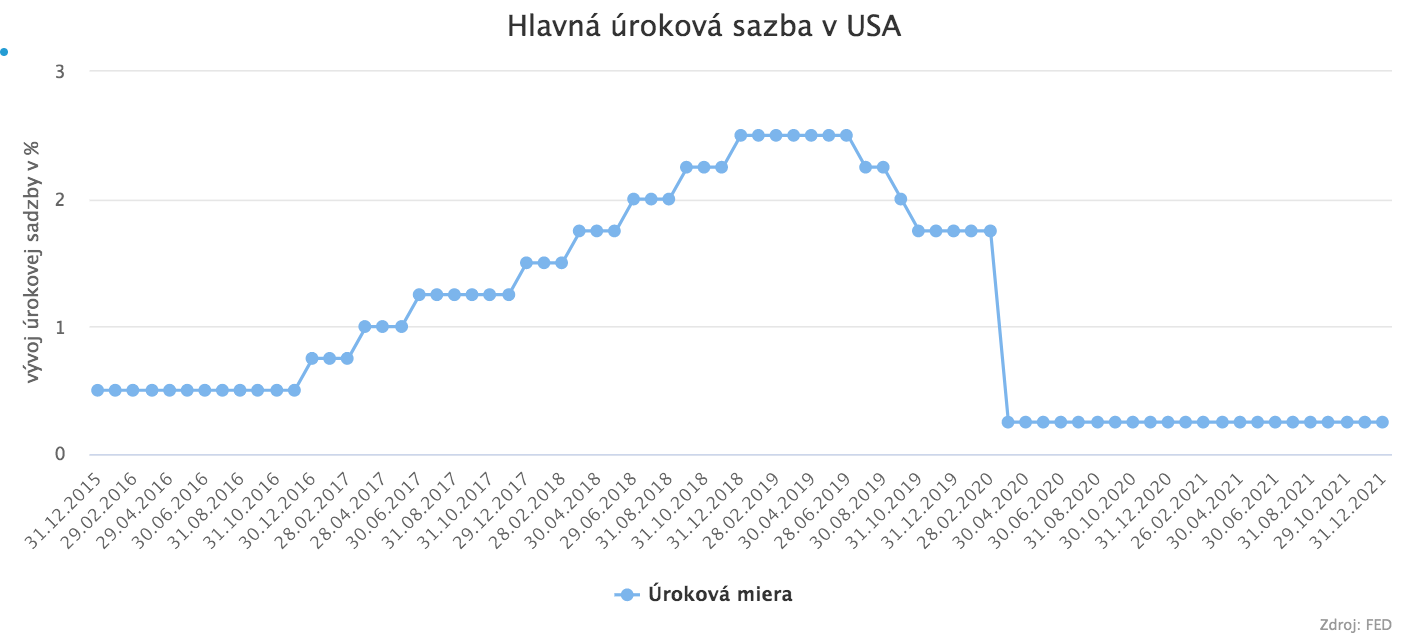
Rising inflation is spooking equity markets, and the Fed has signaled at least three increases in the main policy rate this year. These will likely be 0.25 percentage point hikes in each round. The Fed expects this step to ensure monetary stability and, as it claims, support sustainable and long-term economic expansion. This is the Fed’s main objective, since in its view the labor market is already in good condition and wages are rising by more than 9% year on year according to the latest data. Some analysts believe the Fed will be more aggressive and expect four rate hikes this year. Others still believe that even with rising inflation the Fed will not be so strict and will raise rates only twice this year. The first rate hike is not expected at the January meeting, but rather at the March meeting. Most analysts at least agree that rate hikes will be gradual rather than drastic. The closest example of drastic rate increases can be seen in the Czech Republic, where the central bank has declared war on inflation and is raising rates aggressively. The current level is 3.75%, while after the outbreak of the pandemic the policy rate was at 0.25%. Representatives of the CNB do not hide the fact that the policy rate will likely rise further. The reason is concern that inflation in the Czech Republic could approach 10%, which, according to CNB members, should happen.
Why do bond yields rise, and why are equity markets afraid of it?
With rising inflation, investors are not satisfied with the low yield offered by government bonds, and therefore are not willing to invest in bonds with yields only slightly below inflation. They then sell these bonds, which pushes yields higher, and this in turn feeds into equity valuations. Of course, higher bond yields discount the value of equities, and that is the main reason most investors monitor the development of government bond yields. A similar scenario occurred last year and investors responded by shifting their investments from technology and growth stocks into more value-oriented names. These do not carry as large a premium valuation as growth stocks. A similar rotation could take place this year as well, since these overvalued stocks reacted to rising yields with declines. The Nasdaq, the best-known technology index, experienced its first correction this year. The index fell by more than 10% from its peak and then stabilized. Stabilization was supported mainly by Tuesday’s statement by the Fed Chair, who said the Fed would conduct monetary policy in a way that ensures stable growth. In addition, the rise in 10-year bond yields halted, and, not least, many investors saw an opportunity to build positions in corrected stocks. Therefore, several analysts believe this could be an opportunity to build exposure to riskier assets.
Have companies prepared for rising interest rates?
Last year brought several records. Many equity indices broke records and repeatedly reached new all-time highs. The amount of money raised through IPOs and SPACs also did not lag behind, reaching USD 594 billion. Companies did not fall asleep this year either, and with the threat of higher interest rates, they raised more than USD 100 billion through bond issuance in the first week of January alone. This is the second-largest amount over the last 19 years in the first seven days of the year, with as much as USD 60 billion raised by US companies. This is a clear signal that companies expect interest rate hikes and are preparing for this situation while rates are still relatively low.
How should an investor behave in such a period?
In times of higher inflation and low yields on term deposits in banks, investors should not keep all their funds in banks, but invest a portion. They should invest prudently and with regard to their investor profile. Investors have multiple options, from more conservative instruments such as bonds or real estate to riskier assets. From a long-term perspective, temporarily higher inflation does not prevent equities from rising, and they can grow even in such periods. In the short term, however, inflation limits their performance, and therefore one must also consider the scenario that equities will not meet investors’ expectations this year. It is therefore necessary to prepare for volatility and a higher risk of loss than with bonds.