Is Russia in default?
Moscow’s war in Ukraine has crossed many lines and its consequences have spilled over into the financial sector. On 27 May the Russian Federation was due to pay interest of USD 100 million, but the payment was not made. A 30day grace period then began, during which the debt can still be paid. Predictably, no payment was received by 27 June, and Russia has repeatedly insisted that it transferred the funds but that the creditors did not receive them.
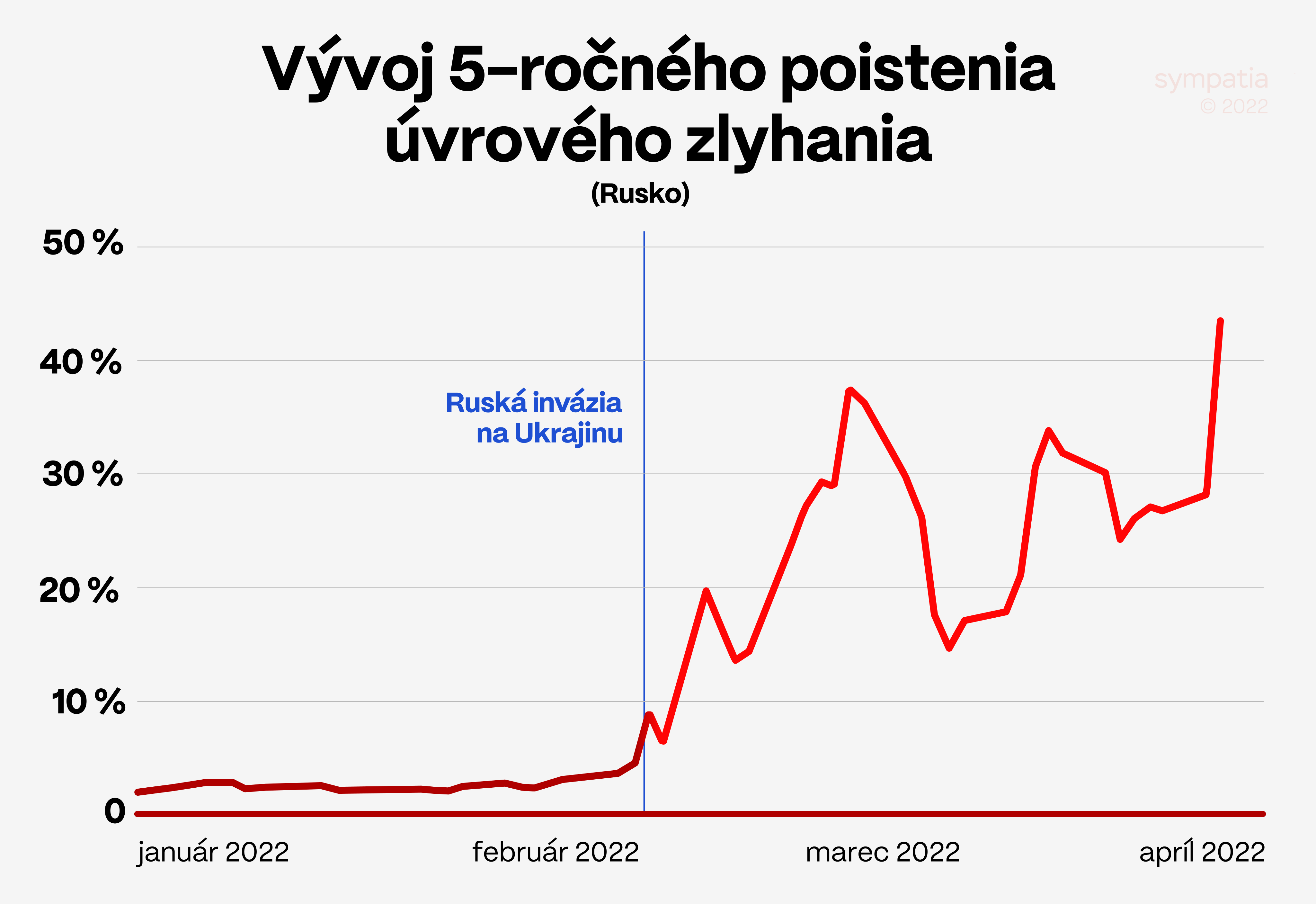
A seamless transfer of funds is handled by Euroclear in Belgium, which has stated that it is complying with sanctions imposed on the Russian Federation. It therefore appears likely that Moscow attempted to send the money but that the restrictions prevent distribution. In financial markets, however, only the outcome matters. Russia denied that it was in default and referred creditors to Euroclear. Officially, however, the Russian Federation has been declared to be in default — a determination made by the rating agency Moody’s, notwithstanding that sanctions complicate such pronouncements. Declarations of default are not made lightly and are typically issued by the three most respected rating agencies.
Russia is not new to this situation. The last comparable episode occurred in 1998, when the country experienced a financial collapse and the domestic currency was devalued — although that default related to debt denominated in roubles. A historically similar event occurred a century earlier, when Lenin’s government repudiated the tsarist foreigncurrency debts after the Bolshevik Revolution. In short, Russia has a lengthy history of failing to meet obligations.
Today’s circumstances differ, however, because the state is not seeking to renounce its debts as in some past episodes but is unable realistically to effect payment. Harsh Western sanctions have hit the financial sector, and politicians have pushed to force a default by the Russian Federation. Whether this form of default carries meaningful weight or can be presented as a form of retribution is debatable. Many restrictions are justified and sensible; yet preventing the payment of debts and then declaring a default risks appearing petty. In conventional defaults the debtor typically enters bankruptcy and is shut out of capital markets for years as investor confidence evaporates. Russia had already, through its actions, in effect isolated itself from the global financial system long before this episode, so that signal of exclusion was unnecessary.
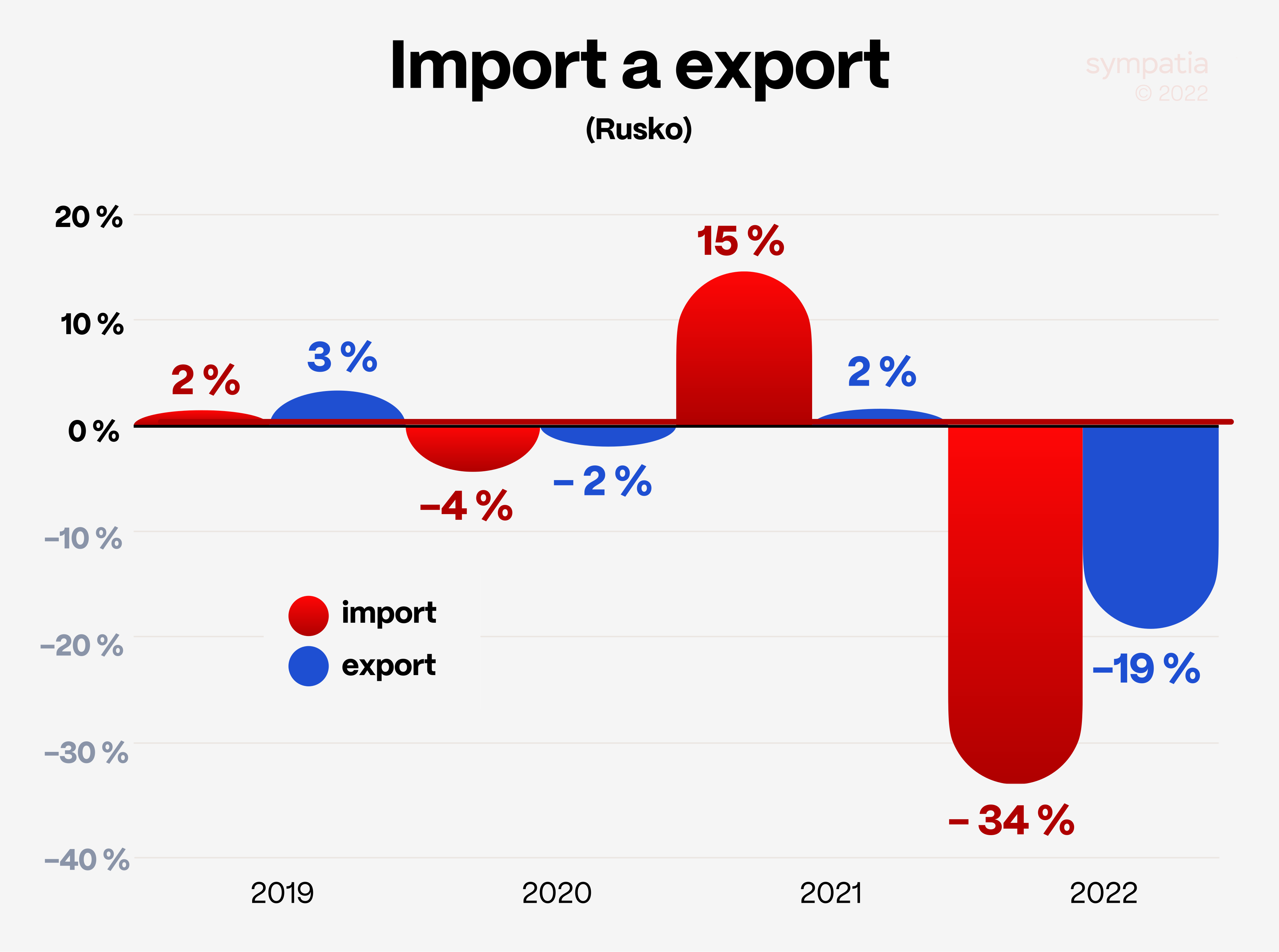
The current sanctions therefore often punish creditors more than Russia — creditors who either cannot access their funds or must wait years for repayment. Russia is not, at present, preparing to enter formal bankruptcy: revenues from natural resources, which it sells in large volumes, remain at record prices. From the start of the war in Ukraine until 3 June, Russia reportedly earned more than €90bn from fossil fuels, roughly 60% of which came from the EU, with Germany the largest single buyer. This paradox — blocking payments to Russia while continuing to buy its oil, gas and coal — highlights a split in Western policy. Ideally, sanctions should inflict maximum pressure on Russia while minimising harm to Western economies. Existing debts should, arguably, be allowed to be repaid while new lending should be prohibited. Other nonessential financial dealings with Russia should remain banned until its policy towards Ukraine changes.
Disclaimer
All texts, images, graphics and other objects contained in this document are protected by copyright. Without the prior written consent of Sympatia Financie, o.c.p., a.s., the content of this document must not be copied, distributed, altered or supplied to third parties. This document contains only general information. Sympatia Financie, o.c.p., a.s. does not provide professional advice or services through this document and accepts no responsibility for any loss arising directly or indirectly from reliance on this document.