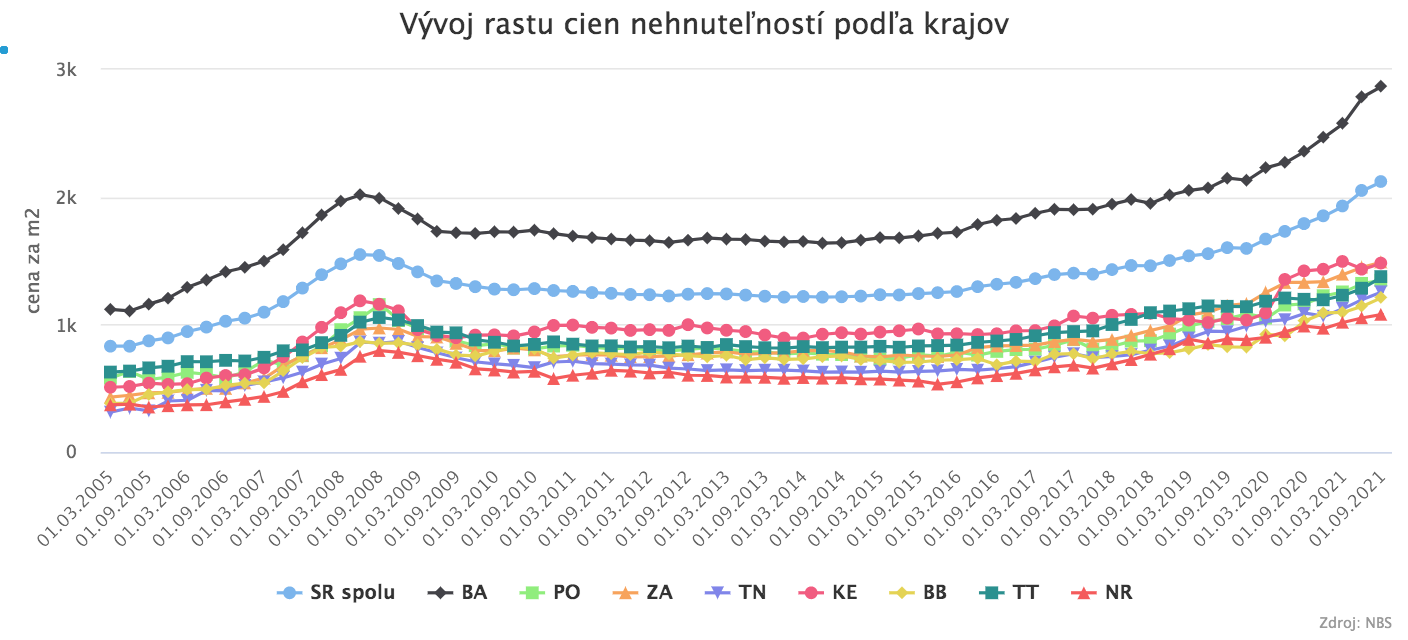
Property Prices Continue to Rise
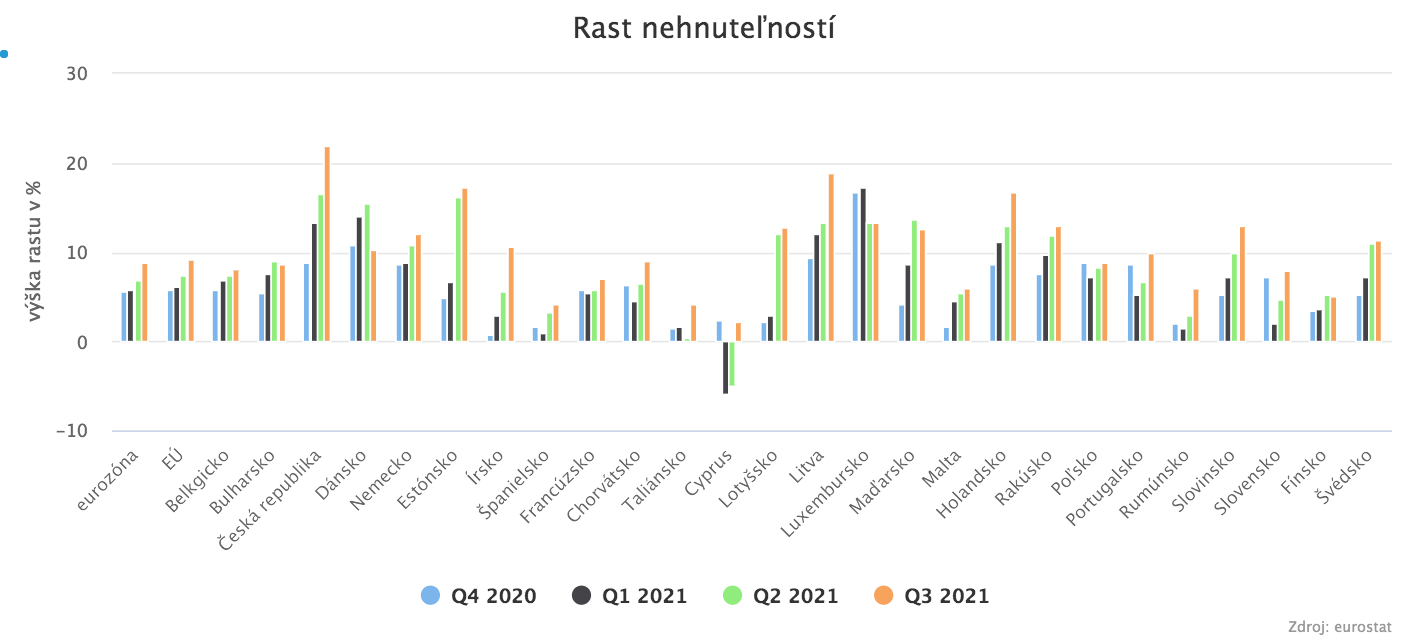
Year-on-year growth in property prices in the third quarter of 2021 continues across all EU member states, and in more than half of them this growth is in double digits. The most pronounced increase was recorded by our neighbors in the Czech Republic, where the growth rate reached as much as 22%. This will likely be a strong signal for the CNB, which will want to curb this strong rise in residential property prices by further increasing the main policy interest rate. It would probably be better to increase the base amount that needs to be available as equity (own funds) when financing a property purchase through a mortgage loan. A broad-based intervention will complicate life for many entrepreneurs, for whom business financing will become unnecessarily more expensive. This will likely slow the Czech economy, since more expensive money will slow economic expansion. The ECB likely wants to avoid such a step so as not to slow the expansion of the economy, and therefore is still waiting before raising interest rates. Not to mention that current inflation is not caused solely by cheap money, but also by the pandemic itself, which continues to complicate supply chains, and by high energy prices that feed through into the entire economy. Therefore, the ECB has so far not been leaning toward raising the main policy rate, and consequently this factor should not complicate the growth of property prices in the euro area this year. The weakest year-on-year growth in residential property prices in the third quarter of 2021 was recorded in Cyprus, at 2.2%.
Developments in residential property prices and rents in the EU
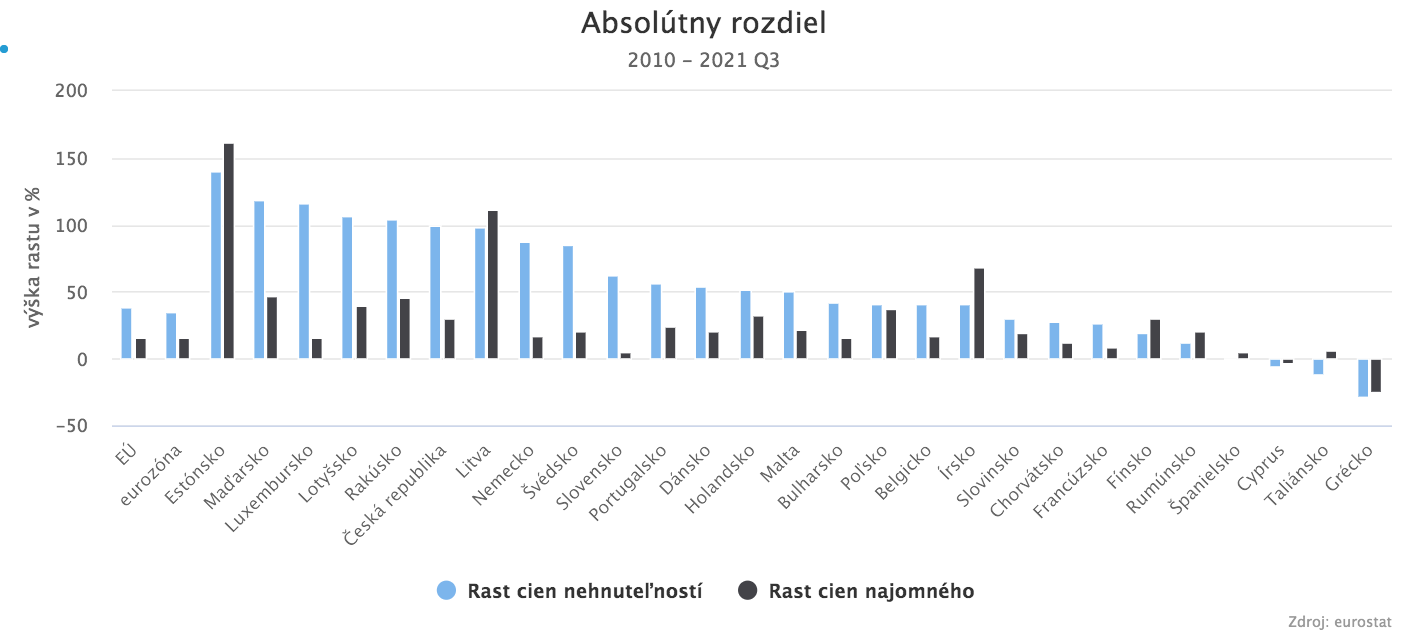
Income from property is not only the profit from an increase in its value upon sale. Income may also come from rental payments, which form a smaller part of the total return on this asset. This income proved to be very stable and was able to grow even when property prices in the EU declined as a result of the 2007 financial crisis. Eventually, on average, property values returned to their peak and then continued their upward trend. If a property is to serve as an investment that generates profit, it cannot be a blind one. For most investors, it is appropriate to use transparent and successful funds that have been investing in real estate over the long term. Such an investor has no unpleasant worries related to the property itself and can calmly focus on their job or business. An example of why it is advisable to entrust such an investment to experts is the unfavorable development of residential property prices in Greece. Over the observed period from 2010 to the third quarter of 2021, they did not record any increase in value. On the contrary, property values in that country decreased by –27.9%; similarly, Italy recorded –11.9%, Cyprus –5.6%, and Spain –0.5%. A well-managed and diversified real estate fund avoids such an unfavorable scenario. By contrast, an individual investment in a single specific property is exposed to higher risk.
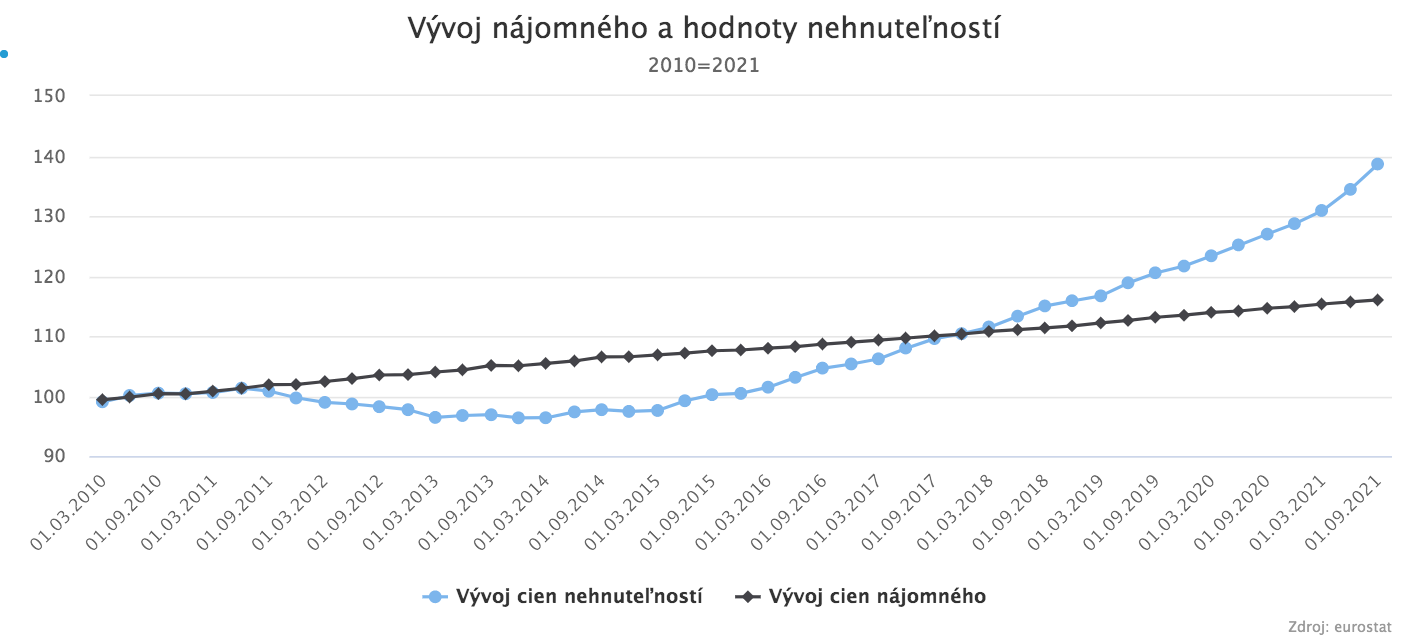
The most pronounced average increase in residential property prices and rents was recorded by Estonia, which on average since 2010 posted an increase in property prices of more than 140.5% and an increase in rents of 162.1%. The worst performer was Greece, where residential property prices have, on average, lost 27.9% since 2010 and rents declined by 25.1%.
What developments can we expect
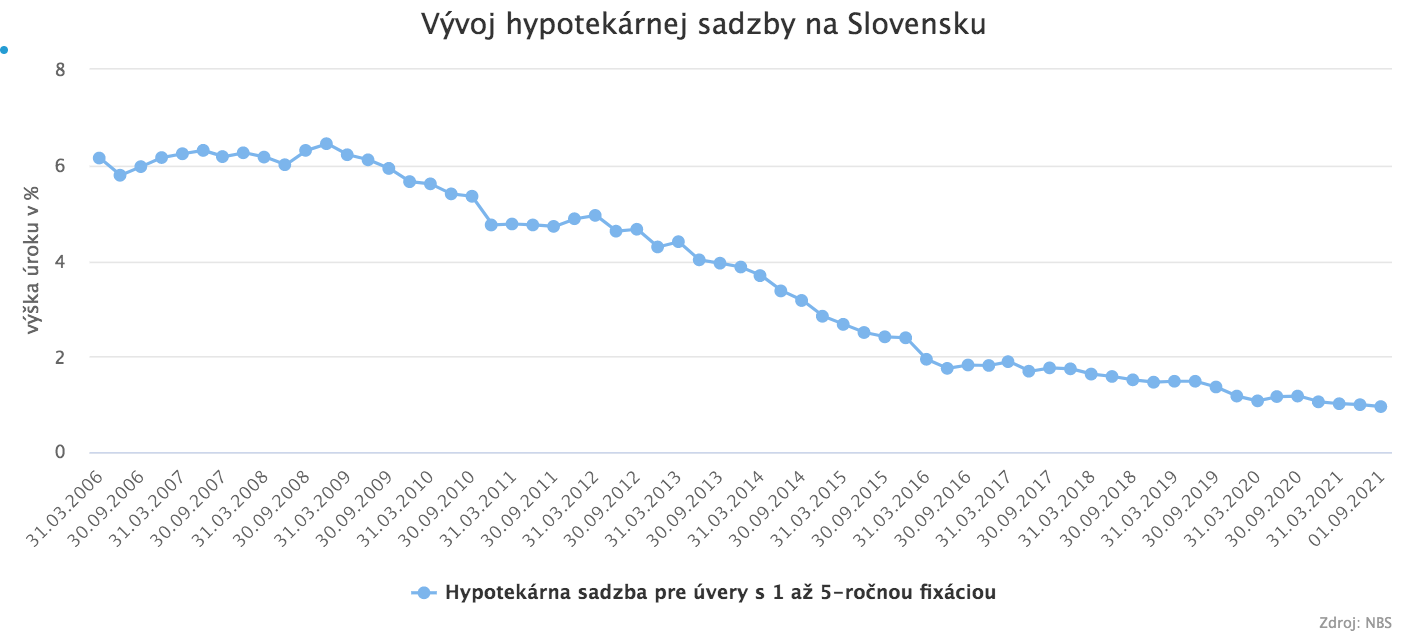
Property price growth in Slovakia was robust last year. In some areas of Slovakia, property prices increased by as much as one third. The main factors driving property price growth are rising land prices, still cheap and accessible loans, increased demand for housing, and rising prices of construction materials. These factors fuel the construction sector’s willingness to implement new projects, which remain in short supply compared to Western countries. According to Cushman & Wakefield, investments in commercial real estate in 2021 in Slovakia exceeded EUR 750 million. An interesting point was the strong performance of industrial buildings, which attracted investments totaling EUR 289 million, a record level in Slovak history. These factors only confirm the high attractiveness of our real estate market and its investment potential in the coming period. For these reasons, many analysts agree that property prices will continue to rise this year as well. Analysts do not recommend waiting to purchase a property intended for housing, as such speculators have not been successful in recent years and currently end up buying property at significantly higher prices.
Are we suffering from a shortage of apartments?
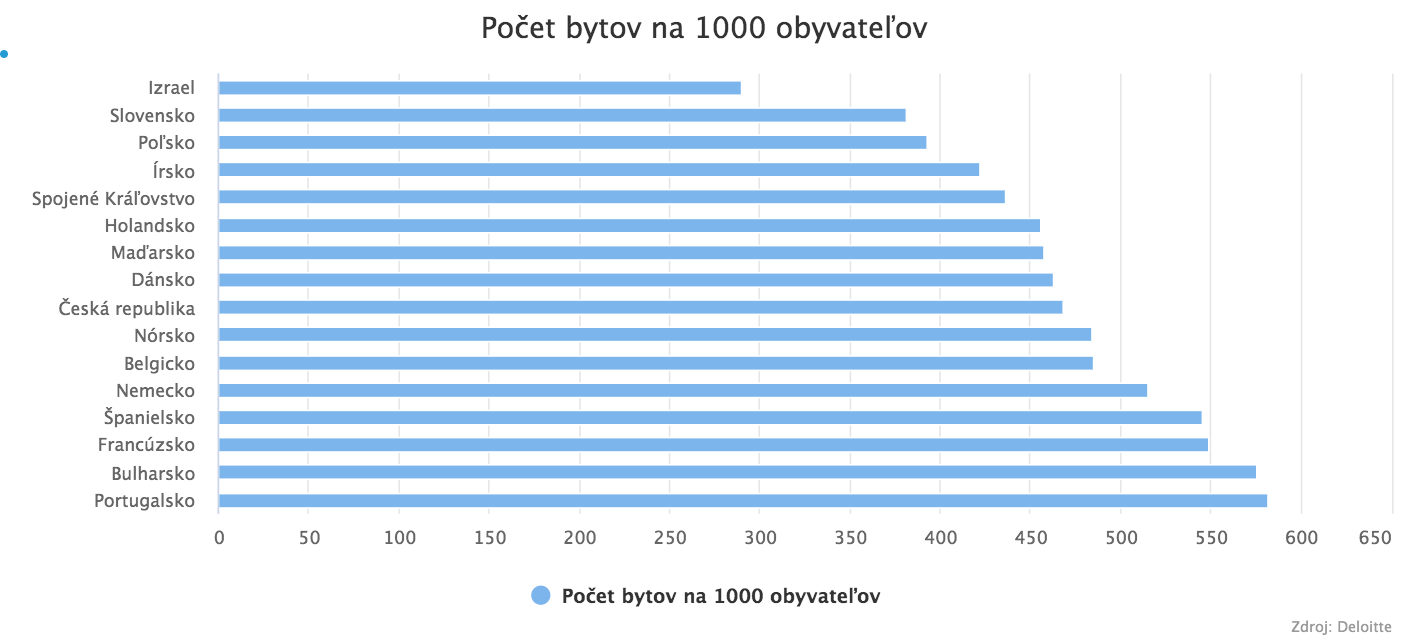
Proof that strong demand and weak supply are not just a marketing claim is also a recent study by Deloitte. It focuses on the construction sector in Europe and Israel. An interesting indicator is the number of dwellings per 1,000 inhabitants in a country. Slovakia ranked second from the bottom. We are a country with 381.52 dwellings per 1,000 inhabitants. Portugal performs best, with as many as 581.91 dwellings per 1,000 inhabitants. This only confirms the strong potential of the real estate market in the coming years.
Are we in a real estate bubble?
Probably not, since the current price growth is caused by several objective factors, and thus it is not just unjustified frenzy. Without these factors, property prices would grow at a slower pace. It is assumed that as inflation growth slows, property price growth will also slow. At present, fear of rising prices contributes to strong demand for property. Before the financial crisis, when real estate suffered globally, Slovakia also experienced three very strong years of growth. We have recently witnessed the first strong growth after a crisis period, which, of course, would not be healthy or sustainable in the long run and would represent a risk of inflating real prices. In the coming years, property prices should at least cover the level of inflation and, in better times, generate a real profit for the investor. Therefore, investing in real estate remains a suitable form of investment for all investors who want to protect their financial resources against inflation and, in better years, outperform it.