Russia insists on payments in rubles
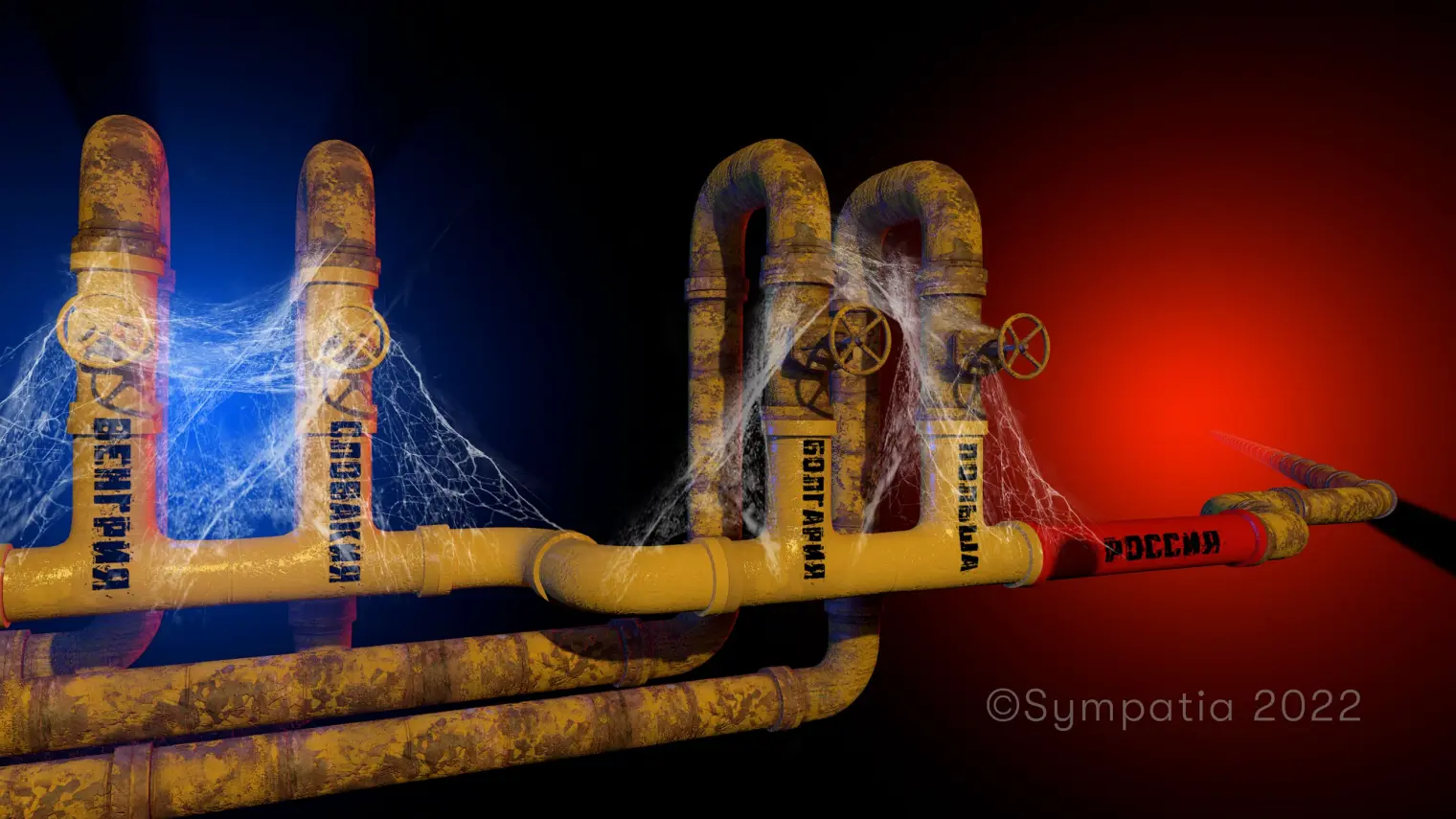
According to the Slovak Minister of Economy, the European Commission stated that the proposed payment method, paying in euros and then having Gazprombank convert the funds, is not in conflict with sanctions. In practice, the payment is made in euros and the bank then converts them. In reality, however, nothing changes for Russia, because there is no difference between receiving euros and exchanging them themselves, or pretending that EU countries are paying in rubles while in fact sending euros that are then converted at the bank. It is mainly a political tool in Moscow’s hands to demonstrate geopolitical power to its domestic audience.
Will supplies of Russian gas to Germany decrease?
The Yamal pipeline runs through Poland and ends in Germany. Representatives in Berlin have long refused an immediate halt to the flow of gas from Russia. Of course, Germany does not want to endanger its economy, and as the engine of the EU it has significant influence in Brussels. An interesting example for the Union is Italy, which is not sleeping and is very actively securing gas from alternative sources. It should have increased gas supplies from Algeria arranged, and it plans to co-finance new natural gas extraction in Congo, which will again increase its independence from Russia. However, Germany does not receive gas only via the Yamal pipeline, but also through Nord Stream and a branch via Slovakia. In addition, Germany has contracted a certain volume of gas from Qatar, and some gas will come from the U.S. for the entire EU. A separate organization has been created for this purpose, which plans to purchase gas on world markets for all Union countries. The problem, however, remains liquefied natural gas (LNG) terminals. Germany does not yet have them, although it has announced the construction of two new ones. Significant capacity in this area is held primarily by Italy and Spain. A faster alternative than building new terminals may be floating LNG terminals, which some northern countries already use.
The World Bank sees strong pressure on commodities
This year, the World Bank does not see reasons for commodity price pressures to ease. According to the bank’s analysis, due to the war in Ukraine, the largest commodity shock since 1973 has occurred. Commodity prices are expected to remain elevated until 2024. In addition, the World Bank’s vice president warns about stagflation and urges countries to use every opportunity to support economic growth. He also warns against steps that would instead hinder growth. According to their estimates, energy prices should rise by 50% this year and then gradually ease in the following years. The bank adds that if the situation escalates, energy prices could rise even above today’s already high levels. As for Brent oil, it should stay around USD 100 per barrel this year, the highest level since 2013 and a year-on-year increase of more than 40%. For 2023, the bank forecasts Brent oil at USD 92 per barrel, which is still above the five-year average of USD 60. Gas prices are expected to be twice as high this year as last year, while coal prices are expected to remain 80% higher this year. Food prices are also a major problem; their rise will have the strongest impact on developing countries, where shortages may occur as well. The world should therefore also consider regions where real poverty prevails, and a humanitarian crisis cannot be ruled out.