Higher inflation is not leaving us yet

Inflation in the U.S. continues to rise
Year-on-year inflation in the U.S. reached 7.9% in February, the highest level since January 1982. The largest share of the increase in the price level is once again driven by energy, which rose by 25.6% year-on-year; gasoline also hit drivers hard, with prices increasing by as much as 38%. Food prices are also accelerating, up 7.9%, with similar price growth last seen in 1981. Used cars still remain expensive, gaining 41.2% year-on-year. Core inflation, which excludes food and energy prices, rose to 6.4%, also a 40-year record. The Fed has already indicated that at its next meeting on March 16 it will raise its key interest rate by at least 0.25 percentage points. Economists expect rates to rise throughout the year, and the final level may reach around 2%. The U.S. economy is very well positioned. This fact is almost indisputable, and therefore after strong GDP growth results and a strong labor market, it is necessary to prevent the economy from overheating and stabilize the price level. This can only be achieved by raising interest rates, which will slow economic activity. U.S. unemployment is at 3.8%, and economic growth in Q4 reached 7%.
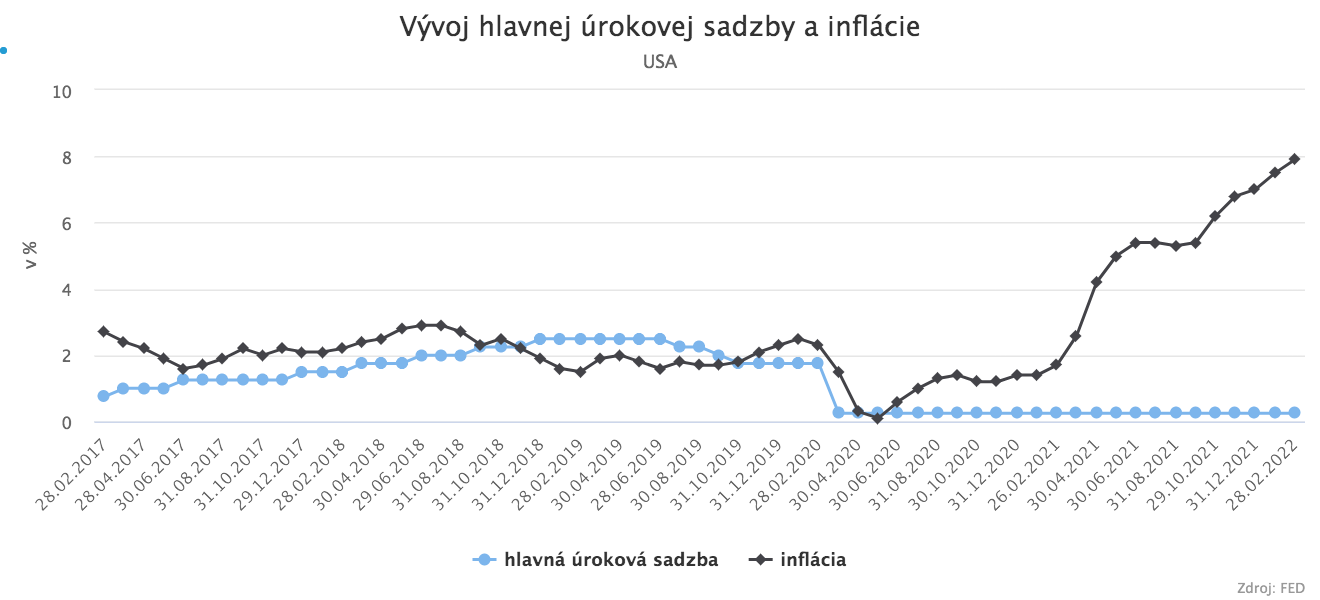
Rising prices are also troubling the euro area
Annual inflation in the euro area reached a historic maximum of 5.8%, while the market expected an increase to 5.4%. The price level therefore exceeded analysts’ expectations, and it cannot be ruled out that in the current situation it could catch up with the U.S. As there, the biggest contributor here as well is energy, which rose by 31.7% year-on-year. Food prices increased by 4.1%, a slower pace than in America. Fortunately, core inflation, which is the key indicator for central banks, stands at 2.7%, which is not a critical level. Of course, the ECB continues to target 2% inflation, just like the Fed. The ECB also no longer wants to wait for long and announced an accelerated end to its asset purchases, which should conclude during the third quarter. This could be followed by an increase in the key interest rate by 0.25 percentage points, after which rate hikes this year would likely be finished. The EU economy is not in as good a condition as the U.S., so we cannot afford to tighten the economy too much. Unemployment is at 6.8%, and economic growth in Q4 reached only 0.3%. In addition, the ECB expects slower GDP growth and revised its outlook for this year from 4.2% to 3.7%. Total inflation for 2022 is expected to reach 5.1% according to the new forecast, whereas it previously predicted 3.2%. The central bank further expects that higher prices for products and services will have a disinflationary effect. In other words, it expects lower consumer demand because goods have become markedly more expensive. Overall, the economic outlook has worsened, and a more significant recovery and stabilization will likely be seen only at the end of the year or at the beginning of the next. Today, everything depends on the ongoing war in Europe and its impact on the economy.
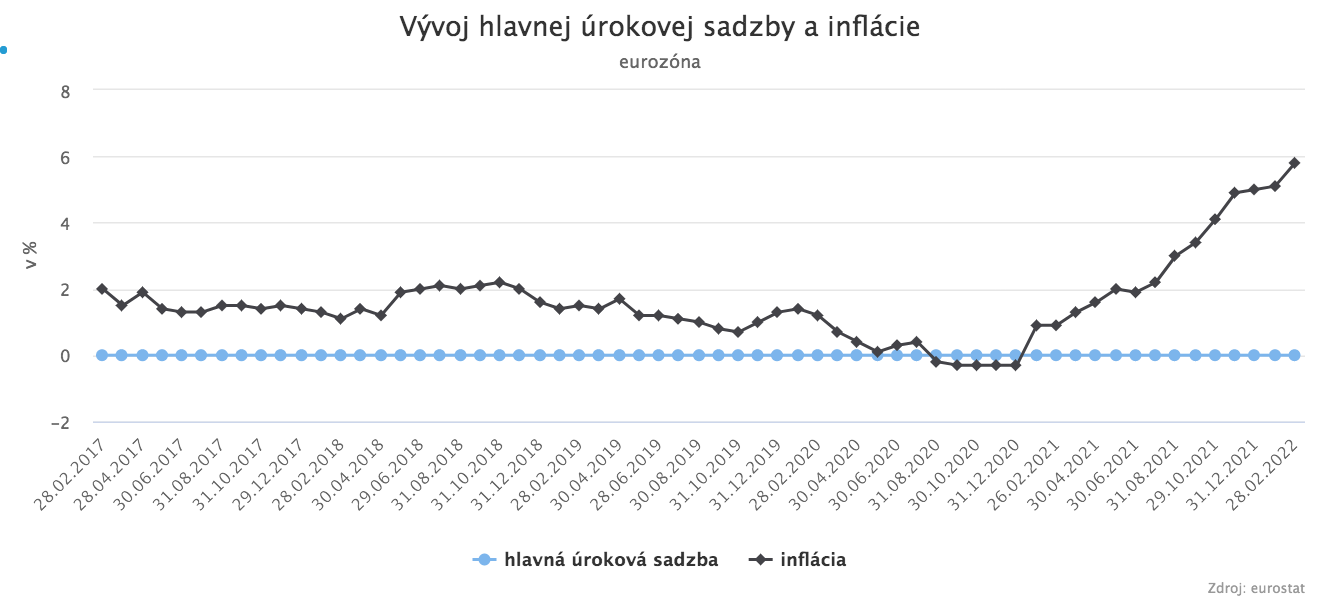
EUR vs. USD
The EUR/USD exchange rate is not protected from today’s panic either, and the U.S. dollar is becoming a natural safe haven for investors. Both currencies belong to the basket of reserve currencies; however, the U.S. dollar is the most widely used currency in the world and is used in most international transactions. It is also supported by central banks worldwide, which hold a large portion of their foreign-exchange reserves in dollars. For these reasons, it is the most stable and today also the safest currency that investors flee to when problems arise in the world. For illustration, more than 55% of foreign-exchange reserves are held in U.S. dollars, while the euro’s share is “only” 20%.