Japan: What Happened to the Land of the Rising Sun?

Date created: 11 April 2023
Once, Japan was not only one of Asia’s economic tigers but a global powerhouse. The island nation’s economy expanded rapidly and appeared on course to challenge the United States for supremacy. Everything began to change in the 1990s, when Japan was still the world’s second-largest economy.
How did it start?
After World War II Japan lay in ruins; its economy was shattered. The immediate postwar years were difficult, but decisive leaders introduced bold political and economic reforms. Markets were liberalised, taxes were cut, investment was promoted and the population set out to rebuild—driven in large part by the famously industrious Japanese workforce.
Japan also became a parliamentary democracy, and the structural composition of the economy shifted from agriculture to manufacturing and extractive industries, and later to advanced technologies. The country’s rapid productivity gains and export growth earned it global renown.
Japan’s rising export surplus began to worry the United States. Japanese exports were effectively freer, while imports into Japan remained relatively constrained. Meanwhile, persistently high U.S. interest rates strengthened the dollar, boosting U.S. imports and weighing on exports. The growing U.S. trade deficit—especially with Japan and Germany—generated mounting political pressure, culminating in the Plaza Accord.
Plaza Accord
Signed in 1985, the Plaza Accord committed major economies to measures aimed at correcting global imbalances: lowering public deficits, liberalising capital markets and removing trade barriers. Crucially, the agreement sought to weaken the U.S. dollar, including coordinated intervention in foreign-exchange markets. G5 countries agreed to take actions—directly or via policy alignment—to reduce the dollar’s strength.
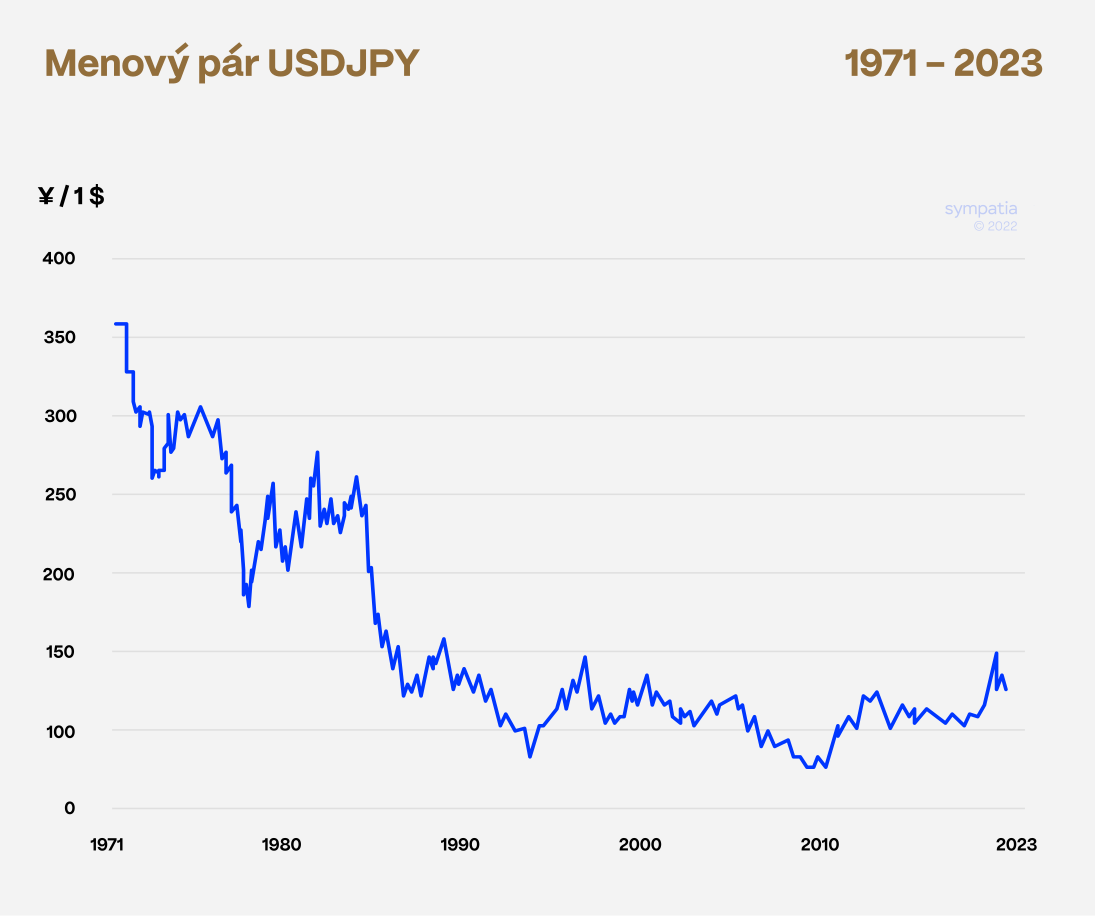
The measures worked perhaps too well: the dollar fell by nearly 50%. This narrowed the U.S. trade deficit because Japanese and German consumers gained purchasing power in the U.S. market. But the rapid appreciation of the yen severely hurt the competitiveness of Japanese exporters. Japanese firms and households used the stronger yen to acquire assets, companies and real estate abroad.
Louvre Accord
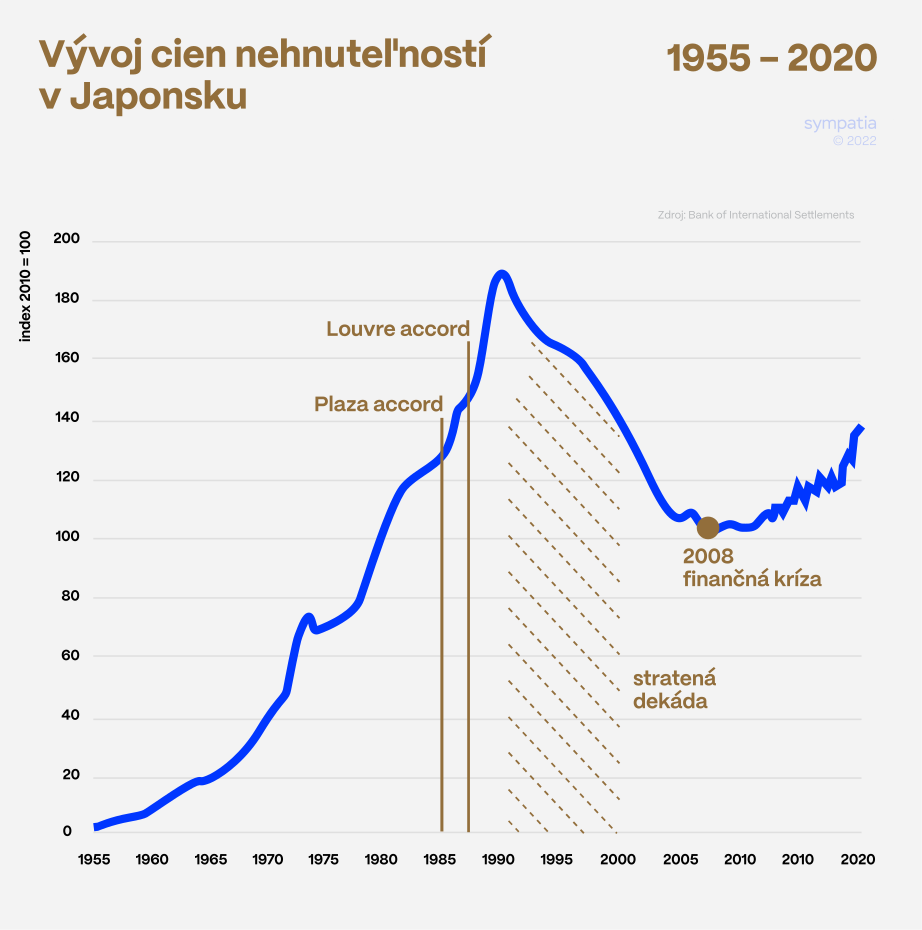
Japan was unhappy with the yen’s sharp appreciation and joined the subsequent Louvre Accord (1987), which included the original G5 plus Canada and aimed to stabilise exchange rates and curb the yen’s rise. Despite these efforts, the yen’s surge had already set in motion market forces that were hard to reverse. The currency boom helped inflate asset prices at home and—when those bubbles burst—contributed to a prolonged economic downturn. The monetary-policy experiments of the Plaza and Louvre accords therefore played a significant role in the emergence of Japan’s economic crisis.
Refusing the Plaza Accord might have led to wider protectionist measures by the United States, possibly including trade barriers or embargoes on Japanese and German goods. Such a spiral of retaliation could have severely damaged global trade and triggered a deeper global crisis. From that perspective, the coordinated approach averted a potential worst-case scenario, albeit at great cost to Japan’s domestic economy.
Was Japan really an economic miracle?
Shortly before the 1990s crisis, Japan ranked as the second-largest economy. Between 1960 and 1995 Japan’s GDP rose from about USD 44.3 billion to USD 5.55 trillion—an increase of over 12,000%. Between 1987 and 1997 Japan even reported higher GDP per capita than the United States. But the subsequent recession—the “lost decade”—undermined that trajectory.
The crisis shares features with other major financial crises, including an extreme run-up in real-estate prices and widespread over-leverage among firms and households. Lenders sometimes provided loans exceeding the value of the collateral, betting that asset prices would continue to rise. Multiple asset bubbles burst and pushed Japan into a multi-year slump from which it has never fully recovered.
Lost decade
After the Plaza Accord weakened the dollar, concern mounted in Japan over the yen’s appreciation, which threatened export competitiveness. Policymakers responded with aggressive easing and fiscal stimulus. Those policies fuelled an asset-price boom that ultimately collapsed. Between 1985 and 1990 Japan’s main stock index rose roughly 200% and the yen strengthened more than 60% versus the dollar. At the bubble’s peak, the market value of Japanese equities exceeded that of U.S. equities by a wide margin, despite Japan’s GDP being much smaller. When the bubble burst, losses on assets exceeded USD 10 trillion—about three times Japan’s GDP—while real-estate values retraced dramatically. The country lost roughly a decade of growth and never returned to its pre-crisis growth path.
Abenomics
Abenomics—the policy package associated with the late Prime Minister Shinzo Abe, who served 2006–2007 and 2012–2020—combined very loose monetary policy, fiscal stimulus and structural reforms. During Abe’s second term the government deployed aggressive monetary easing, JPY 10.3 trillion in fiscal measures, and reforms including consumption-tax increases, deficit reduction plans, education reforms and efforts to boost female labour-force participation. The aim was to jolt the economy out of stagnation.
These policies produced tangible short-term gains: nominal GDP rose, public-debt dynamics stabilised to some extent, and the yen weakened by more than 20%. Employment improved—the unemployment rate fell from 4% to 3.7%—and equity markets rallied (rising nearly 60%). Yet the intended improvement in the trade balance did not materialise sustainably, in part because many Japanese exporters invoice in foreign currencies; a weaker yen raises the domestic cost of imported inputs and raw materials, which Japan relies on heavily. Over time the stimulus effects faded, exposing the limits of monetary and fiscal easing alone.
Current situation
Despite historic setbacks, Japan retains considerable global economic standing. It is a G7 member and remains the world’s third-largest economy—though China has overtaken it. The yen remains a reserve currency, accounting for about 7.6% of global foreign-exchange reserves (the U.S. dollar is still dominant at roughly 43.4%). Unemployment is low (around 2.5%) and the employment rate (about 61.3%) roughly matches prelost-decade levels.
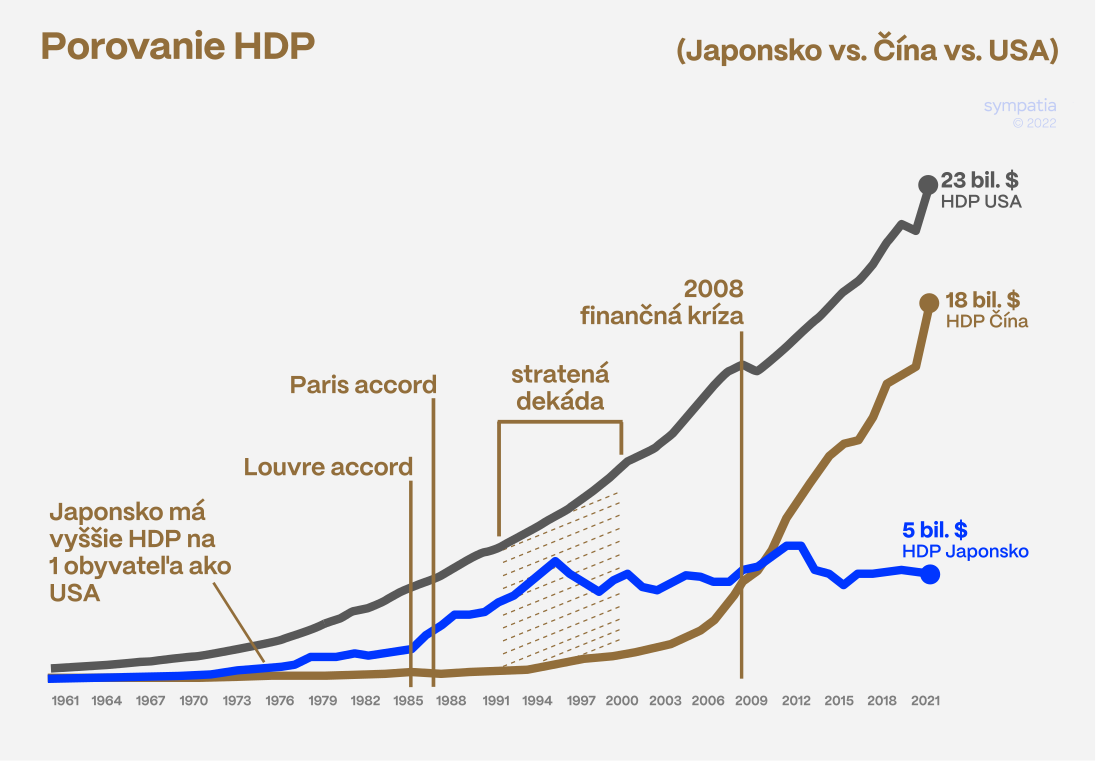
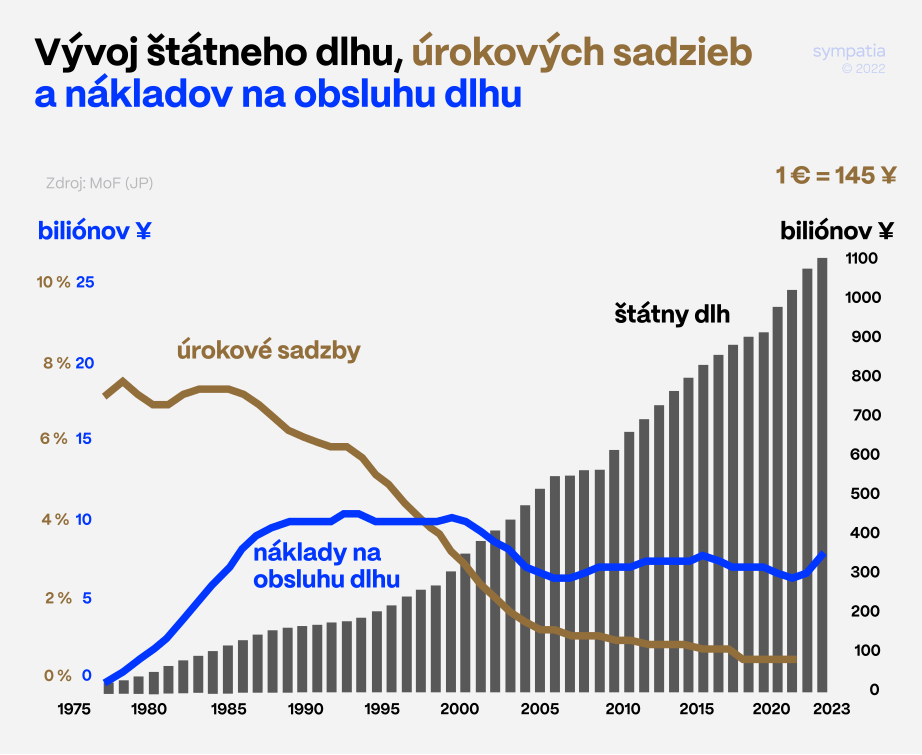
Japan stands out today as an exception to the global inflation wave: inflation is modest (around 3%). But the country faces major challenges—above all a government debt burden of about 266.2% of GDP. Public debt rose further following Abe’s era, driven in significant part by pandemic-related spending.
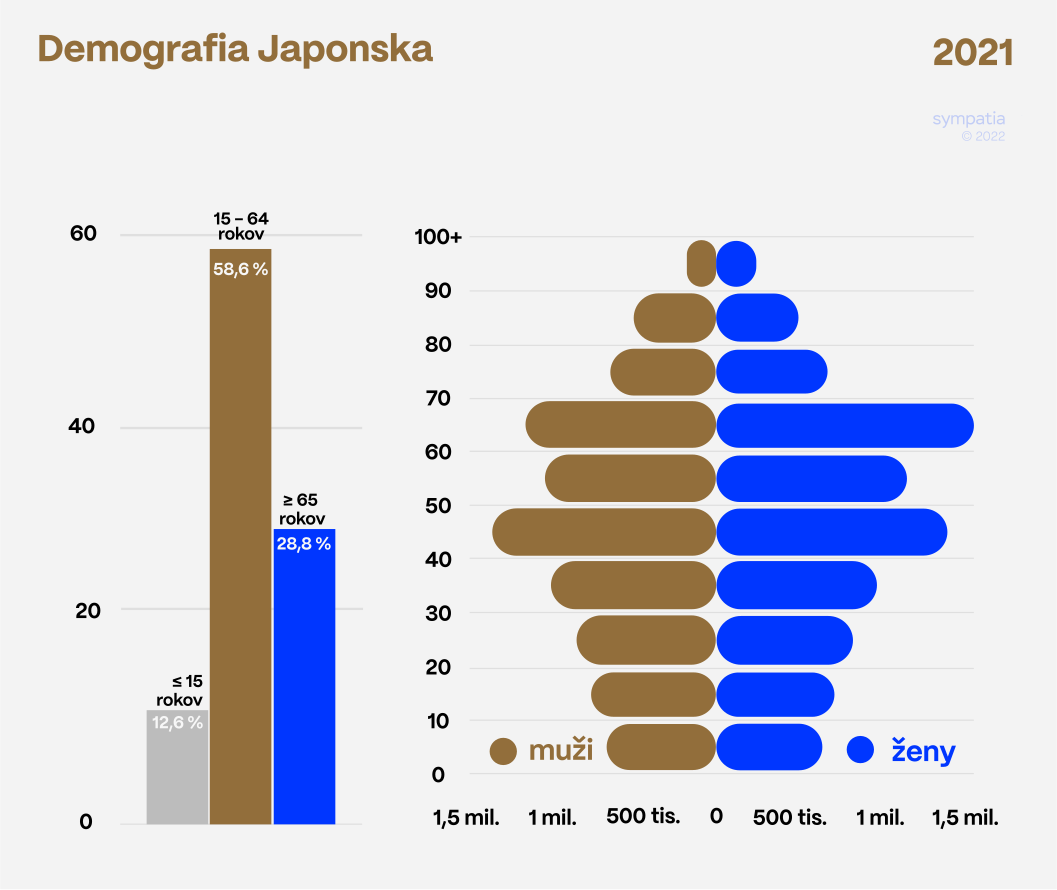
Property prices have not returned to their 1991 peak even after three decades and a long period of ultra-loose monetary policy. Japanese equities likewise remain over 40% below the 1990 highs. Compounding these problems is Japan’s demographic stagnation: a shrinking and rapidly ageing population will constrain future growth prospects.
The yen has weakened sharply in the face of global interest-rate rises; in the current year it fell about 30% versus the dollar, reaching a 32year low. Rather than raising interest rates, the Bank of Japan has intervened in foreign-exchange markets; the most recent intervention targeted roughly JPY 152 to the dollar.
What awaits the Land of the Rising Sun?
Japan needs decisive leadership—perhaps more forceful than ever before. Policy change must go beyond monetary and fiscal measures and include structural shifts. Lowering relatively high taxes would help stimulate growth, but the burden of very large public debt limits room for manoeuvre. Attracting foreign direct investment and opening the labour market to foreign workers are critical given demographic trends.
Japan also faces intensified competition within Asia. During Japan’s postwar boom, comparable competitors did not exist at scale; today it must compete with China and rapidly growing ASEAN economies. Japan’s comparative advantage today lies in high-value goods—advanced electronics, automobiles and cuttingedge technologies—rather than low-cost manufacturing. A large share of workers is employed in services, as in other advanced economies. These strengths provide a foundation for a restart, but success will require bold reforms to boost productivity, open markets and adapt to demographic realities.
Disclaimer
All texts, images, graphics and other elements in this document are copyright-protected. Without prior written consent of Sympatia Financie, o.c.p., a.s., the content of this document must not be copied, distributed, altered or provided to third parties. This document contains general information only. Sympatia Financie, o.c.p., a.s. does not provide professional advice or services through this document and accepts no responsibility for any loss arising directly or indirectly from reliance on this document.