Pension System: Do We Know What Awaits Us?

It is now almost certain that working citizens will not be able to rely on firstpillar pensions in the future. Their purchasing power will steadily decline over coming decades, and the sooner people of working age realise this, the better standard of living they can secure for their later years.
The currently misaligned pension system in Slovakia does not reflect the realities of the coming years and decades, even after the latest reform. Much of the responsibility for retirement living standards rests with each individual. The final outcome depends on financial literacy, which domestic surveys show is relatively low. The situation is serious: the state pension is unlikely to cover retirees’ essential expenses and will constitute only a small portion of the resources required for a dignified life in the 21st century.
Why will pensions be low?
Slovaks face low pensions for several reasons: inappropriate allocation of tax revenues, lack of necessary reforms, and unfavourable demographic trends. The resulting cocktail will significantly reduce the number of contributors to the pension system. The demographic curve was shaped mainly by the postrevolution birth decline. Currently there are 3.6 workingage persons per retiree, but by 2060 this ratio could fall to as low as 1.3.
Although birth rates have begun to stabilise, they are not high enough to increase the population. On the contrary, a decline in fertility is a sober expectation for the coming decades. Immediate, indiscriminate family subsidies will not fill the demographic gap because cohorts born today cannot quickly replace missing larger generations.
That said, family support matters. Effective measures should prioritise improving conditions for working mothers (facilitating their return to employment) and raising overall living standards so citizens feel less financial insecurity when planning children. A more liberal immigration policy could help, but public attitudes in Slovakia make rapid change unlikely.
When will the hard years arrive?
Because painful but necessary reforms are not being implemented, widespread elderly poverty and a likely pensionsystem collapse by 2060 are plausible outcomes. Without change, the Slovak pension system will be decimated. To maintain pensions at today’s real purchasing power, contribution rates would need to rise by around 200% — and Slovakia already ranks among European countries with high taxandcontribution burdens.
Are any positive steps being taken?
A pension reform is being implemented, driven in part by the conditions of recovery funding. The reform contains both beneficial and problematic elements. One negative measure is a parental bonus equal to 1.5% of contributions (up to 1.2× the average wage in Slovakia) for each parent. This provision does not affect the contributor’s pension entitlement and therefore constitutes a universal transfer funded by active workers, which is not stabilising for the system.
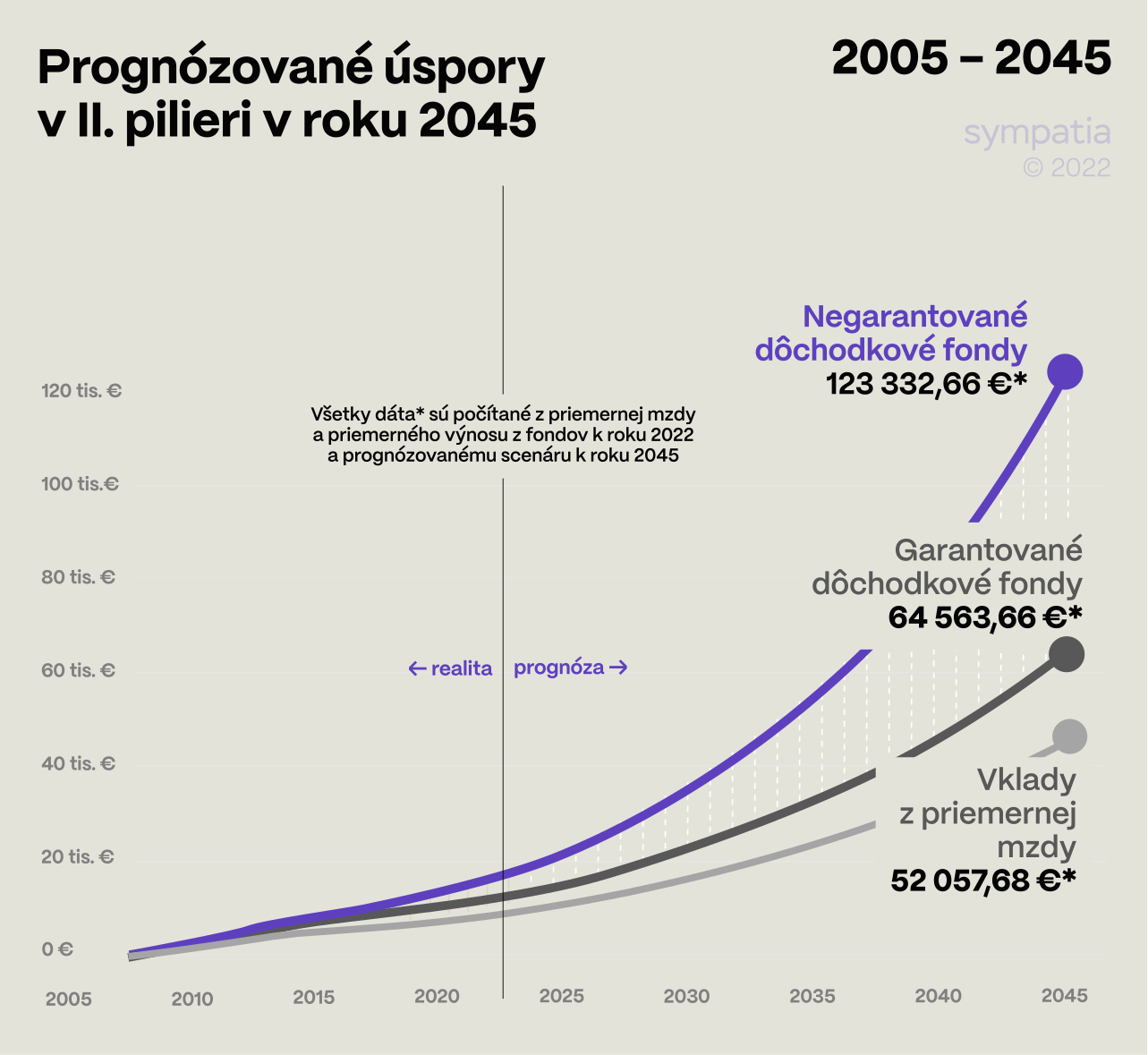
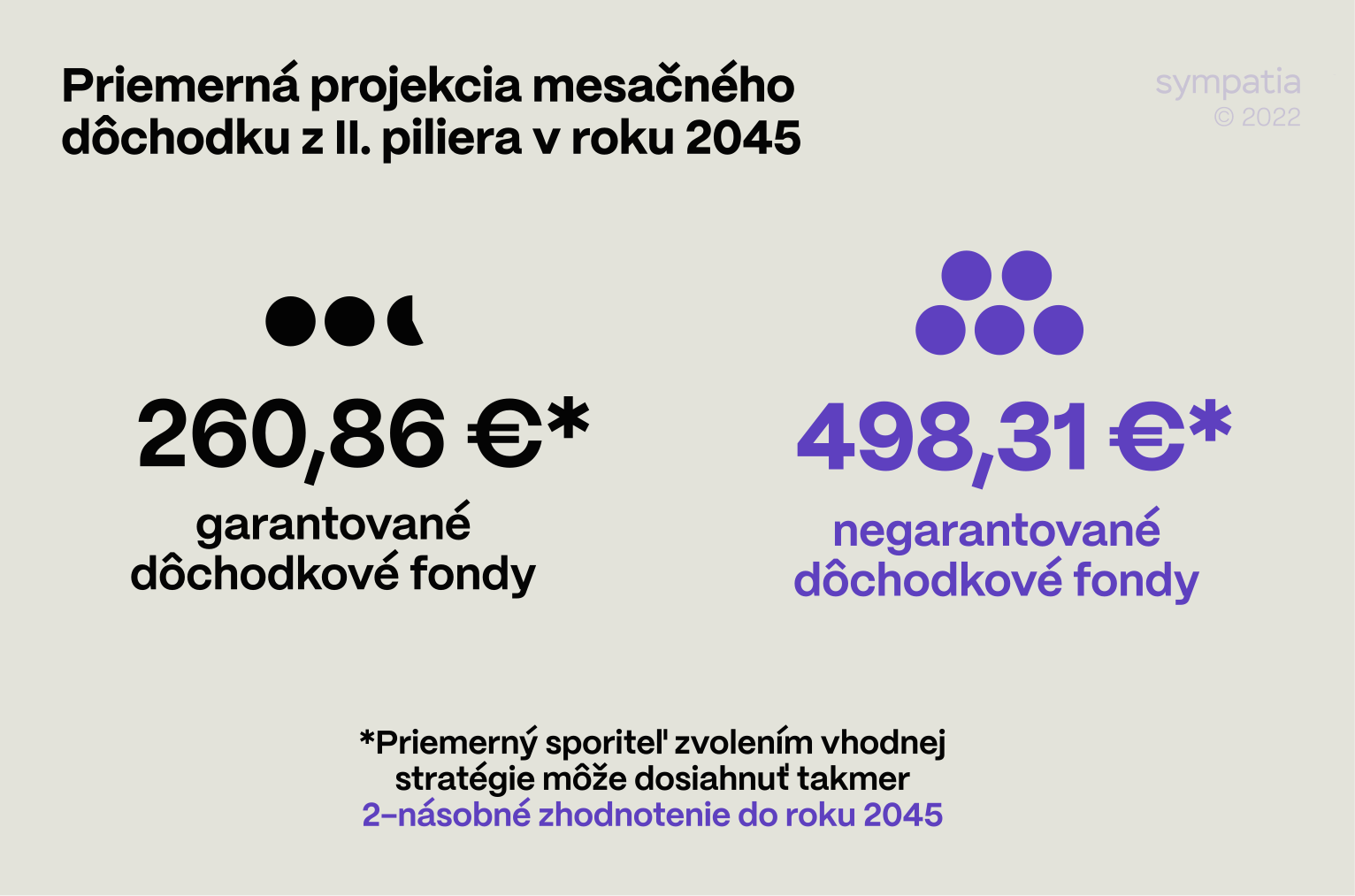
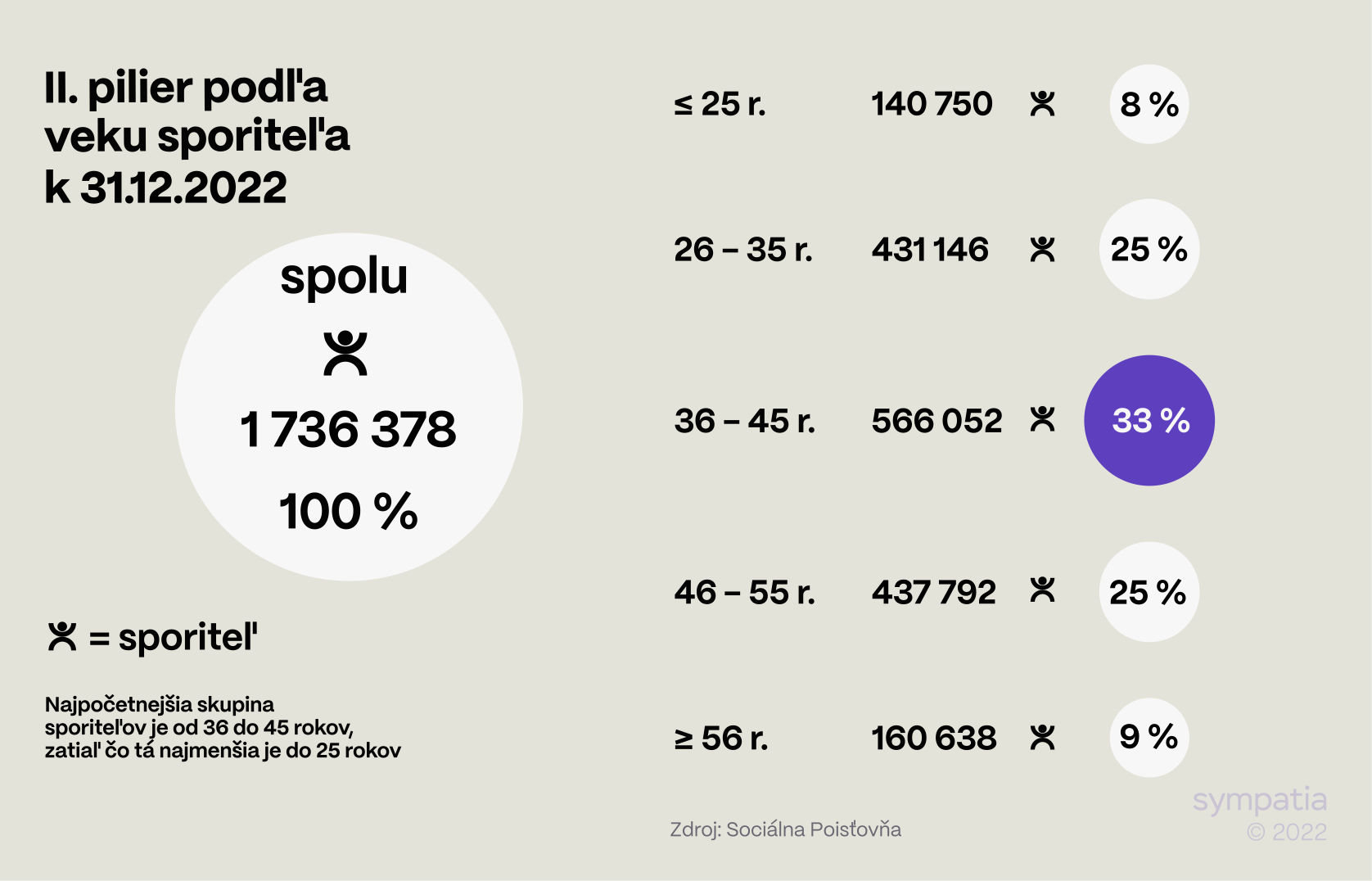
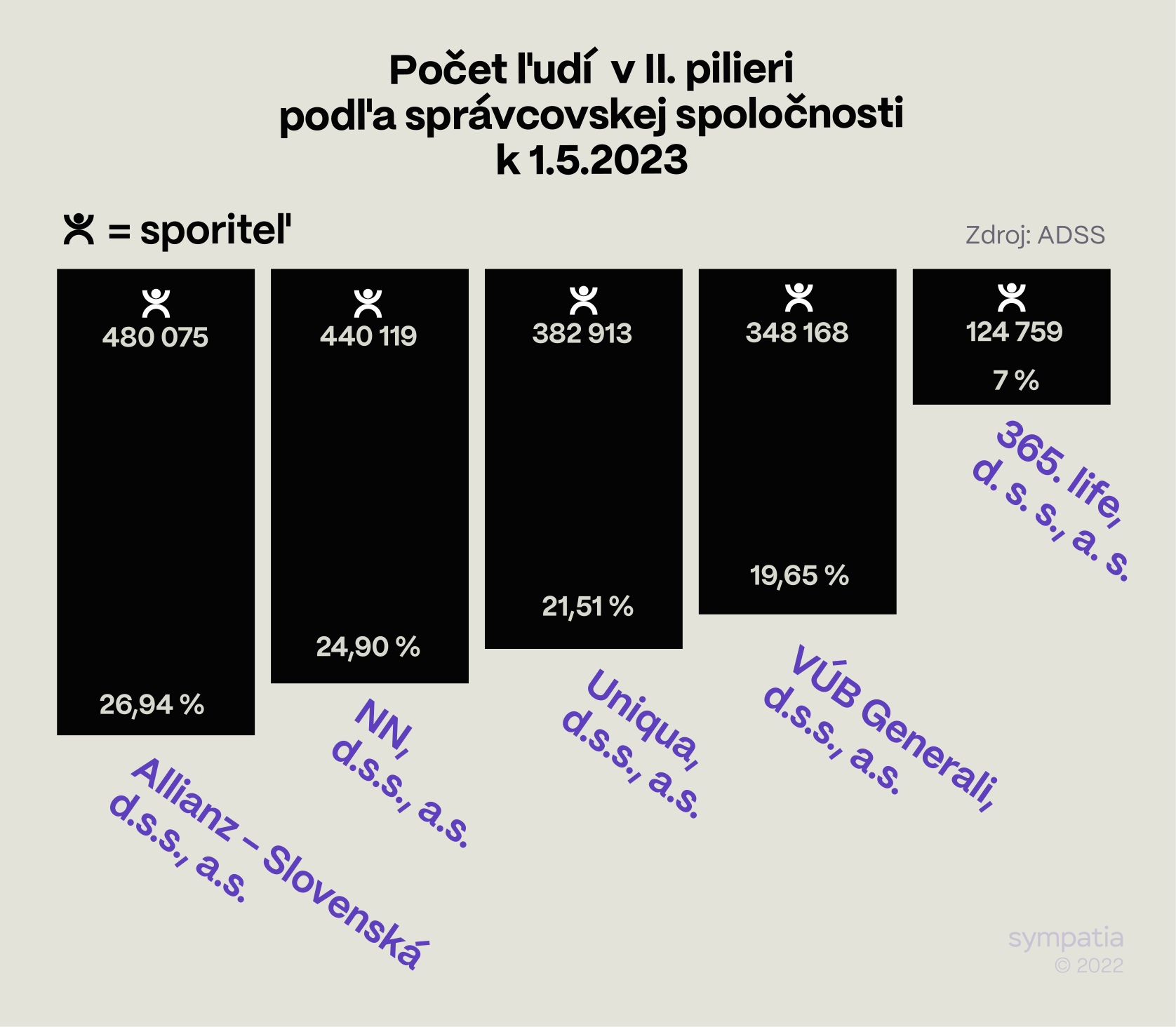
A positive change concerns the second pillar, which will partially correct a past political error during the financial and sovereigndebt crisis when many savers were shifted into inefficient guaranteed funds. However, the sharp reduction of the secondpillar contribution from 9% to 4% has not been fully reversed; current effective contribution remains only 5.5% of gross wage.
Past illadvised interventions have materially reduced the level of present and future pensions. Fortunately, under the reform younger cohorts (citizens up to age 54) will be automatically enrolled in a default strategy with a higher equity share. The strategy will be predefined and progressively shift toward bonds as the saver ages.
A gap remains: savers can still switch from a dynamic to a conservative strategy. On the positive side, the reform ends the option of a onetime withdrawal of the entire secondpillar balance — an important protection because many people lack the financial literacy to manage lifelong pension savings. This prevents rapid dissipation and longterm erosion of retirement capital, for example by leaving funds on a standard deposit.
Going forward, only half of the accumulated secondpillar assets may be withdrawn, and only after meeting specified conditions. The withdrawn half will be taxable. These new levies are largely offset by changes in the secondpillar fee structure: the account maintenance fee (1% of contribution) and the performance fee (10% of return) will be abolished. The management fee will rise from 0.30% to 0.45% but will be reduced over two years toward a target of 0.40%.
The reform also addresses early retirees. They must complete at least 40 years of work; each month of early retirement reduces the pension by 0.3%. The current pension indexation parameter (used to calculate benefits) will be lowered from 100% to 95% of the average wage in Slovakia, which improves system stability.
What additional measures could help?
The most important longterm stabiliser would be a constitutional law guaranteeing that pension age is linked to national life expectancy. The reform already contemplates such a change. Education should also be strengthened by integrating financial literacy and critical thinking into curricula so people learn responsible money management and longterm investing to increase their retirement income.
Economic reforms that stimulate growth would help as well. It would be appropriate to reassess the efficiency of the taxandcontribution burden (as inflationary pressures subside), since Slovakia’s current rates are among the highest in Europe. Reducing these burdens would likely spur growth — Switzerland, for example, combines relatively low taxcontribution rates with a functioning welfare state and secure retiree provisions.
Read the previous instalments in the pension series: parts 1, 2, 3 and 4.
All texts, images, graphics and other objects in this document are protected by copyright. Without prior written consent from Sympatia Financie, o.c.p., a.s., the contents of this document may not be copied, distributed, modified or provided to third parties. This document contains general information only. Sympatia Financie, o.c.p., a.s. does not provide professional advice or services through this document and accepts no liability for any damage arising directly or indirectly from reliance on it.