What are bonds and how do they work?
If you have ever wondered where to put your money so it works harder than a savings account, yet without the volatility of the stock market, bonds may be an attractive alternative.
Most people associate investing with stocks, but the bond market is actually even larger. According to SIFMA data, the global bond market reached approximately $140 trillion in mid-2024, while the equity market stood at around $115 trillion, meaning bonds exceed equities by over 20 %. Yet many investors know surprisingly little about this market. In reality, bonds are a straightforward instrument accessible to ordinary investors starting from low entry amounts.
What is a bond and how does it work
A bond is essentially a confirmation of a loan. When you buy a bond, you lend money to its issuer (emitent), and the issuer commits to repay it at an agreed time together with a return. It is an alternative to a bank loan, with the difference that in this case the lender is you, not the bank.
Bonds can be issued by:
Governments – to finance public budgets and infrastructure
Municipalities – to finance local public projects
Corporations – to develop business or finance specific projects
Every bond has several basic parameters you should know:
Face value (par) – the amount you receive at maturity
Yield (coupon) – the interest the issuer pays you for the borrowed funds
Maturity – the date of face value repayment
Issuer – the entity that borrows financial resources from investors
Types of bonds
Government bonds
Considered the safest form of bonds because they are backed by the state and its tax revenues. Government bond yields depend on current market conditions and are typically lower than corporate bonds. Risk is low, but so is the return.
Corporate bonds
by companies and corporations. Since the risk of default is higher than with the state, they generally offer investors a higher yield. On the Slovak market, many issues lack an official rating, which is why it is important to carefully assess the financial health of the issuer.
Project bonds
A specific type of corporate bond where the raised funds are tied to a concrete, clearly defined project. The investor knows where the money goes and what real assets stand behind the investment. This is exactly the type of bond offered by Sympatia.
Coupon bonds vs. zero-coupon bonds
A traditional coupon bond pays interest to the investor on a regular basis, for example once a year. If you hold a bond worth €1,000 with a 7 % coupon, you receive €70 every year, and at maturity the original €1,000 is returned.
A zero-coupon bond is purchased at a price lower than its face value. It does not pay regular coupons during its lifetime, and at maturity the investor receives the full face value. The difference between the purchase price and the face value represents the yield.
Because the interest is not paid out periodically, it remains part of the investment and continues to accumulate. This creates a compounding effect, which may increase the total return over a longer investment horizon.
If you invest a larger amount and achieve a higher return, you do not benefit solely from the difference in the interest rate. Your capital grows faster, and through compounding, the interest itself begins to generate additional returns. The higher the initial investment, the greater the potential effect of compounding.
Compound interest
Zero-bond vs. coupon bond: the power of compounding over a longer horizon
Yields and risks of bonds
Every investment carries a certain degree of risk. With bonds, it is important to understand several key factors.
Yield-risk relationship
As a general rule, the higher the promised yield, the higher the risk. More conservative government bonds typically offer lower returns than corporate or project bonds.
Credit risk
The risk that the issuer will be unable to meet its obligations to investors. It is therefore important to assess the issuer's financial results, business model, history, and assets.
Interest rate risk
When interest rates in the economy rise, the prices of existing bonds on the market fall (and vice versa). However, this risk primarily concerns investors who want to sell a bond before maturity. If you hold it to maturity, you receive the agreed yield regardless of rate movements.
Inflation risk
If inflation exceeds the bond's yield, the real value of the investment declines. For example, with a 3 % yield and 4 % inflation, you nominally achieve a return, but the purchasing power of your money decreases. It is therefore important to factor inflation into investment decisions.
Liquidity
Not all bonds can be easily sold at any time. For less liquid issues, selling before maturity may take longer or occur at a different price than the investor expects. However, for an investor planning to hold the bond to maturity, this factor typically does not represent a significant issue.
Risk vs. return
Where project bonds stand
Potential yield (% p.a.)
How to choose the right bond
When selecting a specific bond, we recommend looking at:
Issuer's financial health
Assets and economic background of the issuer
Investment horizon
Adequacy of yield relative to risk
Diversification of portfolio – never put all your money into a single bond or a single issuer
Investing in project bonds of Log Sympatia Holding
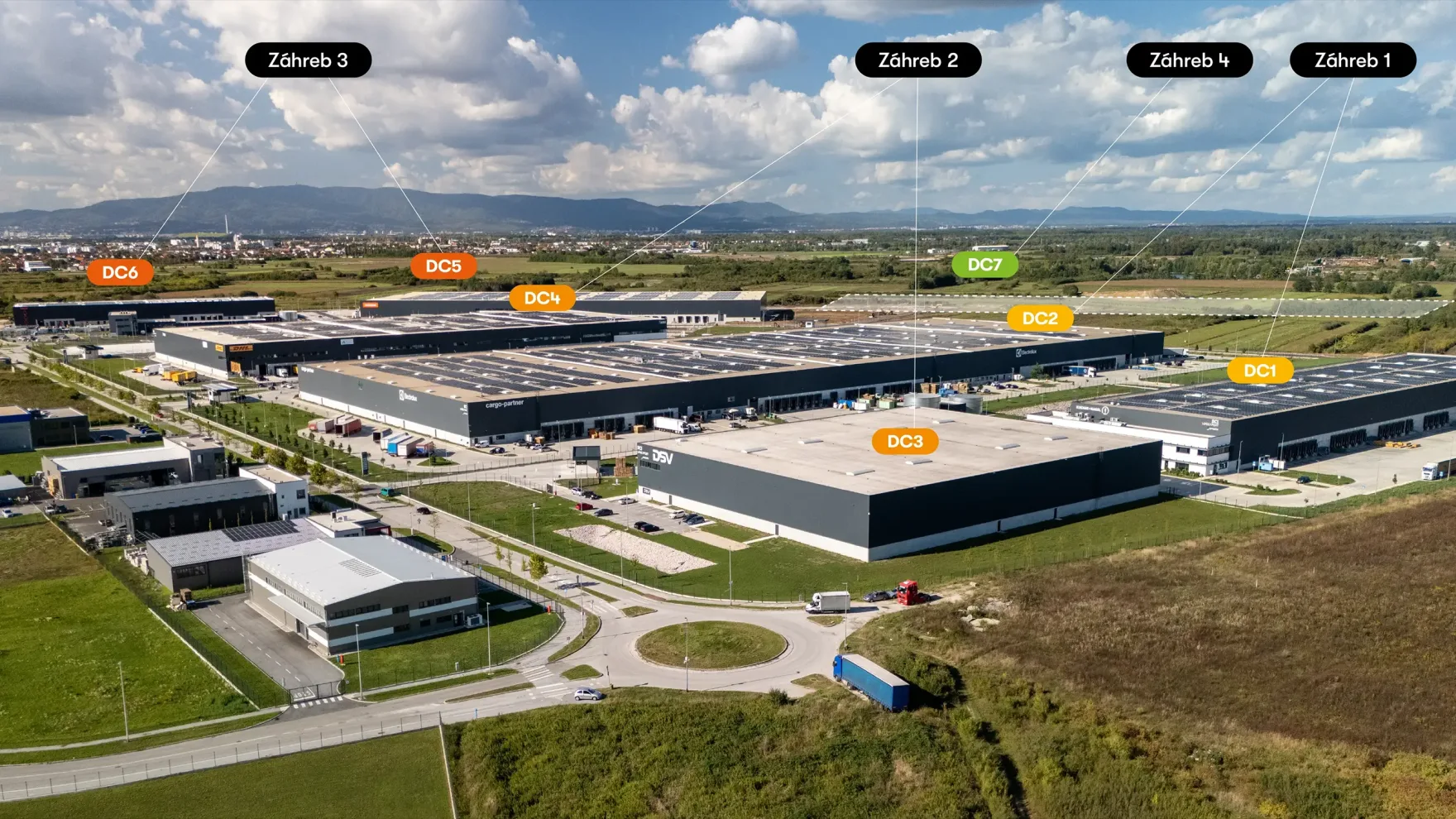
Project bonds of Log Sympatia Holding a.s. are designed for investors who want to invest in specific development projects in the area of logistics and industrial real estate.
| Parameter | Value |
|---|---|
| Issuer | Log Sympatia Holding a.s. |
| Type | Zero-coupon bond (zero bond) |
| Fixed yield | 7–8 % p.a. (depending on specific issue) |
| Investment horizon | 4–5 years |
| Minimum investment | from €1,000 |
| Tradability | Bratislava Stock Exchange (BCPB) |
Where your money goes
Proceeds from the bonds are used exclusively for the construction and operation of industrial and logistics halls in Croatia and Slovenia, regions with growing demand and EU/NATO membership. See our current projects.
Tenants include: Bosch, DHL, DSV, Electrolux, Kuehne+Nagel, Maersk, Orbico and Phoenix Group.
What underpins the investment value?
According to data provided by the issuer, the value of the real asset portfolio significantly exceeds the total value of the bonds issued. Long-term lease agreements with international companies generate stable cash flow, which is used to meet the issuer’s obligations to investors.
The value of the assets is more than three times the total value of the bond issue.
Factors supporting the issuer’s ability to meet its obligations
Ratio of asset value to the total bond issue
-

9 industrial projects worth €554m upon completion
Logistics and industrial halls in Croatia and Slovenia
-

Long-term lease agreements
With international corporations
-

Bank co-financing of projects
Following standard credit assessment
-

Tradable on BCPB
Tax exemption after 1 year + 1 day for natural persons
Yield comparison
Growth of a €100,000 investment over time
Who May Project Bonds Be Suitable For?
LSH project bonds may be suitable for investors who:
Have the necessary knowledge and experience and understand the associated risks
Want to invest in specific projects
Prefer investments backed by real assets
Have an investment horizon of at least 4–5 years
Are seeking returns that exceed inflation and those offered by term deposits
Depending on their risk tolerance, many investors combine project bonds with government bonds or equity ETFs.
More information about current bond issues, their terms and risks can be found on the project bonds page.
How to start investing with Sympatia
-
Investment questionnaire
Complete the investment questionnaire, which we will use to assess your knowledge and experience of investing.
-
Opening an investment account
If you meet the applicable requirements, proceed with opening an investment account and completing the identity verification process.
-
Selecting and purchasing a bond
Review the terms and risks of the specific bond issue. You can then place a limit order to purchase the bonds.
-
Managing your investment
You can monitor your investment through the client zone. At maturity, the issuer will proceed in accordance with the terms of the specific bond issue.
Frequently asked questions
If you haven't found the answer you're looking for, we're happy to help.
Contact us at info@sympatia.sk
Bonds can be sold before maturity. LSH bonds are admitted to trading on the regulated free market of the Bratislava Stock Exchange (BCPB). They may also be sold over the counter (OTC).
However, the market price may differ from the purchase price. It may be higher as the bond approaches maturity or lower due to changes in market conditions. The liquidity of the bonds may also be limited.
A zero-coupon bond does not pay regular coupons during its term. Instead, the investor purchases it at a price below its face value and receives the full face value at maturity.
The benefits of a zero-coupon bond include a predictable return and no coupon reinvestment risk. The income from its sale may also be exempt from tax after a holding period of more than one year and one day, provided that all statutory conditions are met.
Government bonds are generally more conservative but offer lower returns. Project bonds carry a higher level of credit risk associated with a specific issuer, but they also offer a higher potential return and are backed by real assets, including land, industrial properties and lease agreements with international companies.
Many investors combine both types of bonds as part of a diversified portfolio.
LSH project bonds offer a fixed return of 7–8% p.a., depending on the terms of the specific issue. The return is known in advance and does not depend on movements in the equity market.
Investment income is taxed in accordance with the applicable income tax legislation. If an individual sells a bond admitted to trading on a regulated market more than one year and one day after acquiring it, the income from the sale may be exempt from income tax, provided that all statutory conditions are met. Consult a tax adviser regarding your individual tax circumstances.
First, complete the investment questionnaire. If you meet the applicable requirements, you can open an investment account, complete the identity verification process and select a specific bond issue. The minimum investment is €1,000. You can then monitor your investment through the client zone.
Invest in project bonds with a fixed yield of 7–8 % p.a.
Project bonds financing logistics and industrial projects. Minimum investment from €1,000, investment horizon 4 to 5 years.
Invest online